
America's 'Treasure' Threatens Immediate Collapse Due to Iran Conflict
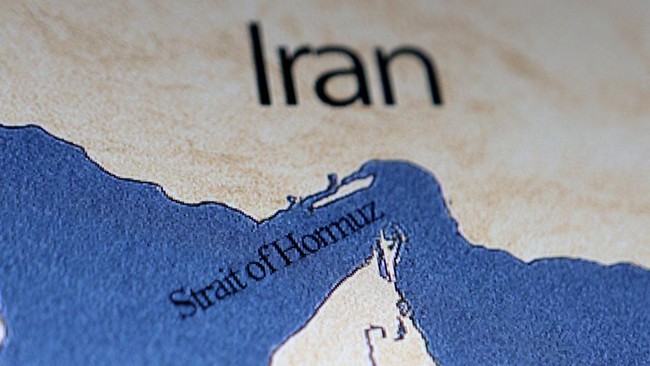
The fallout from the conflict initiated by the United States and Israel against Iran extends beyond concerns about surging oil prices. The near-paralysis of the Strait of Hormuz has also raised alarm about soaring commodity prices used across various sectors, ranging from agriculture to semiconductor manufacturing.
Earlier this month, Qatar shut down one of the world’s largest energy facilities following a drone attack. This halted liquefied natural gas and helium production. The disruption affected approximately one-third of global helium supply, according to Bloomberg estimates.
Helium has critical applications, including magnetic resonance imaging (MRI), welding, and electronics and semiconductor manufacturing, which consume the majority of global supply. Helium is essential for rapidly cooling chips during the fabrication process to prevent overheating and damage.
A shortfall in global helium supply will compound the chip crisis that has plagued the world since the end of 2025. Additionally, it will impede the development of what is America’s and the world’s “treasure” technology: artificial intelligence (AI).
Although the United States produces most of the helium it consumes, Asian countries import the majority of their helium. Taiwan produces more than 60% of the world’s chips, including 90% of the most advanced chips, with Japan and South Korea also serving as major semiconductor hubs.
“We know that TSMC and Hynix are heavily dependent on helium flows from Qatar (potentially around 40%-50%, or more), meaning they will need to rely on reserves over the coming months,” wrote economist Andreas Steno Larsen, founder of Steno Research, as cited by Yahoo Finance on Monday (16 March 2026).
“This has the potential to become a major obstacle to overall AI development,” he added.
Several market participants noted that helium spot prices have risen as much as 50%. However, this price increase does not apply to existing contracts, which dominate the industry.
“It is already too late because the supply chain is quite lengthy,” said Phil Kornbluth, president of Kornbluth Helium Consulting, to Yahoo Finance.
A cargo ship reportedly takes several weeks to reach its destination, so there is no immediate deficit until the ship fails to arrive at its intended location.
“If this situation continues and the Strait of Hormuz remains closed for 6 months or a year, this will truly become a major challenge,” he said.