
America's Failure: Intelligence Reveals Khamenei Regime Will Not Collapse in Iran
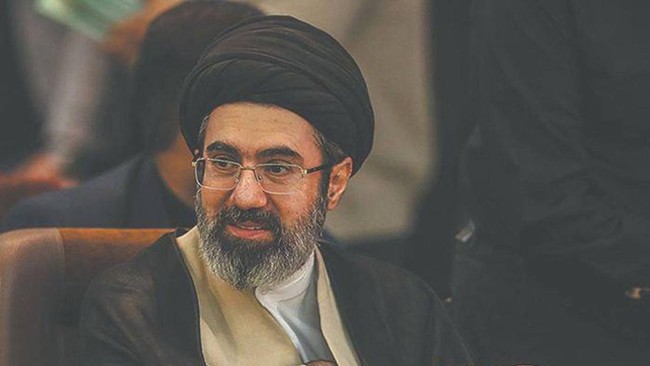
United States intelligence indicates that Iran’s current leadership remains largely intact and is not at risk of collapse in the near term, according to assessments emerging after nearly two weeks of relentless bombardment by the US and Israel.
Multiple intelligence reports provide consistent analysis that the Tehran regime is not in danger of collapse and continues to maintain full control over its population, according to three sources familiar with the matter. One source, speaking anonymously to discuss US intelligence findings, stated that the Iranian government retains complete control over the Iranian public.
“Multiple intelligence reports provide consistent analysis that the regime is not in danger of collapse and continues to maintain control over the Iranian public,” the source told Reuters on 12 March 2026.
The latest intelligence assessment was completed in recent days amid escalating political pressure due to surging global oil prices. President Donald Trump has suggested he will soon end America’s largest military operation since 2003, yet finding an acceptable end to the conflict has proved difficult whilst hardline Iranian leaders remain in power.
The intelligence reporting underscores the cohesion of Iran’s clerical leadership despite Supreme Leader Ayatollah Ali Khamenei’s death on the first day of the assault. Trump previously urged Iranian citizens to seize control of their government, though his aides denied that regime change was the primary objective.
Despite airstrikes that have killed dozens of senior officials and senior commanders of the Islamic Revolutionary Guard Corps (IRGC), intelligence indicates the organisation remains solid. The Assembly of Experts has even declared Khamenei’s son, Mojtaba, as the new supreme leader to preserve regime stability.
Amid the situation, Iranian Kurdish militias based in Iraq consulted with the US regarding potential attacks on western Iranian territory. Abdullah Mohtadi, head of the Kurdistan Komala Party of Iran, claimed that Iranian security units are showing signs of weakness in border regions.
“We have witnessed clear signs of weakness in Kurdish areas. Tens of thousands of young people are ready to take up arms against the government if they receive US support,” Mohtadi said.
However, US intelligence assessments doubt the Kurdish group’s ability to sustain long-term resistance due to lack of firepower. Responding to this, Trump has firmly ruled out allowing Kurdish groups to conduct operations within Iranian territory.
Israel’s Ambitions to Topple the Regime
Meanwhile, Israel has adopted a more aggressive stance whilst acknowledging difficult realities on the ground. Israeli officials in closed discussions reportedly began recognising that the current military campaign may not necessarily result in the collapse of the clerical government in Tehran.
A senior Israeli official revealed this acknowledgement during a closed discussion that was leaked to the media. He emphasised that internal dynamics in Iran are extremely complex despite intensive aerial bombardment.
“Israel in closed discussions has also acknowledged that there is no certainty that war will lead to the collapse of the clerical government,” the senior Israeli official said.
Despite this acknowledgement, another source familiar with the matter stated that Israel has no intention of allowing remnants of the old government to remain standing. Tel Aviv remains committed to dismantling Iran’s power structure at its roots.
Israel’s strategy for overthrowing the regime is predicted to require far greater escalation than mere airstrikes. This suggests the need for physical intervention that could trigger massive public resistance on the streets of Tehran.
“Israel has no intention of allowing remnants of the previous government to remain intact. This would likely require ground operations that would enable people within Iran to safely protest on the streets,” the fourth source said.