
Already in Crisis, Now Battered by War: Iran's Economic Outlook Grows Bleaker
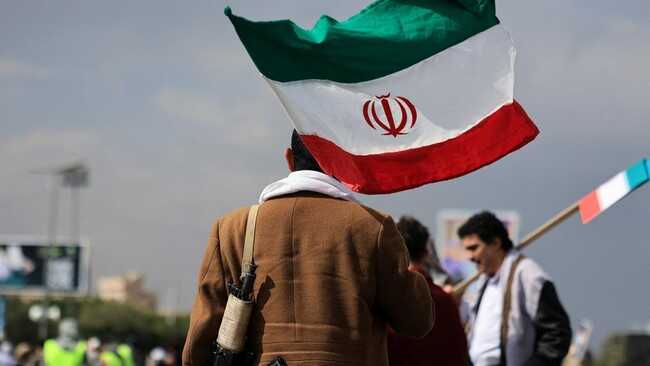
Iran is facing extraordinary pressure internally following increased escalation of conflict and security turmoil that has triggered serious tensions throughout the country and the broader Middle East region.
The situation has deteriorated following a series of joint military attacks by the United States and Israel that have killed several key figures of the Iranian regime, including Supreme Leader Ayatollah Ali Khamenei, as well as numerous senior military and intelligence leaders of the country in various air strikes over recent days.
This situation has provoked strong responses from various Iranian military and security factions, and increased activity and alert status of authorities in many major cities. It has also heightened concerns amongst the Iranian population itself as well as the international community.
Under these circumstances, it is important to understand the strength of Iran’s fundamental economic conditions as of early 2026.
Economic Growth
Iran’s Gross Domestic Product has shown a recovery trend in recent years despite sharp fluctuations. After contracting during 2018-2020, the economy returned to positive growth from 2021 onwards, and throughout 2023 remained in the range of 3-5% per quarter. In 2024, growth remained above 4% in the early part of the year, but slowed to 1.59% in the fourth quarter, indicating that the momentum of expansion is beginning to weaken.
Structurally, Iran’s economy is reasonably well diversified. Although it is one of the world’s major oil producers, the oil sector contributes only approximately 23% to GDP.
The largest contributors come from the services sector at approximately 50%, particularly real estate and professional services at 14%, trade, restaurants and hotels at 12%, and public services at 10%. Meanwhile, the manufacturing and mining sectors contribute approximately 20% and agriculture approximately 10%, demonstrating that Iran’s economic base is not entirely dependent on oil.
Inflation
Iran’s inflation during 2021-2025 has been very high and volatile. In 2021 it stood in the range of 34-49%, before surging again in 2022 to approximately 49%. The peak occurred in April 2023 at 55.5%, before declining to the 30-40% range throughout 2024. However, in 2025 inflation rose again and reached 48.6% in October, indicating that price pressures remain strong and have not yet stabilised.
The largest component in Iran’s consumer price index (CPI) is housing, water, electricity, gas and other fuels with a weighting of 36.1%, followed by food and beverages at 28.8%. This means that more than half of Iran’s inflation is heavily influenced by the prices of basic necessities.
Interest Rates
Iran’s interest rates during 2021-2022 were recorded as stable at the 18% level. Entering January 2023, the monetary authorities raised interest rates to 23%, and that level has remained in place until October 2025 without change.
It should be noted that the Central Bank of Iran does not employ a benchmark interest rate like many other countries. Instead, the authorities set bank profit rates for lending and deposit activities. The increase from 18% to 23% in 2023 reflects a policy response to inflationary pressures.
Unemployment
In Iran, unemployment measures the number of the population actively seeking work as a percentage of the total labour force. During the 2015-2018 period, unemployment was relatively high and stable in the range of 11-12%, even reaching 12.7% in Q3 2016. Entering 2019-2020, unemployment began to decline to approximately 9-10%.
The improvement trend continued in 2021-2023 with unemployment declining gradually to 7.6% in Q4 2023. In 2024, unemployment declined further and reached 7.2% in Q4, becoming the lowest level in the recorded period.