
All Clear: This Country's Oil Tanker Slips Through the Strait of Hormuz
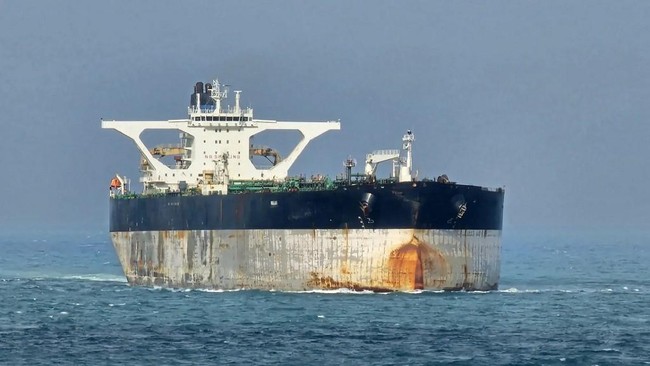
Jakarta – The Islamic Republic of Iran continues to defiantly send large quantities of crude oil to China through the Strait of Hormuz. This high-risk measure persists despite the ongoing conflict between the United States and Israel against Iran, which has disrupted energy supplies along this critical global shipping lane.
Based on data from TankerTrackers, Iran has shipped at least 11.7 million barrels of crude oil through the Strait of Hormuz since the war began on 28 February 2024. All of this black gold is reported to have a single primary destination: China.
TankerTrackers co-founder Samir Madani revealed that the organisation continues to monitor vessel movements using satellite imagery. This technology enables detection of ships attempting to “go dark” by disabling their tracking systems following threats from Tehran.
“Many vessels have ‘gone dark’ after Tehran threatened to attack any ship attempting to pass through the waterway,” Madani told CNBC International on Wednesday, 11 March 2026.
Similarly, maritime intelligence data provider Kpler estimated that approximately 12 million barrels of crude oil have passed through the strait since the war began. Although identifying the final destination has become increasingly difficult, China remains the prime suspect as the recipient of these supplies.
“Given that China has been the primary buyer of Iranian crude oil in recent years, most of these barrels will likely ultimately end up there,” said Kpler Crude Oil Analyst Nhway Khin Soe.
The Strait of Hormuz is a narrow waterway crucial for transporting approximately one-fifth of the world’s oil and gas. However, shipping traffic there has reportedly plummeted dramatically, leaving only minimal activity as tanker operators tend to avoid the war-torn region.
Based on data from the International Maritime Organization (IMO), ten vessels in or near the Strait of Hormuz have been targeted by Iranian attacks in less than two weeks since the war began. These incidents reportedly killed at least seven sailors aboard vessels.
Iran’s Foreign Ministry spokesman confirmed that risks to transiting ships rest entirely with the operators. This tension makes navigation in the region extremely dangerous for international vessels.
“Oil tankers transiting through the Strait of Hormuz must be extremely cautious,” the Iranian Foreign Ministry spokesman stressed in an interview.
Trump’s Response
On the other hand, US President Donald Trump responded to the situation with a tough tone. Amid surging oil prices due to concerns about supply disruptions, Trump urged vessels stranded near the waterway not to lose courage.
“Ships stranded near that passage need to show courage and break through the channel. There is nothing to fear; they have no Navy, we have already sunk all their ships,” Trump told Fox News.
This situation has also forced Iran to seek alternative export routes. The Kharg Island Terminal has historically handled approximately 90% of Iran’s oil exports. However, Iran is now reactivating the Jask oil and gas terminal along the Gulf of Oman, located south of the Strait of Hormuz, to increase shipping capacity.
According to TankerTrackers records, an Iranian vessel was observed loading 2 million barrels of crude oil at Jask. This is the fifth loading to occur at the location in the past five years, signalling Tehran’s efforts to bypass the Strait of Hormuz.
“New activity at Jask shows that Tehran is exploring alternatives to the Strait of Hormuz, although the extent to which this terminal can function as a viable shipping route remains uncertain,” explained Nhway Khin Soe from Kpler.
Although the Jask terminal allows Iran to completely avoid the Strait of Hormuz, the facility is considered less efficient than Kharg Island. Loading processes for Very Large Crude Carrier (VLCC) vessels at Jask take considerably longer.
“Loading one VLCC can take up to ten days. This has good domestic propaganda value, but does not offer much logistical advantage. By comparison, VLCCs require only one or two days to load at Kharg Island,” added Madani from TankerTrackers.
Energy Reserves Buildup
Meanwhile, this surge in supplies to China coincides with Beijing’s efforts to accumulate energy reserves. Kpler noted that Iranian exports reached a record high of 3.78 million barrels per day in the week of 16 February, doubling from the usual weekly average.
By January, China had accumulated an estimated 1.2 billion barrels of oil inventory, sufficient to meet demand for three to four months. This measure was taken as the US began targeting China’s primary supply sources, including Venezuela and Iran.
Global energy markets remain under high uncertainty as oil prices briefly touched US$120 (Rp 2.02 million) per barrel earlier this week. World leaders, including G7 nations, are reportedly considering the release of the largest strategic petroleum reserves in history to dampen the shock of rising prices from a war that shows no signs of abating.