
Ali Larijani Killed in US-Israel Strike While Visiting Daughter in Tehran
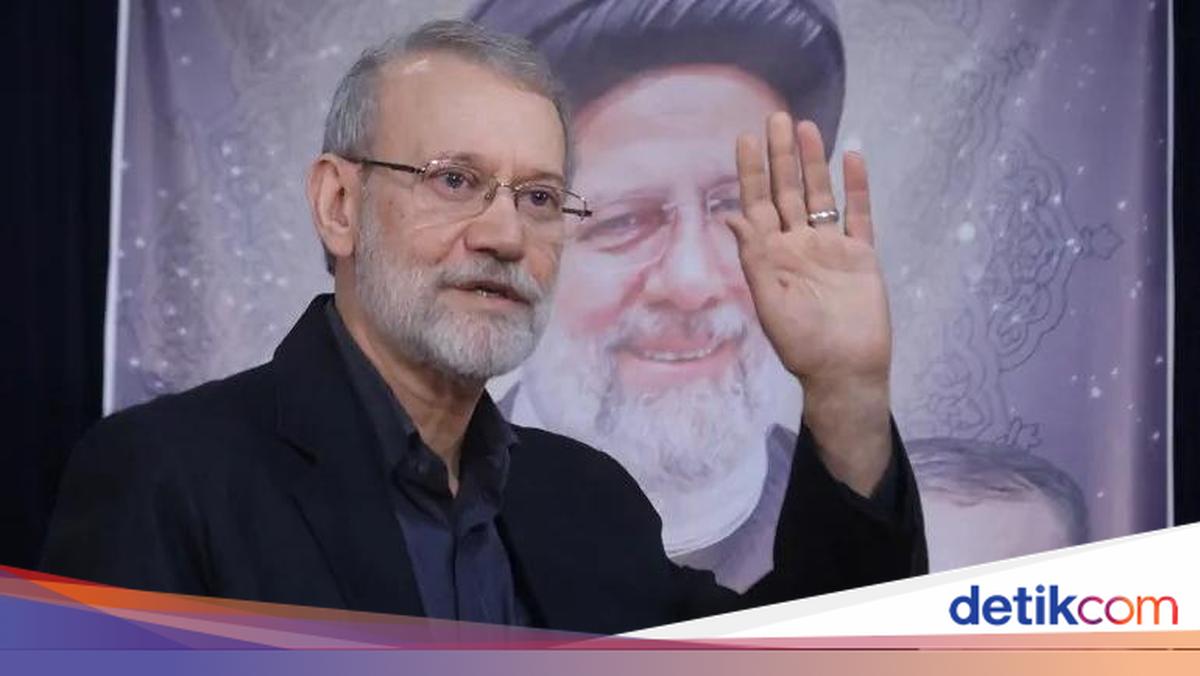
Top security chief and senior Iranian politician Ali Larijani was killed in a United States (US)-Israel attack in the Islamic Republic. Larijani is said to have been murdered by Israel while visiting his daughter.
According to Reuters on Wednesday (18/3/2026), Ali Larijani was one of the most influential figures in Iran, the architect of its security policies, and a close advisor to Ayatollah Ali Khamenei until the supreme leader’s death in an airstrike last month.
Larijani, 67, was killed in a US-Israel airstrike while visiting his daughter on the eastern outskirts of Tehran, as reported by Iran’s semi-official Fars news agency on Tuesday (17/3).
Israeli Defence Minister Israel Katz had earlier stated on Tuesday (17/3) that Larijani had been killed in an Israeli strike.
As a scion of a prominent clerical family whose brothers rose to high positions after the 1979 Islamic Revolution, Larijani was regarded as a shrewd and pragmatic figure but always firmly committed to preserving Iran’s theocratic system of government.
As commander of the Revolutionary Guard Corps during the 1980s Iran-Iraq War, he later became head of Iran’s national broadcasting authority before serving as head of the Supreme National Security Council amid his membership in parliament, where he was speaker for 12 years.
His role as one of the most important insiders in Iran under Ali Khamenei’s leadership gave him responsibilities across various fields, including key nuclear negotiations with the West, managing Tehran’s regional relations, and handling internal unrest.
While steadfastly committed to Khamenei’s absolute rule, he advocated a more cautious approach than other hardliners, sometimes willing to advance Iran’s goals through diplomacy and addressing domestic opposition with soothing words.
However, despite his relatively moderate stance, he is suspected of playing a central role in the bloody handling of mass protests in January. That brutal response, which killed thousands of demonstrators, led Washington to impose sanctions on him last month.
After the US-Israel strikes began on 28 February, he was one of the first major Iranian figures to speak out, accusing the attackers of seeking to destroy and plunder the country. He also issued stark warnings against anyone potentially engaging in protests.
The strikes represent a total failure of the nuclear policy he helped design, which aimed to build atomic capabilities at the edge of international rules without provoking an attack.
In pursuing that policy, he projected the supreme leader’s voice, using his skills as a communicator to build rapport with Western negotiators and outline Khamenei’s vision in frequent television interviews.
Even if he had survived the current war, that role might have diminished. In the power struggle following Khamenei’s death, the Revolutionary Guard has taken an increasingly prominent role, thereby reducing the decisions that political figures like Larijani could make.