
Ali Khamenei: Iran's Supreme Leader Amid US-Israeli Assault
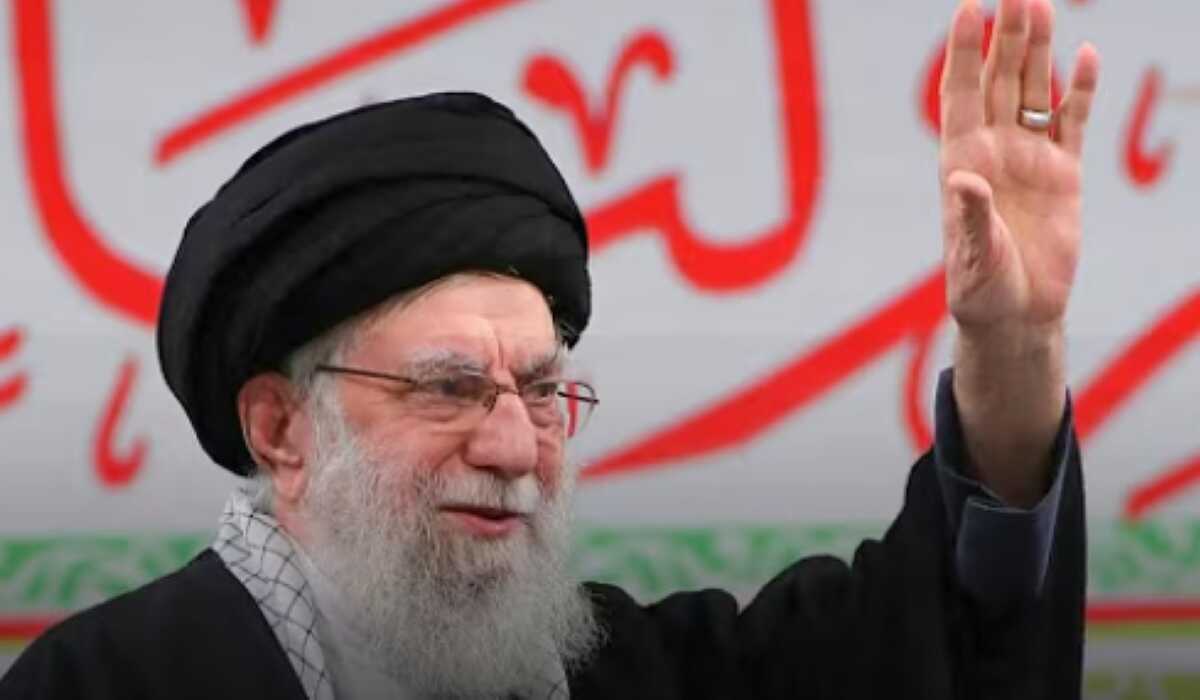
Iran’s Supreme Leader Ali Khamenei, the pillar of the Islamic Republic’s theocratic system since the Islamic Revolution, has navigated a series of crises throughout his tenure using repression and strategic manoeuvre, but may now face his greatest challenge.
The United States and Israel launched attacks against targets in Iranian cities on Saturday, 28 February. This prompted a swift response from the Islamic Republic, with the Revolutionary Guards announcing the launch of waves of missile and drone attacks against Israel.
Whilst the scope of attacks against Iran remains unclear, they could range from limited strikes to targeting the apex of leadership.
Khamenei, now 86 years old, has dominated Iran for the past three and a half decades since assuming the position of supreme leader for life in 1989 following the death of revolutionary founder Ayatollah Ruhollah Khomeini.
He has retained power after weathering student demonstrations in 1999, mass protests in 2009 triggered by a disputed presidential election, and demonstrations in 2019. He also survived the “Woman, Life, Freedom” movement of 2022-2023 triggered by the death of Mahsa Amini, a Kurdish Iranian woman, in custody, who was arrested for allegedly violating strict dress codes for women.
Khamenei was forced into hiding during a twelve-day war against Israel in June. This exposed deep Israeli intelligence penetration of the Islamic Republic, resulting in the killing of several important security officials in air strikes. However, he survived that conflict. Following renewed nationwide protests that shook the Islamic Republic earlier this year, he emerged with his usual defiant demeanor.
Khamenei lives under extremely tight security. His relatively infrequent public appearances are never announced in advance or broadcast live.
As supreme leader, he has never set foot outside his country, a precedent established by Khomeini following his triumphant return to Tehran from France in 1979. Khamenei’s last known foreign visit was an official trip to North Korea in 1989 as president, when he met Kim Il Sung.
There has long been speculation about his health given his age, though nothing in his latest appearance has triggered new rumours.
Khamenei’s right arm has remained immobilised since an assassination attempt in 1981, which authorities have consistently attributed to the Mujahidin-e Khalq (MEK), a group that was once allied with the revolution and is now banned in the country. This attempt left his government partially paralysed.
Repeatedly detained under the Shah for anti-imperialist activism, Khamenei soon after the Islamic Revolution became the leader of Friday prayers in Tehran and served on the front lines during the Iran-Iraq War. He was elected president in 1981 following the assassination of Mohammad Ali Rajai, another attack blamed on the MEK.
During the 1980s, Khomeini’s most likely successor was senior cleric Ayatollah Hossein Montazeri, but the revolutionary leader changed his mind shortly before his death after Montazeri objected to the mass execution of MEK members and other dissenters.
When Khomeini died and the Islamic Republic’s highest clerical body, the Assembly of Experts, convened, they selected Khamenei as leader. Khamenei initially became famous for refusing the nomination, bowing his head in despair and declaring, “I oppose it”. However, the clergy united to ratify his nomination, and his grip on power has never weakened since.
Khamenei has now worked with six elected presidents—a position far less powerful than the supreme leader—including more moderate figures such as Mohammad Khatami, who was permitted to undertake careful reform efforts and engagement with the West. However, Khamenei has ultimately always sided with hardline factions.
He is believed to have six children, though only one, Mojtaba, has achieved public prominence. He was sanctioned by the United States in 2019 and is one of the most influential behind-the-scenes figures in Iran.
Family discord has also drawn attention. His sister Badri fell out with the family in the 1980s and fled to Iraq during the war to join her husband, a dissident cleric. Some of their children, including a nephew now living in France, have become harsh critics.