
Alert on Shifting to Pertalite: A Comparison of Pertamax vs Pertalite Consumption
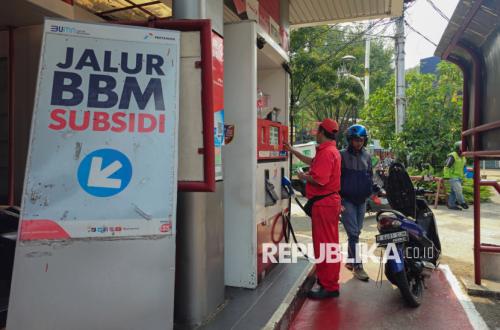
JAKARTA – The increase in the price of Pertamax to Rp16,250 per litre starting 10 June 2026 has not only sparked debate over public purchasing power and the state’s fiscal health. Behind this policy lies another risk that is beginning to concern economists: the potential shift in consumption from Pertamax to Pertalite, which could increase the government’s energy subsidy and compensation burden.
The Center of Economic and Law Studies (CELIOS) assesses that the widening price gap between Pertamax and Pertalite could alter national fuel consumption patterns. With Pertalite’s price remaining at Rp10,000 per litre, there is a price difference of Rp6,250 per litre with Pertamax.
CELIOS Director of Public Policy Media Wahyudi Askar stated that the public is now faced with two choices: continue buying Pertamax at a higher price or switch to Pertalite. “When the margin increase is too large, the options are to pay more or downgrade to Pertalite. Downgrading to Pertalite also means increasing the number of Pertalite users who have been receiving subsidies from the government,” said Media.
CELIOS Director of Economics Nailul Huda assessed that this risk cannot be taken lightly. According to him, the increase in Pertamax prices without a corresponding adjustment to Pertalite prices will drive increased demand for the fuel assigned by the government. “When the government decides to raise the price of Pertamax without raising the price of Pertalite, there is a consequence of increased demand for Pertalite. As a result, the Pertalite quota will increase and cause fuel subsidies to swell as well,” Huda stated.
National fuel consumption data shows that Pertalite remains the backbone of national petrol consumption. Based on data from the Downstream Oil and Gas Regulatory Agency (BPH Migas), the quota for Special Assignment Fuel Types (JBKP) or Pertalite has been in the range of 29-32 million kilolitres per year over the last five years. Meanwhile, national Pertamax consumption is estimated to be in the range of 10-12 million kilolitres per year. This means that Pertalite consumption is almost three times greater than Pertamax.
In terms of national petrol market share, Pertalite is estimated to control around 70-75 percent of national petrol consumption, while Pertamax and similar products are in the range of 25-30 percent. The large base of Pertalite users means that even a small-scale change in consumption can have a significant impact on the country’s energy budget. As an illustration, if only 10 percent of Pertamax users switch to Pertalite, the additional Pertalite consumption could reach around 1 million to 1.2 million kilolitres per year. This additional volume could increase the government’s energy compensation needs.
On the other hand, the government faces increasing fiscal pressure due to the high cost of keeping energy prices affordable. In the 2026 Draft State Budget (RAPBN), the government allocated energy subsidies of Rp210.1 trillion, an increase compared to the 2025 outlook of Rp183.9 trillion and the 2024 realisation of Rp177.6 trillion. Meanwhile, Our State Budget (APBN Kita) data shows that as of May 2026, the realisation of energy subsidies and compensations had reached Rp203.7 trillion. Of that amount, energy compensation reached Rp108.9 trillion, larger than the energy subsidy of Rp94.8 trillion. The magnitude of this figure shows that the government is finding it increasingly difficult to maintain energy prices far below the economic price when world oil prices and the rupiah exchange rate are under pressure.
A study by the Indonesian Forum for Budget Transparency (Fitra) estimated that the economic price of Pertamax in May 2026 was already above Rp17,000 per litre. Meanwhile, the selling price before adjustment was still at Rp12,300 per litre. This means there is a difference of around Rp4,700 to Rp5,000 per litre between the selling price and the economic price. With national Pertamax consumption of around 10-12 million kilolitres per year, this difference could create an economic burden of up to Rp47 trillion to Rp60 trillion per year if it all had to be borne through the compensation mechanism. This condition explains why the government and Pertamina ultimately chose to adjust the price of Pertamax.
However, adjusting the price of Pertamax does not automatically solve the problem. If Pertamax prices are kept suppressed, the energy compensation burden will continue to swell. But when the price of Pertamax is increased closer to the economic price, the risk of consumers shifting to Pertalite emerges, which in turn can also increase the subsidy and energy compensation burden. Therefore, the government’s challenge going forward is not only maintaining the health of the state budget but also ensuring that the distribution of Pertalite remains well-targeted. Without strict supervision, the increase in Pertamax prices could trigger a consumption migration that creates new fiscal pressure. With Pertalite consumption reaching about 31 million kilolitres per year, or almost three times greater than Pertamax, a slight shift in consumption can have a major impact on the state energy budget. This is the dilemma the government now faces: keeping energy prices affordable while ensuring the state budget remains healthy and sustainable.