
Alert on Measles Outbreak: Indonesian Paediatricians' Association Calls for Immunisation and Prevention Measures
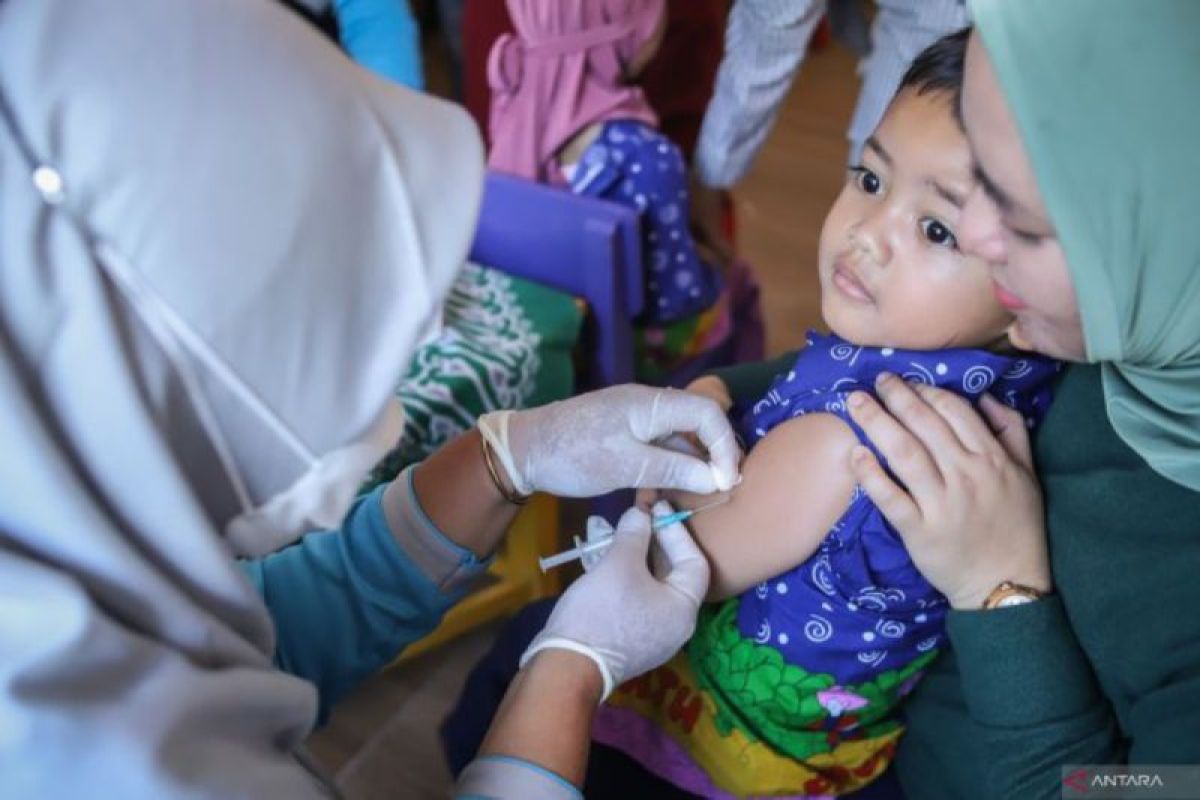
Jakarta — The Central Board of the Indonesian Association of Paediatricians (IDAI) has issued a warning regarding a significant increase in measles cases recorded up to week 7 of 2026, with 8,224 suspected cases, 572 confirmed cases, and 4 deaths documented.
In comparison, 2025 saw 63,769 suspected measles cases with 11,094 confirmed cases and 69 deaths. IDAI has called upon all parents, healthcare workers, and the government to work together in intensifying immunisation campaigns.
“We must act swiftly to protect Indonesian children. Immunisation is a fundamental right of the child and our responsibility to ensure every child is protected,” stated DR Dr Piprim Basarah Yanuarso, Sp.A, Subsp.Kardio(K), Chair of IDAI’s Central Board, in a press statement received in Jakarta on Tuesday.
Piprim emphasised that this emergency situation requires extraordinary measures from all stakeholders. Globally, Indonesia ranks second for the highest number of measles cases with 10,744 cases, below Yemen and above India, based on WHO data released by the CDC in February 2026.
The IDAI has outlined three key recommendations: firstly, accelerate catch-up immunisation efforts; secondly, strengthen disease surveillance for measles and rubella. The coverage of the second dose of measles-rubella immunisation (MR2) currently stands at only 82.3 per cent in 2024, far below the national target of 95 per cent, meaning herd immunity has not yet been optimally established; and thirdly, enhance laboratory diagnostic capacity for measles and rubella.
Prof. Dr. dr. Hartono Gunardi, Sp.A(K), Chair of IDAI’s Immunisation Task Force, explained the importance of efforts to recover immunisation coverage following the pandemic. “The COVID-19 pandemic caused significant disruption to routine immunisation services. Many children missed their scheduled immunisations, creating pockets of vulnerability across various regions. It is important to understand that measles-rubella immunisation is safe and effective. Concerns about vaccine safety circulating in society have no scientific basis,” he added.
Hartono stated that the MR vaccine used in Indonesia has undergone strict evaluation procedures and obtained marketing authorisation from the Indonesian Drug and Food Authority (BPOM).
“In treating measles, management is supportive and symptomatic because there is no specific antiviral available. However, there is one intervention that is extremely important and proven to reduce mortality rates by 50 per cent: vitamin A supplementation in accordance with WHO recommendations,” said Hartono.
Additionally, patient isolation is vital to prevent transmission. Measles patients transmit the virus from four days before until four days after the rash appears. In hospitals, patients must be cared for in airborne isolation rooms with good ventilation, and healthcare workers must use appropriate personal protective equipment.
Immunisation is critical because, according to IDAI, measles can cause serious complications such as pneumonia, encephalitis, and even death.
IDAI has also instructed all paediatricians to increase surveillance of immunisation-preventable diseases (IPDs), particularly measles and rubella, by reporting every case to the local health office through the measles case-based surveillance system—a systematic approach to monitor measles by documenting, investigating, and obtaining laboratory samples from each individual suspected measles case.
Communication and public education are important pillars of these recommendations. IDAI encourages all healthcare workers, both general practitioners and paediatricians who have completed immunisation champion training, to actively provide education about the dangers of measles and its potentially fatal complications, both through daily practice and social media.
“Deaths from measles are deaths that should not occur. We have a prevention tool that is safe, effective, and available free of charge at healthcare facilities. The government has provided the vaccines, healthcare workers are ready to serve—now it is up to our collective awareness and concern as a nation. Let us protect Indonesian children from measles. Do not delay immunisation, do not ignore symptoms, and do not hesitate to immediately take your child to a healthcare facility if there are signs of illness,” concluded Piprim.