
Alert for Phase II of US-Iran War: Trump Officially Blockades Strait of Hormuz
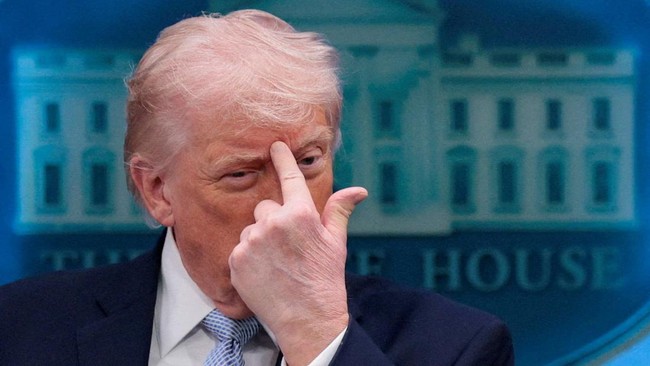
Jakarta - US President Donald Trump announced that his military has begun blockading ships leaving Iranian ports on Monday (13/4/2026) local time, marking a new escalation in the conflict with Tehran. This step was taken after negotiations to end the war failed to reach an agreement.
In a statement at the White House, Trump emphasised that Iran had contacted Washington to reopen negotiations. However, he rejected any compromise that would allow Tehran to possess nuclear weapons.
“Iran will not have nuclear weapons. We cannot allow a country to threaten the world,” Trump said, as quoted by Reuters on Tuesday (14/4/2026).
The US Central Command itself confirmed that the blockade will be enforced impartially against all ships entering or leaving Iranian ports in the Gulf and Gulf of Oman. However, neutral transit routes to non-Iranian destinations are said not to be disrupted.
Alongside this escalation, global oil prices have surged above US100perbarrel, oraboutRp1.7million(exchangerateRp17, 000/US), reflecting market concerns over disrupted global supplies. The strategic Strait of Hormuz route, through which around one-fifth of the world’s oil passes, shows no signs of returning to normal.
A US official stated that communications with Iran are ongoing and there is progress towards an agreement. Pakistan’s Prime Minister Shehbaz Sharif also said diplomatic efforts continue to defuse the conflict.
However, on the ground, tensions are rising. Trump said that Iranian ships or those paying fees to Tehran for passage will be blocked. He even warned that Iran’s “fast attack” boats approaching the blockade area will be destroyed.
From Iran’s side, Brigadier General Reza Talaei-Nik warned that foreign military intervention in the strait risks worsening the crisis and disrupting global energy stability. Iran also described the US shipping restrictions as “piracy”.
Meanwhile, two tankers linked to Iran were reported to have successfully left the strait before the blockade deadline. Nevertheless, threats of retaliation from Tehran are increasing, including warnings that ports in Gulf countries will not be safe if Iran is attacked.
The ceasefire that previously halted US and Israeli airstrikes is now on the brink, with about one week remaining in its term. Washington said Iran rejected demands in the latest talks, which were the first high-level contacts since the 1979 Islamic Revolution.
NATO allies such as the UK and France have chosen not to participate in the blockade and emphasise the importance of keeping shipping lanes open. On the other hand, the conflict is spreading to other areas, including Israeli strikes on Lebanon claimed to target Hezbollah.
Amid domestic pressure from the war and surging energy prices, Trump previously halted a major bombing campaign. Nevertheless, he still claims victory, although initial goals like stopping Iran’s nuclear programme have not been achieved.