
Al-Hikmah Mosque in Denpasar: A Trace of Islamic and Balinese Cultural Fusion
Bali is often recognised as a centre of Hindu culture in Indonesia. However, throughout its history, Bali has also served as a meeting place for various traditions, including Islamic culture. This interaction has produced a unique process of cultural acculturation—visible in both the daily life of the community and the architecture of its buildings.
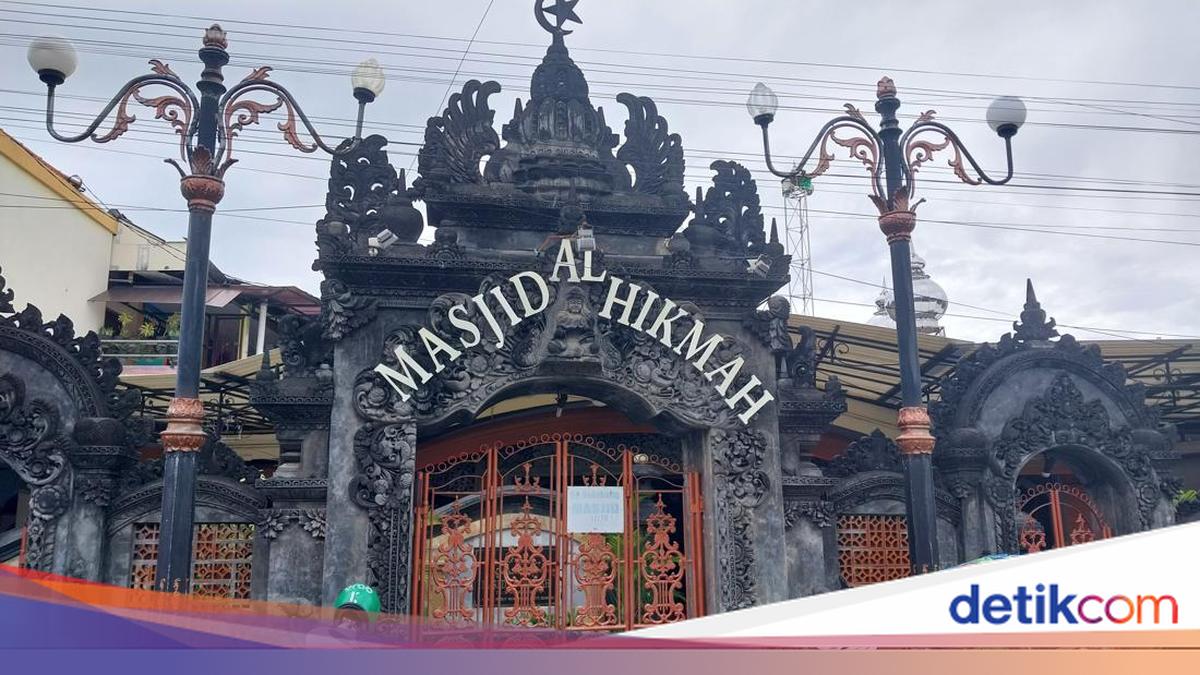
One notable example can be found at the Al-Hikmah Mosque located in Kesiman, East Denpasar, in the city of Denpasar. This mosque functions not only as a place of worship for the Muslim community, but also symbolises the meeting of Balinese, Javanese, and Islamic cultures that have coexisted harmoniously for a considerable time.
Brief History of Al-Hikmah Mosque
The presence of the Muslim community in Bali did not happen abruptly. According to various local historical records, Muslims began settling in Bali during the reign of Raja Waturenggong in the Gelgel Kingdom. At that time, Bali’s ruler opened space for newcomers, including Muslims, to settle and build lives on the Island of the Gods.
These historical traces subsequently developed into Muslim communities in various regions of Bali, including Denpasar.
The Al-Hikmah Mosque itself was established in 1978 on wakaf (endowed) land donated by H. Abdurahman. In its early construction phase, the mosque was built using wooden materials. As the number of worshippers and the need for prayer space increased, the building was renovated in 1995 with more sturdy brick walls.
To this day, the Al-Hikmah Mosque remains one of the centres of religious activity for the Muslim community in the Kesiman area.
Gateway with Balinese Architectural Style
One of the most striking features of the Al-Hikmah Mosque complex is its gateway or entrance. Unlike many other mosques in Indonesia, this mosque’s gateway uses the paduraksa form, a type of gate characteristic of traditional Balinese architecture commonly found on puras (Hindu temples) or traditional Balinese buildings.
The gateway is adorned with various types of Balinese carvings that possess both aesthetic and symbolic value. These carvings are divided into several types.
Geometric Carvings
Geometric carvings feature patterns of dots, lines, and repeated shapes that can range from simple to complex. On the gateway of the Al-Hikmah Mosque, there are several characteristic Balinese geometric motifs such as Keketusan Masmasan, Keketusan Kakul-kakulan, Keketusan Bias Membah, and Patra Mesir.
These motifs are typically used as decorative elements that beautify the building whilst imparting a sense of symmetry and neatness.
Anthropomorphic Carvings
Anthropomorphic carvings are motifs resembling human forms. This type of carving is among the oldest in the tradition of fine art, with traces found even from prehistoric times.
On the gateway of the Al-Hikmah Mosque, there are two forms of anthropomorphic carvings: the figure of a holy person located in the upper part of the gateway and the Karang Tapel, which resembles the face of a giant.
Animal Carvings
Animal motifs are also frequently found in Balinese carving art. Beyond serving as ornaments, these carvings often convey symbolic messages or specific beliefs.
On the mosque’s gateway, there are several forms of animal carvings such as Karang Gajah (elephant motif), a dragon figure, and garuda wings located at the top of the gateway.
Plant Carvings
Plant motifs are among the most frequently used in Balinese ornamentation. Their forms resemble tendrils or curved leaves that are interconnected.
On the gateway of the Al-Hikmah Mosque, the plant motifs that can be found include Patra Ulanda, Patra Banci, Karang Simbar, and Karang Sari. These motifs create a natural impression whilst enriching the building’s artistic detail.
Roof with Traditional Javanese Style
The cultural acculturation at the Al-Hikmah Mosque is not limited to the Balinese-style gateway. The roof of the mosque actually adopts the architecture of traditional Javanese mosques.
Its roof is shaped in the tumpang form, a tiered roof structure commonly found in ancient mosques on the island of Java. This form became characteristic of Nusantara mosque architecture before the influence of Middle Eastern domes became popular.
The mosque building was initially constructed in a simple cubic form. However, due to an increasing number of worshippers, the building was subsequently expanded into a rectangular shape to accommodate more people.
The mosque courtyard is also utilised as additional space for religious activities such as Friday prayers, Tarawih prayers during Ramadan, and Eid prayers.
Significance of Cultural Acculturation
The Al-Hikmah Mosque is not only remarkable from an architectural perspective, but also possesses important social and cultural significance.
The combination of a Balinese gateway, a Javanese mosque roof, and its function as a place of worship for Muslims demonstrates how different cultures can coexist without negating one another.
This acculturation reflects the openness of Balinese society towards diversity, as well as the ability of the local Muslim community to adapt to the cultural environment on the Island of the Gods.
In a broader context, the Al-Hikmah Mosque has become a symbol of tolerance and intercultural harmony that has endured for several decades.
For tourists or visitors travelling to Denpasar, this mosque can also serve as an interesting destination to witness firsthand how historical, cultural, and diversity values are woven together in one building.