
Al Araf: Andrie Case Must Go to General Court, Not Connected or Military Court
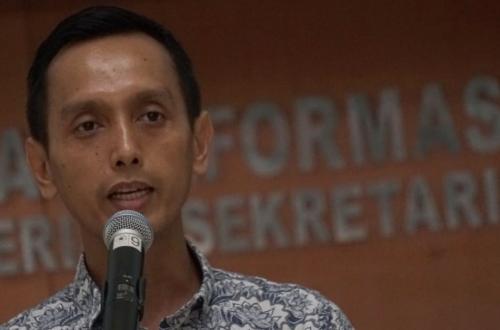
REPUBLIKA.CO.ID, JAKARTA — The Civil Society Coalition assesses that several parties are attempting to shift the focus of the resolution process for the case following the revelation of the perpetrators of the acid attack on human rights defender Andrie Yunus, which involves four members of the Indonesian National Armed Forces (TNI). Efforts to divert the case disclosure by using military courts and connected courts, rather than the general court, are underway.
“We affirm that we reject the resolution of the Andrie case through military courts as stated by the TNI Military Police Corps and also through connected courts as conveyed by Commission 3 of the DPR RI,” said Centra Initiative activist Al Araf in a press release on Thursday (23/3/2026). Centra Initiative is an organisation that is part of the Civil Society Coalition.
He explained that resolving the Andrie case through military courts is inappropriate and would make it difficult to achieve justice for the victim and society. According to him, military courts do not meet the principles of good and fair justice (fair trial).
Resolving through military courts is not in line with the rule of law principles, particularly the principle of equality before the law as affirmed by the constitution. It is only natural that all citizens are punished based on the crimes and criminal acts committed, not based on the subject because they are military members or not.
“Thus, resolving the Andrie case through military courts is not in line with the constitution and the rule of law. It will be difficult to obtain justice in this case if the trial is through military courts,” Al Araf explained.
Resolving the Andrie case through connected courts is also wrong and mistaken. In the Andrie case, all perpetrators are currently military members, so it cannot be brought to a connected court process. “Connected cases can only be conducted if the perpetrators are military members and civilians, whereas in the Andrie case to date, the perpetrators are not civilians,” he said.
From a rule of law perspective, Al Araf continued, military courts and connected courts do not meet the principles of good and fair justice (fair trial), thus these two courts are difficult to use as mechanisms for justice in the Andrie case. Moreover, in practice, these two courts are often used as means of impunity.
According to Al Araf, the Civil Society Coalition urges the resolution of the Andrie case through the general court. For that interest, he said, the president must order all state institutions, especially law enforcement, to use Article 65 of the TNI Law in resolving the Andrie case.
“If law enforcement officials face normative legal obstacles and meet the circumstances of urgent necessity, the president can issue a Government Regulation in Lieu of Law regarding military court reform so that the Andrie case can be resolved through the general court,” Al Araf stated.
The Civil Society Coalition views that if the president does not want to bring the Andrie case to the general court, it is tantamount to the civilian authorities lacking strong political will to provide justice for Andrie and society. In other words, he continued, the president’s statements to resolve this case are merely empty promises. More than that, if the president does not want to bring the Andrie case to the general court, it can be said that the president is allowing the crime that occurred, and that is bad for the rule of law.
“We urge the resolution of the Andrie case through the general court, not through military courts and not through connected courts. The resolution of the Andrie case can also be through the Human Rights Court by placing Komnas HAM as the investigator, because it is suspected there are systematic and planned elements where state apparatus are involved,” he explained.