
Ajinomoto Reduces Plastic Use by 1,736 Tonnes in 2025 as Part of Green Initiative
Jakarta – The World Bank projects that Indonesia’s national plastic waste volume in 2025 is estimated to reach 9.9–12.4 million tonnes per year, accounting for approximately 13.98 per cent of total waste generation. Consequently, active participation from the business community is essential to address this challenge.
Recognising the magnitude of this problem, Ajinomoto Indonesia Group (Ajinomoto) believes that a clean environment is a crucial foundation for creating healthier families. On this basis, Ajinomoto has integrated various environmental initiatives through the Ajinomoto Health Provider programme, which aligns with the company’s objective to strengthen sustainable wellbeing for people, communities, and the planet through AminoScience.
These initiatives have yielded significant results. Overall, various packaging innovations have enabled Ajinomoto to reduce plastic consumption by 1,736 tonnes through 2025. This represents a substantial contribution to supporting national efforts to reduce plastic waste generation. The initiative also demonstrates Ajinomoto’s commitment to complying with regulations from Indonesia’s Ministry of Environment and Forestry (P.75/MENLHK/SETJEN/KUM.1/10/2019) and supporting the target to reduce plastic by 30 per cent by 2029/2030.
“To prepare a better Indonesia, we continue to expand the impact of the Ajinomoto Health Provider not only through education on balanced nutrition, but also through establishing more responsible and mindful waste management practices,” said Grant Senjaya, Head of Corporate Communication at PT Ajinomoto Indonesia.
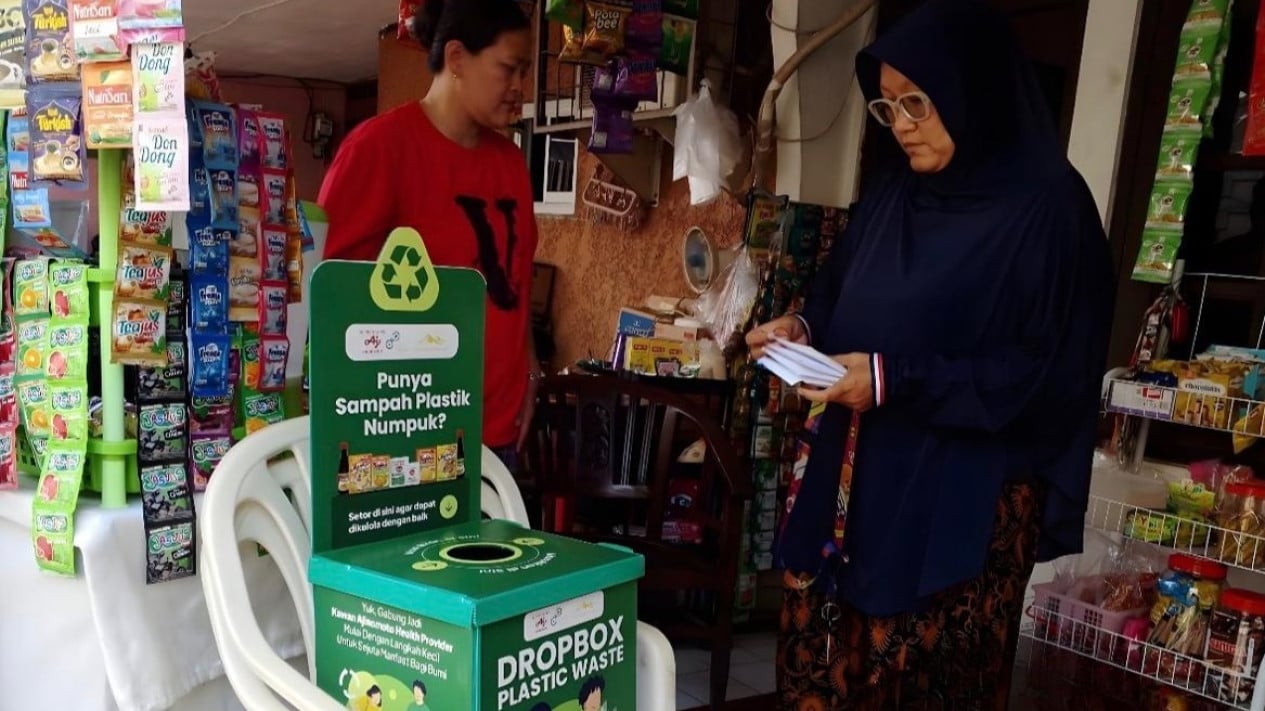
According to him, Ajinomoto continues to expand its sustainability impact through partnerships with startups, such as Rekosistem, which provides waste station facilities operating in Surabaya and Mojokerto, making it easier for communities to deposit their sorted waste.
Beyond providing waste management infrastructure, Ajinomoto has also partnered with various waste banks, including Gunung Emas Waste Bank (East Jakarta), Patriot Induk Waste Bank in Bekasi, Karawang, Mojokerto, and Surabaya, as well as 3R transfer stations in Karawang and Mojokerto. These collaborations aim to strengthen community-based waste management.
From all these initiatives, Ajinomoto successfully managed 352 tonnes of waste throughout 2025. The presence of these facilities not only benefits the environment but also creates economic opportunities for some communities through waste collection schemes.