
Airlines Request Policy Revision from Government: Will Air Ticket Prices Be Increased?
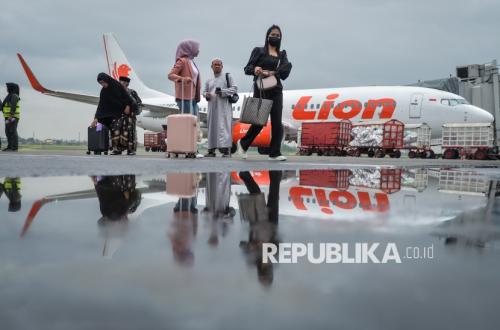
The Indonesian National Air Carriers Association (INACA) has requested an increase in fuel surcharges and upper limit tariffs (TBA) for domestic flight prices due to the global geopolitical conflict. INACA Secretary General Bayu Sutanto stated that this considers the current aviation industry conditions, influenced by the geopolitical conflict between the United States (US), Israel, and Iran, which has made the international economic situation unconducive. “This condition has resulted in a rise in world oil prices and a weakening of the rupiah exchange rate against the US dollar, where both cost components significantly affect the increase in operational costs for national airlines,” said Bayu in a statement in Jakarta on Wednesday (25/3/2026). According to him, many airlines in various countries are currently adjusting operational costs by adding fuel surcharges between 5-70%. This can be seen from airlines such as Air India, Air India Express, IndiGo, and Akasa Air from India; South African Airlines and FlySafair from South Africa; Cathay Pacific and Hong Kong Airlines from Hong Kong; as well as Thai Airways from Thailand. Furthermore, Qantas from Australia; Korean Air and Asiana from South Korea; up to Air Mauritius, Ethiopian Airlines, Kenya Airlines, and other airlines. Bayu mentioned that they have compiled data and analysis regarding the national aviation conditions impacted by the geopolitical crisis. First, the increase in the US dollar exchange rate against the rupiah. In 2019, when the upper limit tariff (TBA) was set through KM 106 of 2019, the average was 1 US dollar at Rp 14,136, whereas in March 2026, the average has reached Rp 17,000 or an increase of more than 20%. “Airline operational costs are 70% in US dollars, while national airline revenues come from rupiah. With the rise in the US dollar exchange rate, this further burdens the finances of national airlines,” said Bayu. Second, the global oil price in March 2026 has risen from the previous 70 US dollars per gallon to 110 US dollars per gallon or an increase of 57%. This affects the fluctuation of avtur prices in Indonesia, where in 2019 the avtur price was Rp 10,442 per litre. Whereas in March 2026, it has reached Rp 14,000-Rp 15,500 per litre (prices vary by airport) or an increase of 34-48%. “Avtur prices are predicted to rise again following the increase in oil prices due to this global geopolitical crisis,” he said. Third, Pertamina, as the supplier of aircraft fuel (avtur), always adjusts prices on the 1st of every month. “Thus, there is a high possibility that avtur prices as of 1 April 2026 will rise, following the market prices that have already increased significantly due to the Middle East geopolitical crisis,” he explained. Fourth, there is an additional operational cost for airlines flying abroad, especially to the Middle East and Europe. Existing flight routes passing through conflict areas must be diverted to circuitous routes, thus increasing operational costs. Fifth, on the other hand, due to this geopolitical conflict, the number of passengers to the Middle East, especially Umrah flights, has decreased. “The same applies to tourism to Indonesia, which will be impacted, both arrivals of foreign tourists from Europe and the Middle East,” he said. Sixth, from the aircraft maintenance side, it is affected by the procurement of spare parts for aircraft under maintenance (aircraft on ground/AOG parts). The supply chain for spare parts is disrupted, so deliveries that previously took only 2-3 days now take 7-10 days, with additional shipping costs. “This is to ensure safety and security as well as longer circuitous flight routes,” he explained. In relation to these conditions, INACA has submitted a request to the government to review and adjust several policies. First, to raise the fuel surcharge by 15% on each fuel surcharge that has been set through KM 7 of 2023 dated 10 January 2023; Second, to raise the upper limit tariff (TBA) for domestic flight ticket prices by 15% for jet and propeller aircraft types on the TBA set through KM 106 of 2019. In addition to adjusting the fuel surcharge and TBA amounts, INACA also requests several temporary stimulus policies (such as for Eid 2026), namely the deferral of VAT on avtur and domestic tickets, relief on airport costs or PJP4U, and the policy of rescheduling payments for airport and navigation obligations to be maintained. He added that the request is submitted to anticipate the avtur price adjustment from Pertamina as of 1 April 2026 and to ensure business sustainability, safety assurance, and the availability of national air transport connectivity.