
Airlines Request Increase in Fuel Surcharge and Upper Fare Limit, Ministry of Transportation Responds—Starting Calculations?
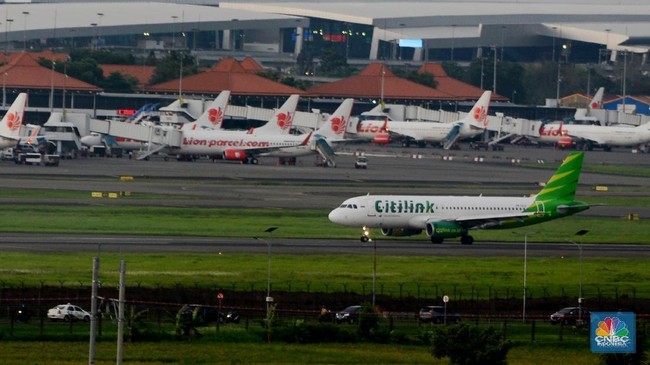
Global pressures are beginning to impact the national aviation industry. Increases in aviation fuel (avtur) prices and fluctuations in the rupiah exchange rate have intensified the operational burdens on airlines in recent times.
The government acknowledges that this situation is unavoidable, in line with geopolitical dynamics that directly affect industry costs. The Directorate General of Civil Aviation states that this circumstance is one of the primary factors being monitored to maintain stability in the aviation sector.
Director General of Civil Aviation at the Ministry of Transportation (Kemenhub) Lukman F. Laisa stated that the government is currently reviewing various proposals from industry players, including requests for tariff adjustments.
“The Directorate General of Civil Aviation at the Ministry of Transportation understands the dynamics faced by the national aviation industry as a result of global geopolitical developments that influence the rise in avtur prices, exchange rate fluctuations, and airline operational costs,” said Lukman in his statement on Thursday (26/3/2026).
These adjustment requests include fuel surcharges up to the Upper Fare Limit (TBA) submitted by airline associations. However, the government is not immediately approving these proposals without considering various aspects.
He emphasised that decisions regarding tariffs will be calculated carefully to avoid burdening the public while still ensuring the industry’s sustainability.
“In connection with the request for adjustments to fuel surcharges and the Upper Fare Limit (TBA) submitted by INACA, in principle, the Government considers various aspects, including the economic condition of airlines, public purchasing power, aviation industry sustainability, as well as safety, security, and service aspects,” said Lukman.
Amid this situation, the government is also continuously engaging in intensive communication with various parties in the aviation ecosystem. This step is taken to directly monitor developments in costs, particularly avtur prices, which are the largest component in airline operations.
“The Directorate General of Civil Aviation is also continuously coordinating with all stakeholders, including airlines, airport operators, avtur providers, and other related agencies to monitor avtur price developments and their impact on flight operations,” said Lukman.
In addition to tariff adjustments, stimulus options have also emerged. Nevertheless, the government’s fiscal space is one of the limiting factors considered in policy-making.
“Regarding stimulus policy proposals, the Government continues to pay attention to fiscal conditions and the broader public interest,” said Lukman.
Ultimately, the government emphasises that policy directions will continue to strive for a balance between industry interests and consumer protection. This is important to keep air transport services affordable without sacrificing safety and service quality aspects.
“We emphasise that every policy taken will prioritise a balance between the sustainability of the aviation industry and consumer protection, so that air transport services remain maintained in terms of safety, security, affordability, and national connectivity,” said Lukman.