
Airlangga warns Iran conflict escalation will drive up fuel prices in Indonesia
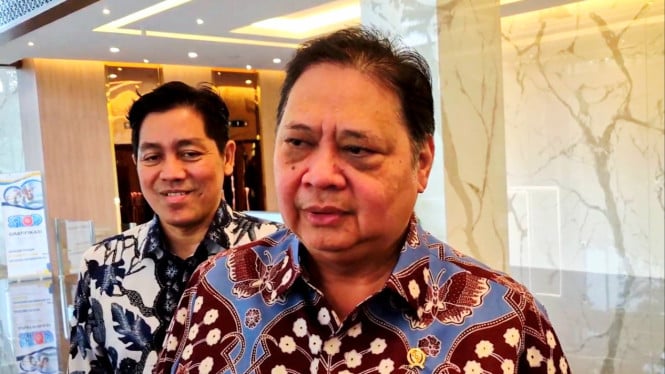
Jakarta – Coordinating Minister for Economic Affairs Airlangga Hartarto has warned that escalating conflict between Iran, the United States and Israel will drive up global oil prices, which will in turn affect fuel prices in Indonesia.
This mirrors similar geopolitical crises that have impacted Europe, particularly during the Russia-Ukraine war several years ago, when global oil prices surged and Indonesian fuel costs increased accordingly. Indonesia’s fuel supply remains heavily dependent on imports, making it vulnerable to such international shocks.
“(Fuel prices) will automatically rise, just as they did during the Ukraine war,” Airlangga said during a statement at the Coordinating Ministry for Economic Affairs in Jakarta on Monday, 2 March 2026.
Consequently, Airlangga confirmed that the government will continue to monitor geopolitical developments in Iran and the region, as these have already disrupted global logistics and oil distribution routes, with blockades affecting the Strait of Hormuz and the Red Sea.
Airlangga noted that escalating conflicts in the Middle East typically have significant effects on global oil distribution and pricing. He highlighted that oil supplies, already compromised by the disrupted Strait of Hormuz, face further pressure from the situation in the Red Sea.
However, the minister indicated that the government has several options to mitigate the direct impact on Indonesia’s domestic oil supply. He acknowledged that Indonesian oil sourcing is not limited to the Middle East, with significant supplies also coming from the United States. Through Pertamina, Indonesia has established cooperation agreements with major US oil and gas companies, including ExxonMobil and Chevron.
Airlangga did not rule out the possibility of Indonesia procuring energy commodities from other countries if the geopolitical situation in the Middle East persists long term.
“The government already has memoranda of understanding to secure supplies from non-Middle Eastern countries. For instance, Pertamina recently concluded an MOU with the United States,” he said.