
Airlangga Urges Asia to Strengthen Multilateralism and Regional Cooperation
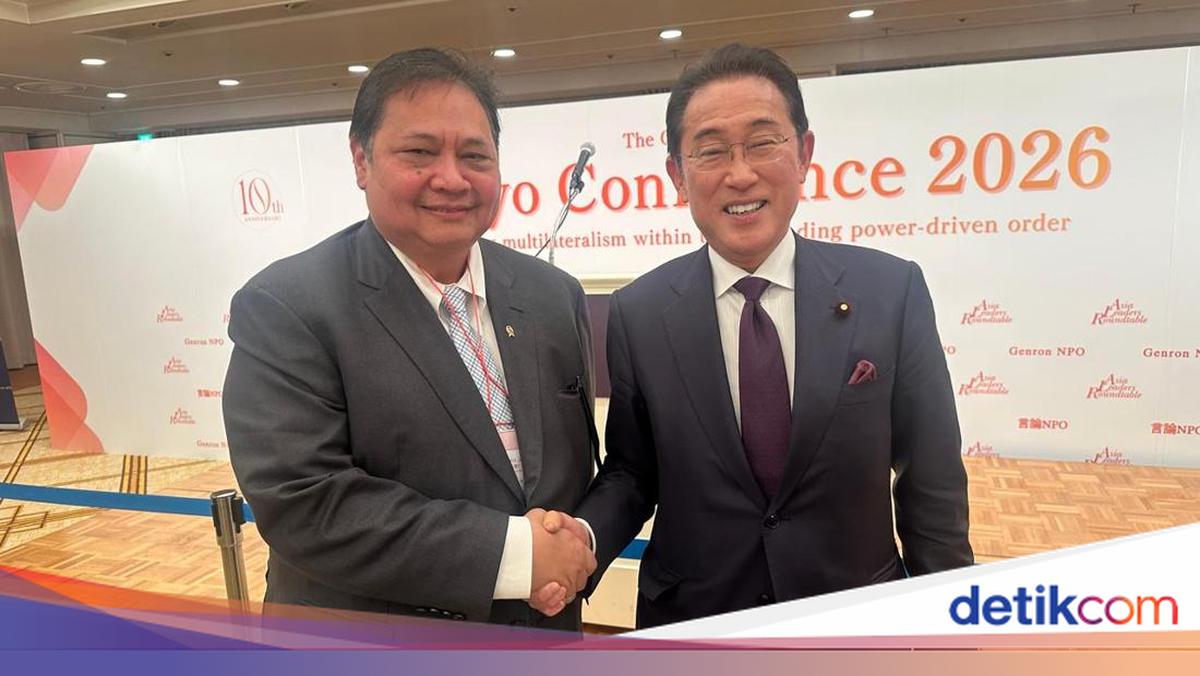
Coordinating Minister for Economic Affairs Airlangga Hartarto conveyed Indonesia’s perspective on global economic dynamics at the Asian Leaders Roundtable during the Tokyo Conference 2026 in Tokyo, Japan. Airlangga also emphasised the importance of strengthening regional cooperation in Asia.
“The current global order is undergoing significant change, marked by the rise of power-based politics, protectionism, and declining confidence in the multilateral system. This is reflected in limited progress in global forums such as the WTO in responding to new issues such as digital trade and global supply chain resilience, as well as an increasing tendency for countries to pursue unilateral and bilateral approaches,” Airlangga stated in a written statement on Thursday (12 March 2026).
He assessed that the heated global geopolitical situation, including the escalation of conflict between the United States and Israel with Iran, is also exerting pressure on global economic stability. This is evident from the surge in global oil prices exceeding USD 100 per barrel with ongoing fluctuations. Furthermore, the potential disruption of global energy routes through the Strait of Hormuz serves as evidence that the stability and development of the world economy is influenced by geopolitical dynamics.
In response to this situation, the Indonesian Government continues to strengthen national energy resilience, in line with the President’s direction through accelerating the development of energy based on domestic resources. Indonesia has currently implemented the Biodiesel B40 programme and is targeting acceleration towards B50.
The Indonesian Government is also promoting the development of bioethanol through the E10 programme, which will be accelerated towards E20. On the renewable energy side, Indonesia is also preparing the development of Solar Power Plant (PLTS) capacity to approximately 800 Gigawatts as part of a long-term strategy to strengthen energy transition and enhance national energy independence.
In facing these conditions, Asia is considered to play an important role as a balancing force capable of maintaining global economic stability. The Asia region is projected to contribute approximately 52% to global Gross Domestic Product (GDP) by 2050, making strengthening regional cooperation increasingly strategic.
Airlangga emphasised that Asia must remain committed to the principles of inclusivity and rules-based multilateralism. Regional cooperation through various frameworks such as ASEAN, regional economic partnerships, and multilateral forums such as the G20 are important instruments for strengthening economic integration, enhancing connectivity, and maintaining regional stability amid great power rivalries and competition from other regions.
Furthermore, Asia is also urged to prevent fragmentation of the global economy into competing blocs. Instead, the region needs to strengthen trade openness, economic connectivity, and complementary strategic cooperation to promote shared growth.
“Following President Prabowo Subianto’s direction, Indonesia itself must be at the centre of the global economic stage because of solid economic performance amid global uncertainty. Indonesia will also continue to pursue non-bloc diplomacy in navigating this global uncertainty,” said Airlangga.
On this occasion, Airlangga also stated that Indonesia’s economy is projected to grow by approximately 5.4% in 2026, with inflation remaining controlled and fiscal deficit maintained. Indonesia has also maintained a trade balance surplus for 69 consecutive months through early 2026.
The Indonesian Government continues to promote the “Indonesia Incorporated” approach, which is the synergy between the Government, the business community, and all stakeholders to strengthen national economic transformation and enhance global competitiveness.
At the conclusion of his remarks, Airlangga emphasised that Asia has a great opportunity to become a stabilising force in the global economy if the region remains committed to openness, regional cooperation, and strengthening an inclusive and sustainable economic system.
“If Asia remains committed to the spirit of regional openness and rejects a zero-sum approach in great power rivalries, then the twenty-first century can truly become the Asian century,” Airlangga concluded.
For information, the event was directly led by former Japanese Prime Minister Fumio Kishida, with former Indonesian President Susilo Bambang Yudhoyono as Co-Chair. The event was attended by numerous regional economic and policy figures, including former Singapore Deputy Prime Minister Heng Swee Keat, former Indonesian Finance Minister Sri Mulyani Indrawati, former Reserve Bank of India Governor Duvvuri Subbarao, former Bank of Thailand Governor Tarisa Watanagase, former ASEAN Secretary-General Ong Keng Yong, and former Malaysian Trade Minister Tengku Zafrul Tengku Abdul Aziz.
Accompanying Coordinating Minister Airlangga at the Asian Leaders Roundtable were Secretary of the Coordinating Ministry for Economic Affairs Susiwijono Moegiarso and Deputy for Commerce Coordination and Digital Economy Ali Murtopo Simbolon.