
Airlangga Says 1,819 Indonesian Product Tariff Lines Granted Duty-Free Access to US
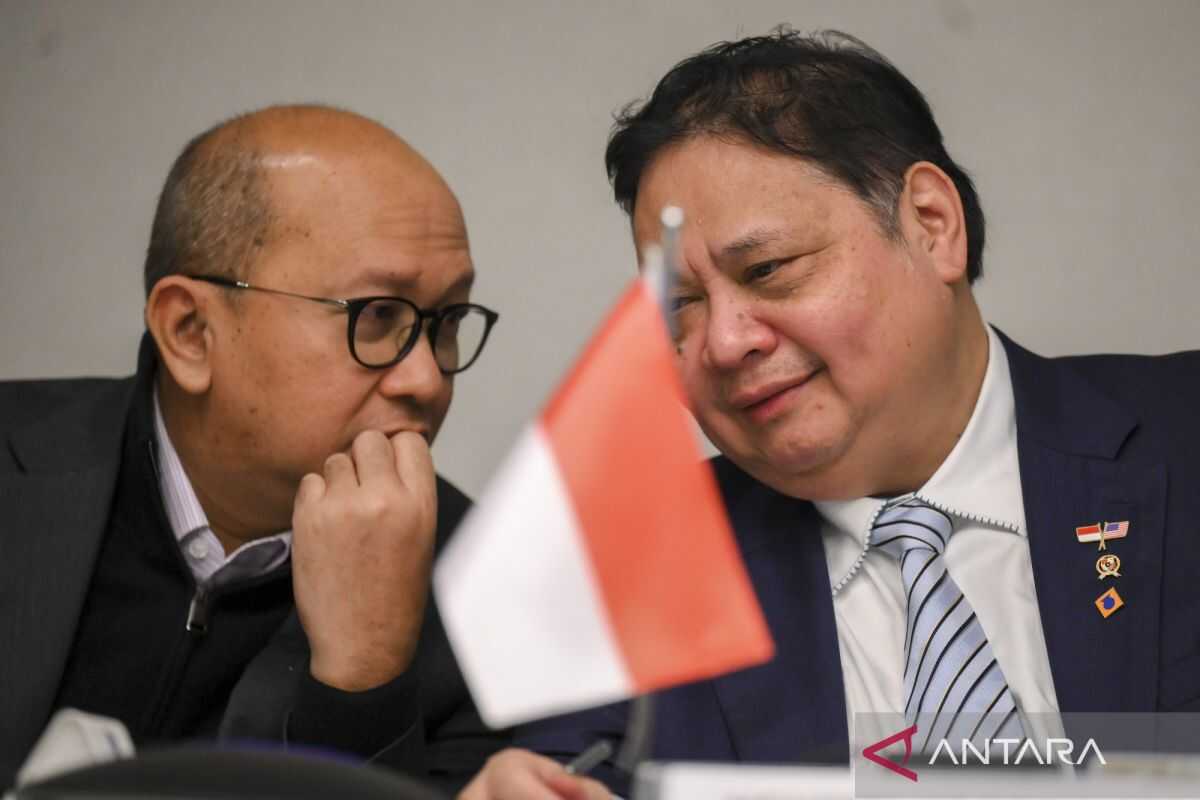
Jakarta (ANTARA) — Coordinating Minister for Economic Affairs Airlangga Hartarto announced that 1,819 tariff lines covering Indonesian products will receive zero per cent import duty access to the United States market.
The facility is the final outcome of Indonesia-US trade tariff negotiations set out in the Agreement on Reciprocal Trade (ART).
“Under this ART there are 1,819 tariff lines for Indonesian products, covering both agricultural and industrial goods, including palm oil, coffee, cocoa, spices, rubber, electronic components including semiconductors, and aircraft parts — all at zero per cent tariff,” Airlangga said at a virtual press conference in Jakarta on Friday.
In addition, Indonesia and the US agreed on a zero per cent tariff scheme for textile and garment products through a Tariff Rate Quota (TRQ) mechanism.
The scheme allows a specified volume of Indonesian textile and garment exports to enter the US market duty-free. However, the quota will be determined based on the volume of textile raw materials imported by Indonesia from the US, such as cotton and man-made fibre.
“This naturally benefits four million workers in the sector, and if we calculate the wider impact, it significantly affects 20 million Indonesians,” Airlangga said.
Overall, the US government will continue to impose a reciprocal tariff of 19 per cent on imports from Indonesia. Nevertheless, the 1,819 tariff lines and the identified textile products under the agreement have been granted a zero per cent tariff exemption.
As part of the deal, Indonesia will in turn provide zero per cent tariff access for a number of US products, particularly agricultural commodities such as wheat and soybeans.
“This means Indonesian consumers will pay zero per cent on goods produced from soybeans or wheat — in this case noodles, or tofu and tempeh. So our people will not bear any additional costs for raw materials we import from the United States,” the Coordinating Minister explained.
Both countries also agreed not to impose import duties on digital economy transactions. This policy is in line with Indonesia’s position of extending the same treatment to other trading partners, including European nations.
“Indonesia also supports limited cross-border data transfers in accordance with prevailing Indonesian law, and also recognises that the United States will provide consumer data protection equivalent to the consumer data protection enforced in Indonesia,” he added.
The government also committed to easing import licensing and standardisation for US industrial and agricultural products, as well as reducing tariff and non-tariff barriers, particularly in the information and communications technology, health, and pharmaceutical sectors.
Airlangga further explained that, procedurally, the ART will come into effect 90 days after all legal processes in each country have been completed. In Indonesia, this includes consultation with the House of Representatives (DPR RI), whilst in the US it will go through internal congressional mechanisms.
“This agreement also aims to achieve Golden Indonesia, and so it is also referred to as a New Golden Age for both Indonesia and the United States,” he said.
Both nations also noted commitments encompassing the purchase of approximately US$15 billion in US energy commodities, the procurement of Boeing aircraft worth approximately US$13.5 billion, and the purchase of US agricultural products exceeding US$4.5 billion.