
Airlangga Responds After US Supreme Court Strikes Down Trump's Trade Tariff Policy
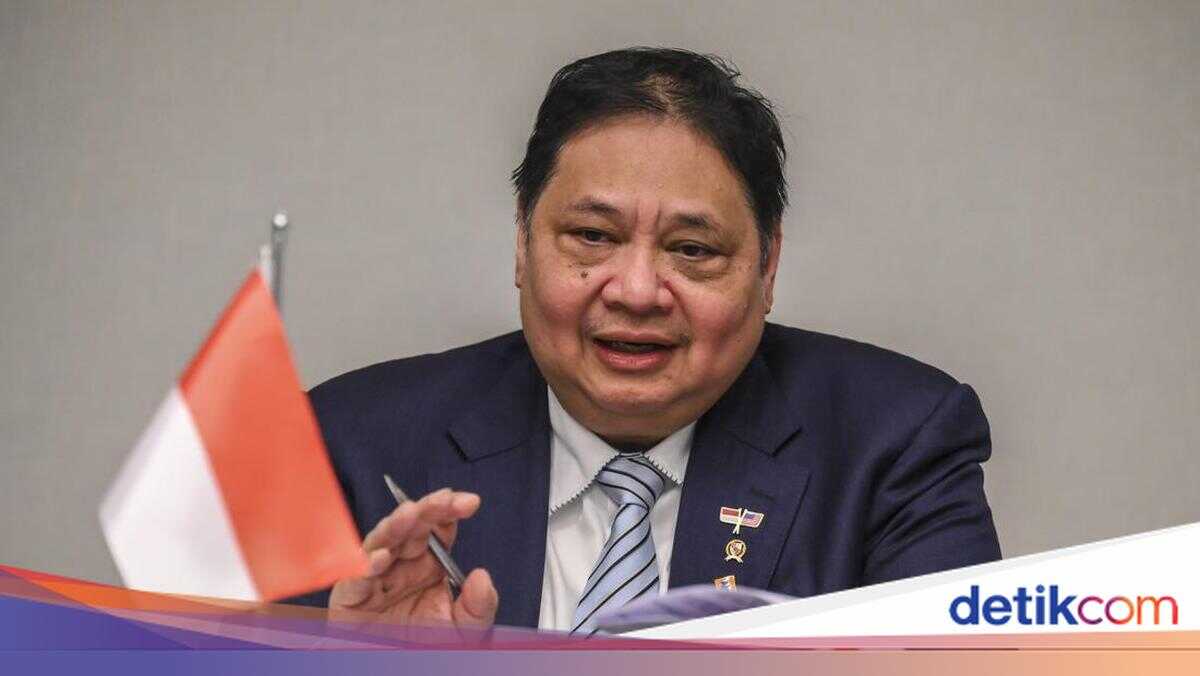
Coordinating Minister for Economic Affairs Airlangga Hartarto has responded to the United States Supreme Court’s decision to strike down President Donald Trump’s global reciprocal tariff policy. Airlangga stated that for Indonesia, the agreement with the US is still being processed.
“For Indonesia, which has already signed an agreement — this is a bilateral agreement between two countries — it is still being processed because the agreement requires a 60-day implementation period after signing, during which each party consults with the necessary institutions,” Airlangga said in a press statement on the Presidential Secretariat’s YouTube channel on Saturday (21/2/2026).
Regarding the ruling, Airlangga said the Indonesian Government would discuss the matter with the House of Representatives (DPR). He noted that the government still has time to deliberate on the agreement with the US.
“We have been coordinating with the USTR and they said there will be a cabinet decision regarding those who have already signed agreements. Thankfully, Indonesia has already signed an agreement, and what Indonesia has requested is that whilst the standard rate for others is 10 per cent, the items already granted zero per cent tariffs should remain so,” Airlangga said.
“Some of these are already covered under separate executive orders for agriculture, so those have not been overturned. However, the zero per cent tariffs also cover supply chains for electronics, as well as crude palm oil, textiles, footwear and others. So we are waiting for the outcome over the next 60 days,” he added.
Airlangga further stated that he had already reported to President Prabowo Subianto, who instructed that the policy be studied thoroughly.
“We have already reported to the President and he asked us to study all potential risks that may arise. Indonesia is prepared for various scenarios because the possibility of the US Supreme Court ruling had already been discussed with the USTR before we signed the agreement,” he said.
Previously, the US Supreme Court ruled that Donald Trump’s tariff policy imposed on numerous countries violated the constitution. The President was found to lack the inherent authority to impose sweeping tariffs on any country.
Trump had used the International Emergency Economic Powers Act (IEEPA) of 1977 as the legal basis, which grants the president power to “regulate” trade in response to emergencies.
However, Trump’s tariff policy provoked strong protests both domestically and internationally. Companies complained about the sudden tax increases on goods entering the US and expressed concern that prices would rise significantly.
Lawyers representing several US states and small business owners subsequently challenged Trump’s policy before the Supreme Court. They argued that the law Trump used to impose the charges made no mention whatsoever of the word “tariff”.
The plaintiffs also emphasised that the US Congress did not grant taxing authority to the president, let alone give the president “unlimited power” to nullify existing trade agreements and tariff regulations.