
Airlangga Projects Indonesia's Economy to Grow 5.5% in Q1 2026, Supported by Consumption and Investment
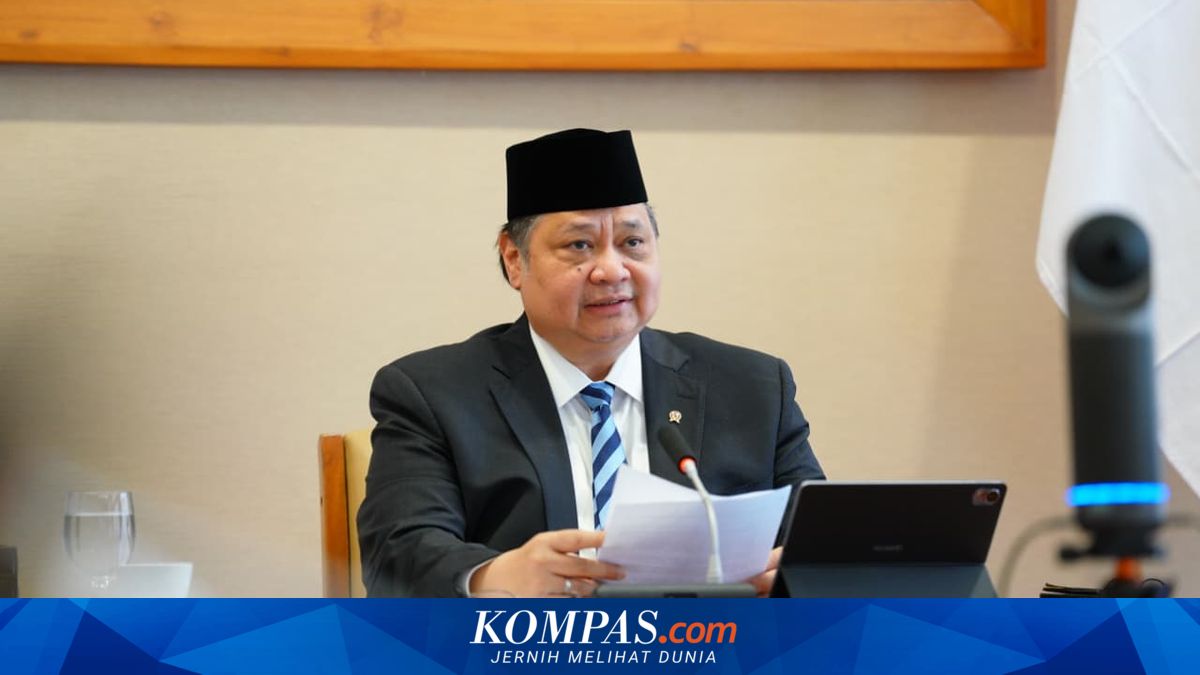
JAKARTA - Coordinating Minister for the Economy Airlangga Hartarto projects Indonesia’s economic growth for the first quarter of 2026 to be around 5.5% year-on-year. This projection comes amid ongoing global pressures.
Airlangga assesses that the domestic economic conditions remain strong. Household consumption and government spending are the main supports at the beginning of the year.
“Although awaiting the release from the BPS Chief, we have several times predicted that growth in the first quarter is fundamentally quite good, and the figure, if there are no protests, is greater than or equal to 5.5%,” said Airlangga during a press conference on first-quarter 2026 investment realisation at the Investment Coordinating Board (BKPM) office in Jakarta on Thursday (23/4/2026).
Several macro indicators show stable conditions. Bank Indonesia has held the benchmark interest rate at 4.75%. Manufacturing activity remains in the expansionary zone with an index above 50.
External performance is also maintained. The trade balance has recorded a surplus for 70 consecutive months. Foreign exchange reserves stand at $148.2 billion or approximately Rp 2,400 trillion, assuming an exchange rate of Rp 16,200 per US dollar.
From the fiscal side, the state budget deficit is recorded at around 0.93% of gross domestic product (GDP). This figure indicates that fiscal discipline is still maintained even as the government conducts expansion.
Investment also serves as an important support. Investment realisation in the first quarter of 2026 reached Rp 498.8 trillion. This figure exceeds the quarterly target.
Airlangga stated that investment will continue to be encouraged in subsequent quarters. The government is preparing various follow-up policies to maintain growth.
“This year’s investment target is more than Rp 2,000 trillion, precisely Rp 2,004 trillion. This is a large figure that needs to be maintained together because it becomes the lever for the economy to achieve a minimum growth target of 5.4% in 2026,” he explained.
Although the prospects appear strong, global risks still loom. Conflicts in the Middle East have the potential to trigger an increase in world oil prices. This situation could put pressure on the national economy, particularly from the inflation and fiscal sides.
Airlangga emphasised that the government will continue to monitor global developments. Economic stability is the focus to keep growth maintained throughout the year.