
Airlangga Outlines Strategy to Drive Indonesia's Economy to 5.4% Growth in 2026
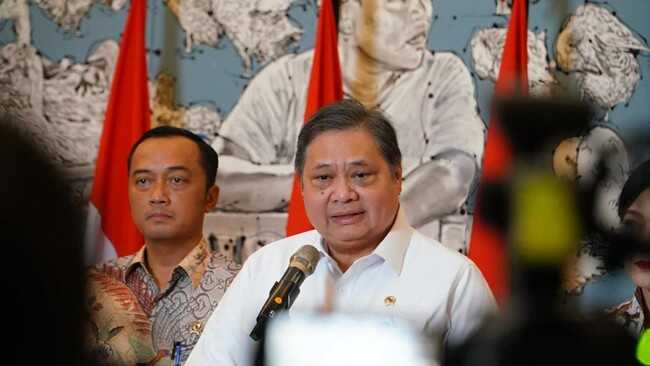
Jakarta — CNBC Indonesia — Coordinating Minister for Economic Affairs Airlangga Hartarto outlined the government’s strategy to achieve 5.4% economic growth in 2026. Airlangga said that regarding the growth target for 2026 of 5.4%, the government will focus on priority sectors: agriculture, manufacturing, the digital economy, and energy resilience. In addition, a number of national priority programmes are being pushed to achieve that 5.4% growth. ‘Various national priority programmes, including the Makan Bergizi Gratis programme, Koperasi Merah Putih, the commercialisation of Danantara, increased FDI, the construction of three million homes that are expected to boost domestic demand while expanding job creation in urban as well as rural areas, and productivity improvements through link and match of the workforce,’ Airlangga said at the Indonesia Economic Forum 2026, quoted on Thursday 5 March 2026.
Beyond strengthening domestic consumption, Airlangga said the government will continue to accelerate structural reforms through deregulation, OSS-based licensing simplification, and the formation of a debottlenecking task force to address investment bottlenecks.
Development of Special Economic Zones (KEK) and the national downstreaming programme will also continue to be promoted to increase the value added of industry and job creation.
Meanwhile, in the financial sector, the Government is strengthening market deepening through increased transparency of the capital market and expanded participation of domestic institutional investors. The launch of a bullion bank has also been a strategic move in providing a safer investment instrument amid global volatility.
Then, to maintain growth momentum in the short term, the Government is preparing various stimuli ahead of Idulfitri, including transport discounts, food assistance to 35.04 million beneficiary families, and the disbursement of Tunjangan Hari Raya (THR). These stimulus measures are expected to accelerate household spending and push economic growth in Q1 2026 to as high as 5.5% year-on-year.
He emphasised that the growth achievement of 5% is the result of synergy between the consumer sector, investment, and export sectors, as well as policy interventions through various social protection programmes and fiscal stimuli to safeguard purchasing power.
Going forward, the Government will continue to strengthen growth sustainability through increasing the tax ratio, digitisation of the tax system, and investment in human resources development, including the Makan Bergizi Gratis programme.
One of the strategies to increase revenue through taxation is the implementation of Coretax. ‘Because if Coretax is implemented, it could add perhaps 2-3% from VAT alone. So we remain optimistic about revenue improvements, which will make the economy more solid,’ Airlangga said.