
Airlangga: Indonesia's Economy Needs to Grow 6.7 Percent to Achieve Developed Nation Status by 2045
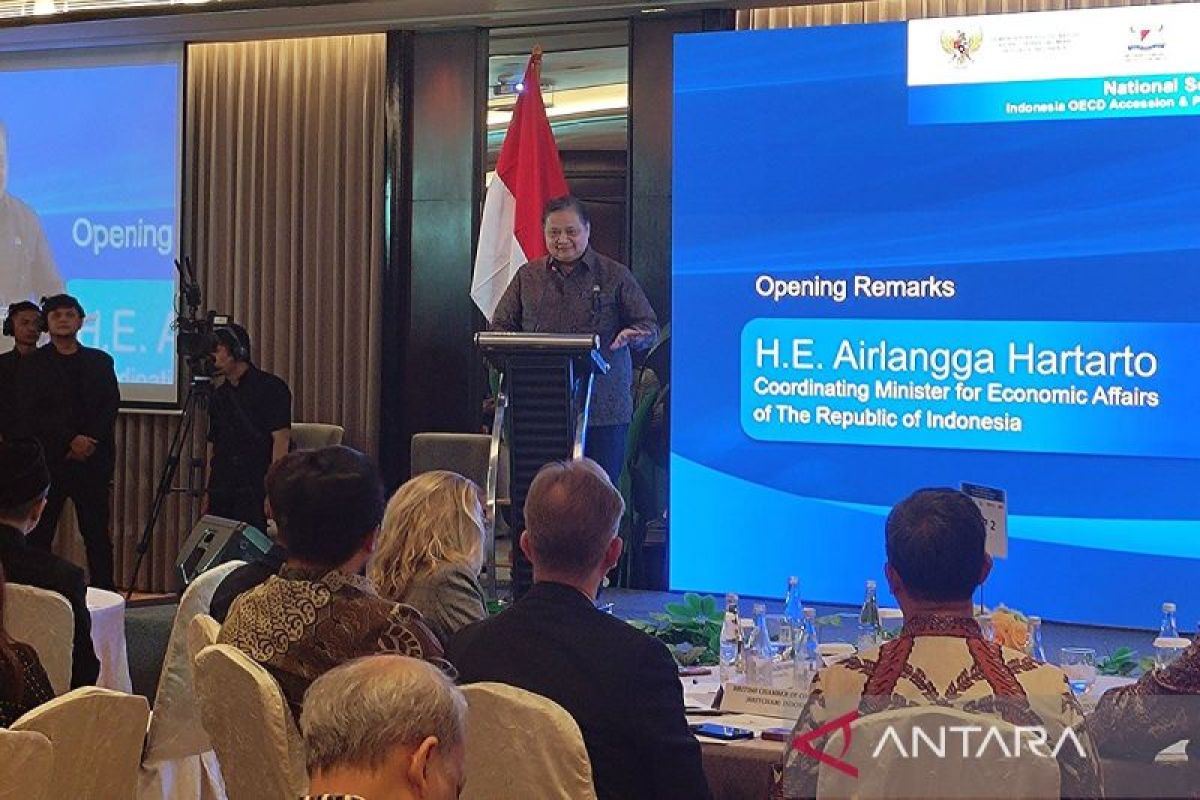
To become a high-income country (developed nation) by 2045, Indonesia needs to grow beyond 5 percent. That means Indonesia needs to achieve economic growth of at least 6.7 percent. Jakarta (ANTARA) - Coordinating Minister for the Economy Airlangga Hartarto said Indonesia needs to push economic growth to around 6.7 percent to meet the target of becoming a developed nation by 2045. He stated that this growth is necessary for Indonesia to escape the middle-income trap and enhance national economic competitiveness. “I think, with the aspiration for Indonesia to become a high-income country (developed nation) by 2045, Indonesia needs to grow beyond 5 percent. That means Indonesia needs to achieve economic growth of at least 6.7 percent. Therefore, the President is strongly encouraging us, even though we are facing a global situation full of challenges,” Airlangga said at a national seminar in Jakarta on Tuesday. He explained that the current global situation is marked by uncertainty impacting various sectors, including energy, food, and supply chains. According to him, the government is responding to this situation by strengthening national economic resilience through various strategic policies, including in the energy and food sectors. Airlangga added that Indonesia continues to maintain economic stability by relying on domestic strengths, including domestic consumption which is the main pillar of the economy. “We need to maintain consumer confidence because domestic consumption is the main pillar of the economy,” he said. He noted that domestic consumption contributes around 54 percent to national economic demand, so it needs to be maintained through adaptive policies. In addition, the government is also promoting energy diversification to reduce import dependency and maintain supply stability. “The government continues to encourage increasing biodiesel blending to B50 to reduce energy import dependency,” he said. In the food sector, the government is also maintaining supply stability through controlling production costs, including gas prices as raw materials for fertiliser. Airlangga said Indonesia has a surplus of urea fertiliser production and exports around 1.5 million tonnes every year. “For urea fertiliser, we have a surplus and even export around 1.5 million tonnes every year,” he revealed. He added that several countries such as India, Australia, and the Philippines have requested fertiliser supply support from Indonesia amid global supply chain dynamics. According to him, this situation demonstrates Indonesia’s increasingly strong position in supporting food security, both domestically and globally. Airlangga assessed that these various measures are part of the government’s strategy to keep economic growth stable amid global pressures. He emphasised that the government will continue to promote flexible and responsive policies to ensure that the economic growth target can be achieved.