
Airlangga: Indonesia's Economy Grows 5.11%, One of the Highest in the G20
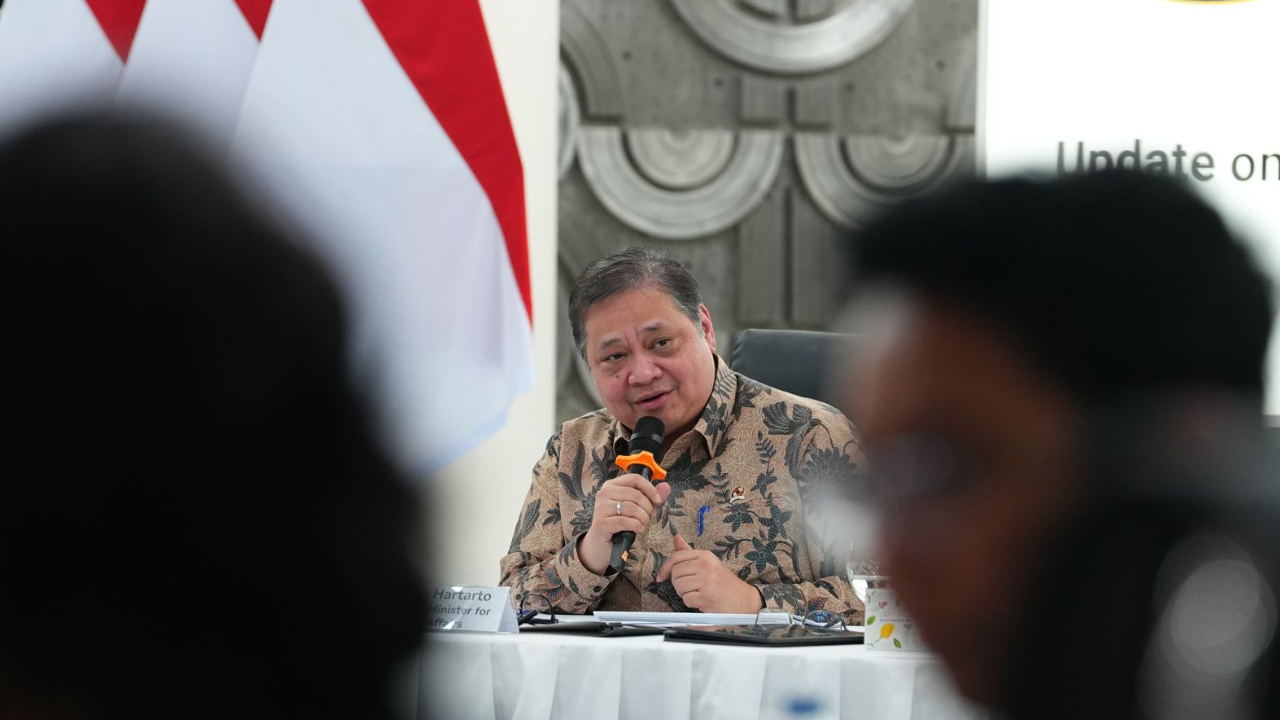
Amid increasingly complex global economic pressures, Indonesia has succeeded in maintaining solid growth momentum. Coordinating Minister for the Economy Airlangga Hartarto revealed that the national economy grew by 5.11% throughout 2025, exceeding the global projection average of only 2.6 to 3.3% according to the IMF, OECD, and World Bank. This achievement positions Indonesia among the countries with the highest growth rates among G20 members. Airlangga noted that the foundation of this growth is supported by strong domestic demand, encompassing household consumption, investment, and government expenditure. Household consumption itself contributes up to 54% to Gross Domestic Product (GDP), as reflected in the Mandiri Spending Index at a level of 360.7. “The economic growth projection for this year is above 5.3%. And for the first quarter of this year, we are optimistic that Indonesia’s economic growth will be around 5.5%,” said Coordinating Minister Airlangga, as quoted from Antara on Tuesday (14/4/2026). Entering the second quarter of 2026, several macroeconomic indicators are still considered healthy. Inflation is controlled, the trade balance has recorded a surplus for 70 consecutive months, and foreign exchange reserves stand at US$148.2 billion. The manufacturing index remains in the expansion zone at 50.1. From the external sector, exports of flagship commodities such as coal, rubber, nickel, copper, and aluminium reached US$47 billion, seen as a natural buffer against pressures in the oil and gas sector. In the food sector, national rice production is approaching 34.7 million tonnes, with Bulog reserves nearly reaching 4.6 million tonnes—one of the largest in history. Meanwhile, in the energy sector, the B50 programme is driving self-reliance, recording an energy surplus of 4.84 million kilolitres. From the fiscal side, the State Revenue and Expenditure Budget (APBN) is also functioning as a shock absorber for economic volatility through various stimuli, from food assistance and energy subsidies to transportation discounts, with a total value of around Rp11.92 trillion. The APBN deficit as of March 2026 is maintained at 0.93% of GDP. Transactions using local currencies have also seen a significant surge. “Indonesia’s local currency transactions in 2025 increased to US$25.6 billion. This figure is double that of 2024, with countries such as Malaysia, South Korea, Thailand, Japan, and China already accepting Indonesian QRIS payment transactions,” said Airlangga on Tuesday (14/4/2026). From the social perspective, the poverty rate has fallen to 8.25%, unemployment has shrunk to 4.7%, and the Gini ratio is at 0.363. Investment realisation throughout 2025 also succeeded in absorbing around 2.71 million new workers. The government is accelerating the downstreaming programme, which is a priority of President Prabowo Subianto. Throughout 2025, investment in this sector reached Rp584.1 trillion or equivalent to US$36.5 billion, growing 43.3% annually and contributing 30.2% to total national investment. To strengthen the business climate, the government has formed the Task Force for Accelerating and Resolving Investment Issues (Satgas P2SP) and carried out regulatory reforms through Government Regulation Number 28 of 2025, including simplification of risk-based licensing through the OSS-RBA system. Airlangga also emphasised Indonesia’s attractiveness to foreign investors in the digital and technology sectors. “Indonesia has land, competitive energy prices, and clean energy. Most US companies, or even regional companies including China, are committed to investing in Indonesia’s data centres,” he said. On the international stage, Indonesia is also expanding its network of economic cooperation with the European Union, Canada, and the Eurasian region, while strengthening its active role in various multilateral forums such as BRICS, ASEAN, RCEP, and CPTPP.