
Airbus, Boeing, and the Implementation of Robust Compliance in Indonesia
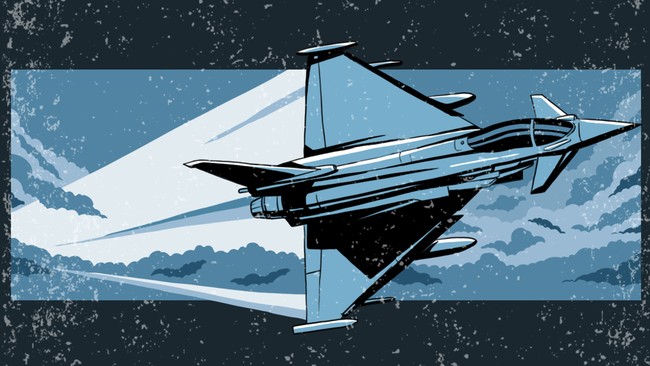
The change in government in Indonesia on 20 October 2024 has given rise to various new policies that differ from the previous administration, a natural occurrence that nonetheless poses challenges for business actors in adapting.
The same applies to the defence sector, particularly defence trade, where modernisation policies through procurement have taken on a new character: uncertainty. This uncertainty is reflected in the nature of acquisition planning in the Special Medium-Term Foreign Loan Plan List (DRPLN-JM) for 2025-2029, which can change at any moment according to the whims of decision-makers.
This situation also mirrors the fact that thorough planning processes involving the aspirations of prospective end-users do not occur, meaning whether the defence equipment purchased by the Ministry of Defence meets the needs of the TNI branches is essentially a gamble.
In the defence trade business, market uncertainty is one thing that entrepreneurs dislike because they must project revenues and profits within a predetermined timeframe. This is especially true for defence companies listed on the stock exchange, which must ensure they can distribute dividends to shareholders each year to keep their shares as investor favourites on the stock market.
Like it or not, wars such as those in Ukraine and Southwest Asia have attracted investors on the stock exchange to buy shares in defence sector businesses. This condition applies to foreign defence firms, but not to Indonesian defence companies, as none are deemed worthy of listing on the capital market.
With a foreign loan quota of US$28 billion, Indonesia is actually an attractive market for global defence manufacturers. Several global players such as Dassault Aviation, Naval Group, Leonardo, Fincantieri, Airbus, MBDA, RTX, Lockheed Martin, and Boeing view Indonesia as a promising market among developing countries.
Which manufacturer would not be tempted by the fortunes gained by Dassault Aviation in this country, worth €8 billion? It is regrettable that the great interest from these international manufacturers is not matched by assurances from Indonesia.
This includes openness regarding acquisition plans for weapon systems until the end of this decade. Thus, it is no surprise that some producers of war equipment, whose products Indonesia must buy whether it likes it or not, are adopting a passive stance and not actively conducting marketing campaigns.
Airbus and Boeing, recorded as global giants in the defence and aerospace industry, actually have market opportunities in Indonesia until 2030, given their highly specialised product portfolios. However, the Indonesian defence market conditions until the end of this decade appear unfriendly to these producers from Europe and the United States.
Besides uncertainty in defence spending planning, why is the Indonesian defence market situation considered unfriendly for Airbus and Boeing? Is it because of Indonesia’s fiscal conditions, which some parties assess as facing heavy pressure following the Iran war against the United States and Israel?
Observing closely what is happening in the Indonesian defence market at present, Airbus and Boeing face different challenges for their defence and aerospace products. Airbus has opportunities to export the A330 MRTT tanker-cum-transport aircraft and secure follow-on orders for the A400M transport aircraft.
The F-15EX is Boeing’s sole opportunity in the Indonesian defence market, as other portfolio items like the CH-47, P-8, and defence satellites are still far from reality. So, what challenges do the makers of the A350 and B787 face in their efforts to gain profits from the US$28 billion foreign loan allocation?
The challenge faced by Airbus in supplying war equipment to Indonesia concerns compliance in conducting business. The implementation of robust compliance by this European multinational manufacturer in executing contracts for two A400M aircraft is unpopular in Indonesia, even though Indonesia is one of the countries that formed the backdrop for why Airbus adopted such a policy from the mid-last decade.
For those unfamiliar with the background of the robust compliance policy, the procurement case of 55 A330 and A320 aircraft by the Garuda Indonesia Group involving Airbus and Rolls-Royce, which led to fines imposed on the two firms by the UK Serious Fraud Office and the US Department of Justice, was the trigger for Airbus to implement robust compliance.
The problem is that the defence business climate in Indonesia is unfriendly to the policy adopted by the manufacturer, which is the successor to several aircraft factories from France, Germany, and Spain. It is no surprise that plans for additional A400M remain unclear, while the agenda to acquire the A330 MRTT, which has been anticipated by the Indonesian Air Force since 2019, appears to have evaporated.
Instead of building air-to-air refuelling capabilities with the A330 MRTT, which can apply hose-and-drogue and boom methods, the Ministry of Defence has instead awarded a contract to a broker company to bring in Ilyushin Il-78 tanker aircraft from Russia, ironically named the MRTT programme by Indonesia.
The Il-78 is not a tanker aircraft capable of air-to-air refuelling using the boom method, besides the major technical challenges that the Indonesian Air Force would face if operating that aircraft. There is strong suspicion as to why Indonesia is not acquiring the A330 MRTT during the 2025-2029 period, as detailed in