
AirAsia Opens Route to Three Provinces, Targeting 67 Million Sulawesi Tourists
According to data from Badan Pusat Statistik (BPS) in 2025, domestic tourist movements to Sulawesi, South Sulawesi, Central Sulawesi, and Southeast Sulawesi totalled more than 67.4 million journeys. This phenomenal figure underpins the airline’s drive to deliver connectivity that not only links Java with Sulawesi, but also integrates with secondary cities such as Palu, Kendari, and Luwuk, and connects to an international network to Kuala Lumpur.
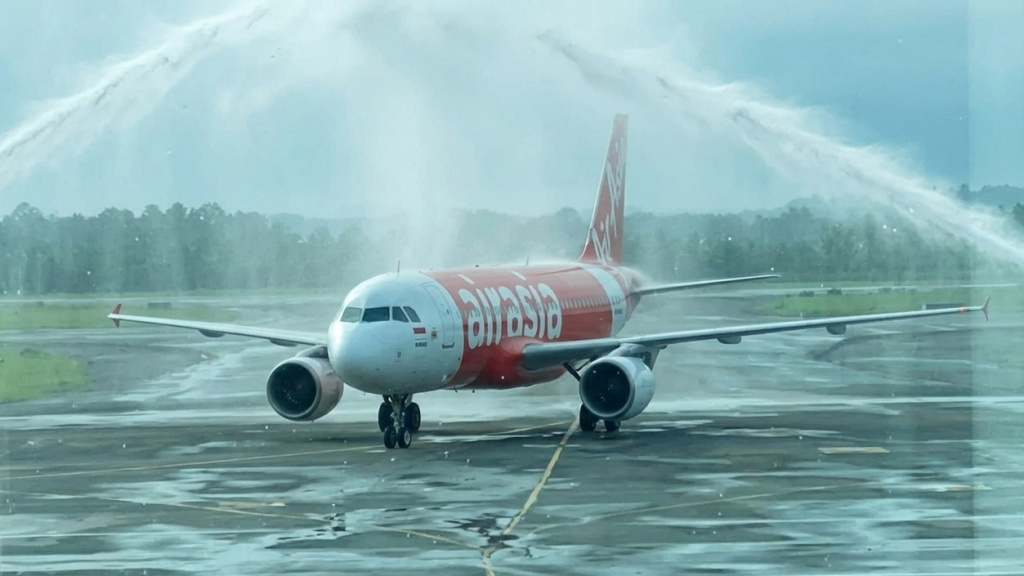
AirAsia has opened its inaugural Surabaya–Makassar route, with the service starting on Saturday, 7 March, flight number QZ 734. The aircraft, arriving at 07:29 WITA at Sultan Hasanuddin International Airport, carried 110 passengers from Surabaya and was greeted with a water salute as a symbol of official reception.
Captain Achmad Sadikin Abdurachman, Acting President Director of Indonesia AirAsia, revealed that the opening of this route is a direct response to the high mobility of people in eastern Indonesia.
The launch of the Surabaya–Makassar route forms part of a commitment to broaden national connectivity, particularly towards eastern Indonesia. Makassar will be strengthened as a virtual hub that makes it easier for people to reach various cities such as Luwuk, Palu, and Kendari in a single itinerary.
“We hope the introduction of this service will drive regional economic growth, widen access to tourism, and create more opportunities for the movement of people and business actors across Indonesia,” Sadikin said.
BPS data confirm the scale of the potential. In South Sulawesi alone, domestic tourist journeys totalled more than 42.5 million during 2025. In Central Sulawesi about 11.6 million journeys, and in Southeast Sulawesi about 13.3 million journeys in the same period. These figures reflect high mobility and the need for adequate air connectivity.
Sadikin added that the connectivity is already integrated with the AirAsia Group network. Passengers from Luwuk, Palu, and Kendari can now connect via Makassar and continue their international journey with fly-thru services to Kuala Lumpur without dealing with immigration formalities in Makassar.
“Under this scheme, people from various cities in Sulawesi have wider access to international destinations in a single sequence of flights. This network integration is expected to boost international tourist visits to Sulawesi, while strengthening the movement of domestic tourists through more connected and efficient travel options,” he explained.
Minggus Gandeguai, General Manager of PT Angkasa Pura Indonesia KC Bandara Internasional Sultan Hasanuddin, welcomed AirAsia’s strategic move. He said the route opening, integrated with Palu, Kendari, and Luwuk, marks a positive step in strengthening intercity movement in eastern Indonesia.
“We appreciate AirAsia’s move, which has long served the Makassar–Kuala Lumpur international route and now expands domestic services. The additional service demonstrates the airline’s confidence in the market potential in Makassar and surrounding areas,” Minggus said.
On its inaugural flight, AirAsia allocated eight frequencies. Minggus hopes this number will grow, particularly ahead of the Eid exodus (mudik).
“Alhamdulillah, ahead of the travel peak, the public can experience AirAsia’s service. We hope international flights can be added, not just to Kuala Lumpur,” he added.
Minggus emphasised Sultan Hasanuddin Airport’s significant transformation. From a terminal area of 51,000 square metres, it has expanded to 166,000 square metres and now operates 24 hours a day, with a terminal capacity of up to 15 million passengers per year.
There are nearby tourist attractions. We will link these flights with flagship destinations such as Takabonerate National Park in Selayar Islands Regency, Tana Toraja, Mamuju, and Bone. The airport can distribute traffic across the region, not only Sulawesi Selatan, because AirAsia offers competitive prices,” Minggus said.
With this new route, inter-island movement of people is expected to be smoother and more affordable. The increasingly integrated air connectivity between Surabaya and several cities in Sulawesi is believed to strengthen local economic growth, expand markets for entrepreneurs, open new opportunities for tourism development, and, of course, reinforce the equity of connectivity across eastern Indonesia.