
Air Ticket Prices to Rise 9-13%, Passenger Numbers Projected to Fall 10-15%
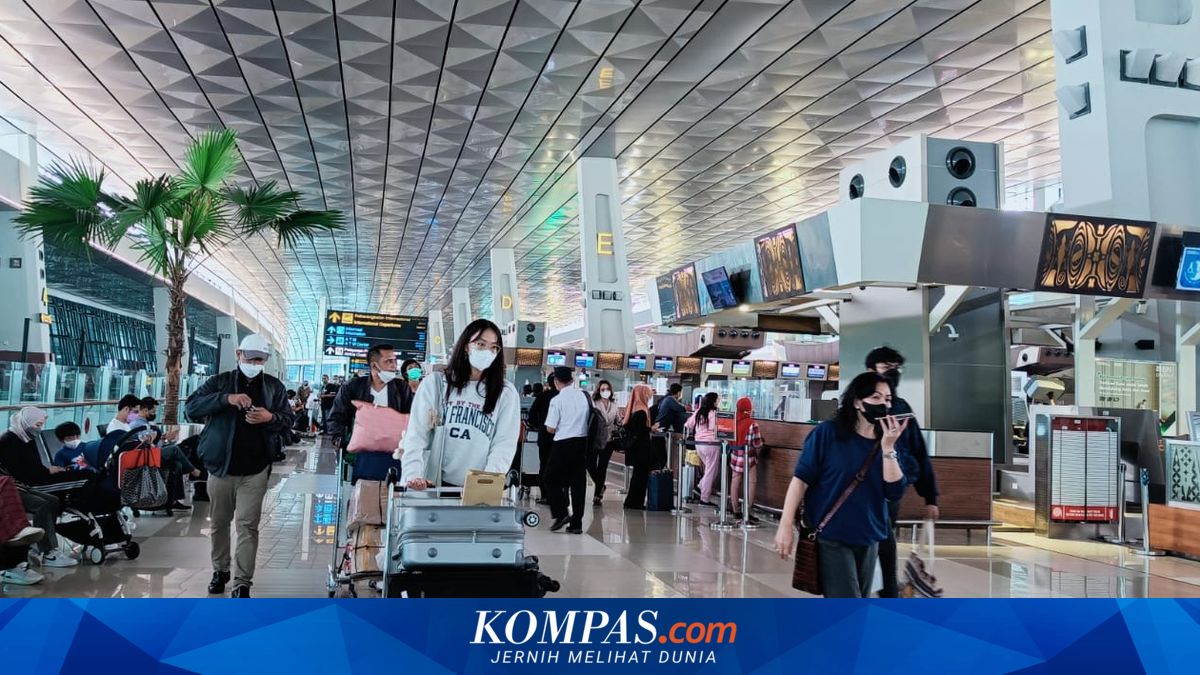
JAKARTA, KOMPAS.com - The government has allowed airlines to raise domestic air ticket prices by 9-13% due to the oil crisis stemming from the Middle East conflict, which has caused domestic aviation fuel prices to surge. This is deemed to impact a decline in passenger numbers.
“With the 9-13% increase, passenger projections will certainly be pressured by 10-15%, especially given the current uncertain economic conditions,” stated Revy Petragradia, a transportation observer from the Indonesian Transportation Society (MTI), in an official statement on Monday (13/4/2026).
Revy predicts a drop in passenger numbers in the near term. He mentioned that passenger projections could be pressured up to 10-15%, particularly amid unstable economic conditions.
On the other hand, the government is also reportedly set to eliminate other cost components, such as online booking admin fees. Regarding this, Revy Petragradia said that components like ticket distribution fees and admin fees only have a minor impact on the final price paid by passengers.
“Admin fees might have a slight influence, but it’s not significant. Airlines will adjust their base fares more,” he said.
As an effort to sustain the aviation industry, the government has also set a fuel surcharge of 38% for all types of aircraft, government-borne value-added tax (PPN DTP) of 11%, and the elimination of import duties on aircraft parts to 0%.
Revy views these steps as appropriate, since the structure of air ticket prices includes four main components that affect fares: fuel surcharge, base fare, value-added tax (PPN), and operational costs (airport tax).
“The business travel segment is potentially affected as well, particularly due to government restrictions on official trips. Meanwhile, during long holiday periods, the public is expected to still travel but tend to choose short-distance trips to cut expenses,” he said.
Revy suggests that airlines begin developing more adaptive business strategies, including integrating aviation services with the tourism sector.
“Not just selling tickets, but also combining them with hotel and tourism services in travel packages to make them more attractive and effective,” he concluded.
Previously, Coordinating Minister for the Economy, Airlangga Hartarto, took strategic mitigation steps to keep domestic air tickets affordable. One key policy is reducing import duties on aircraft parts to 0% from previously around Rp 500 billion per year.
The government is also preparing value-added tax incentives borne by the government (PPN DTP) of 11% for domestic economy class air tickets. The government has also adjusted the fuel surcharge policy or additional fuel costs. The upper limit for fuel surcharge is now set at 38% for aircraft with jet or propeller engines.
“The government is preparing strategic mitigation steps so that ticket prices remain affordable for the public. So, what we are safeguarding is the ticket prices,” Airlangga stated.