
Air pollution could shorten life expectancy
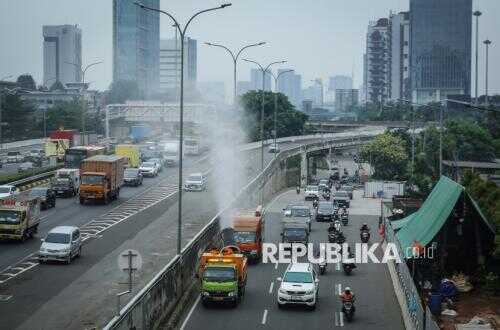
Jakarta’s Dinas Lingkungan Hidup (DLH) says air pollution does not only affect respiratory health but can also reduce life expectancy. Erni Pelita Fitratunnisa, head of the Pollution Control and Environmental Damage Division at DLH Jakarta, noted that exposure to fine PM2.5 particles is associated with an increased risk of premature death in various studies. PM2.5 are extremely small particles that are dangerous to health because they can reach into the lungs. “PM2.5 is essentially one particle containing many tiny, toxic sub-particles. It enters, among other places, the respiratory system, and ends up in the lungs,” she said on Wednesday (4 March 2026). She emphasised that air pollution can have a significant impact on vulnerable groups such as infants and the elderly. One disease commonly observed when air quality deteriorates is Acute Respiratory Infection (ISPA). Erni said monitoring of Jakarta’s air quality is continuously carried out through the Air Quality Monitoring System (SPKU). Information on Jakarta’s air quality is also updated via the JAKI application. When air quality in Jakarta worsens—particularly when PM2.5 exceeds the quality standard—the Jakarta Provincial Government will issue a public warning. The warning includes guidance on activities to be reduced, especially outdoor activities. In addition to respiratory problems, she said long-term exposure carries a risk of serious diseases; “There are many, and the risk includes cancer.” According to her, many sources contribute to air pollution in Jakarta. Not only from motor vehicles, but pollution can also originate from waste burning and other open burning activities. “Waste is also one of the pollutants, especially if waste burning is not controlled,” she said. Erni noted that waste burning is regulated in Regional Regulation Number 4 of 2019 on Waste Management, with penalties in the form of fines up to Rp 500 thousand. However, enforcement is often hampered by difficulty in identifying the perpetrators. She believes that increasing public literacy about air quality is a task that needs strengthening. By doing so, health risks—including the potential reduction in life expectancy—can be mitigated through changes in behaviour and more responsive policies to daily air quality conditions.