
Air pollution control requires cross-regional collaboration
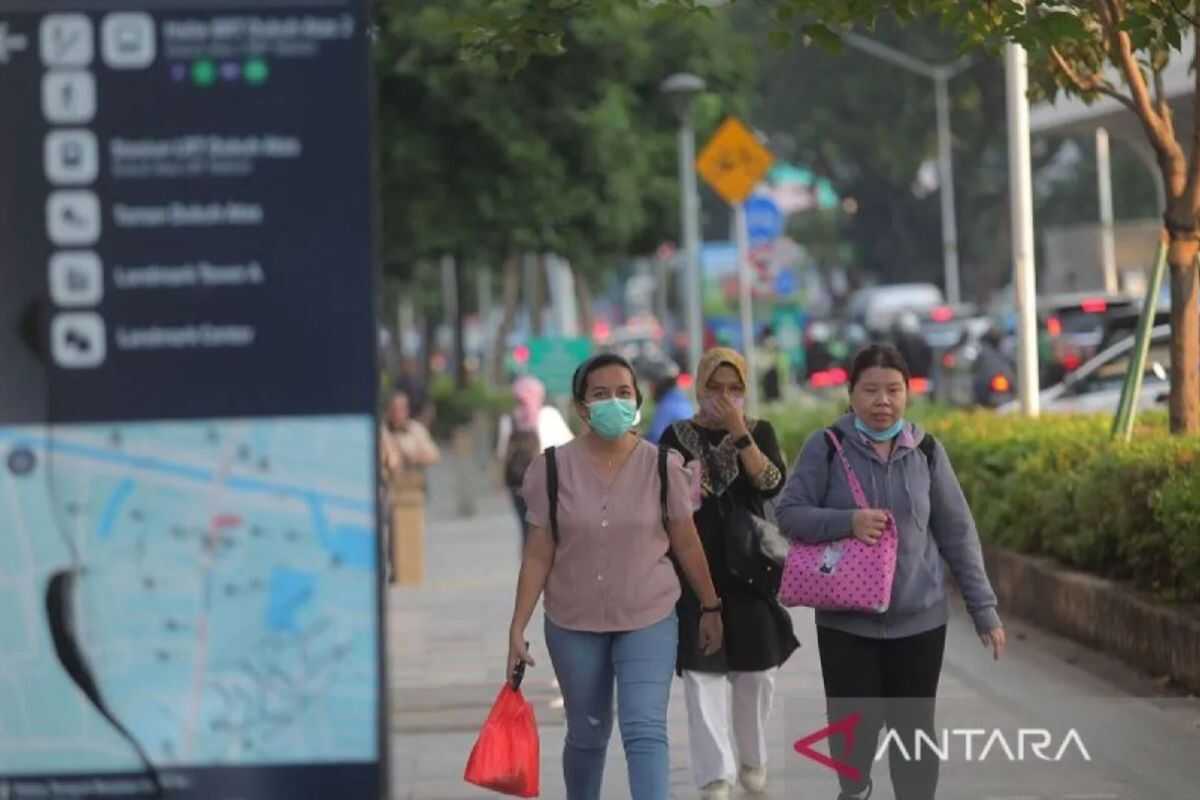
Jakarta (ANTARA) - The Jakarta Provincial Government has affirmed that controlling air pollution cannot be done by a single region in isolation, thus requiring integrated joint action between regional government organisations and cross-regional collaboration in the areas surrounding Jakarta.
“By strengthening the Air Pollution Control Strategy (SPPU), conducting data-based evaluations, and fostering cross-regional collaboration, efforts to control air pollution will be more focused and have a real impact on public health and the quality of the Jakarta environment,” said the Deputy Head of the Jakarta Environmental Agency (DLH), Dudi Gardesi Asikin, in a statement in Jakarta, Thursday.
This was echoed by researcher Muhammad Nur Ihsan Ayyasy from the Centre for Human Resources and Environmental Research at the University of Indonesia. He stated that cross-regional collaboration in Jakarta, Bogor, Depok, Tangerang, and Bekasi (Jabodetabek) is key to reducing air pollution.
According to him, although Jakarta’s air quality is often above the standard, the air quality in several surrounding areas is actually worse, making efforts to control pollution in Jakarta alone less significant.
“If Jakarta has taken various actions to control air pollution, but the surrounding areas do not take similar steps, the impact will not be optimal. Cooperation between Jabodetabek is key to truly reducing the pollution burden,” he said.
The strategy includes three main pillars, namely strengthening the governance of air pollution control, reducing emissions from mobile sources such as transportation, and reducing emissions from stationary sources such as industry and other activities.
These three pillars, he added, are translated into 16 programmes and 68 action plans that are implemented across regional government organisations.
Director of Clean Air Asia Indonesia, Ririn Radiawati Kusuma, added that evaluating the SPPU is an important step to ensure that policies and budget allocations are effective, targeted, and have a real impact on reducing air pollution.
“The evaluation is carried out through assessing the implementation of actions, the allocation and realisation of budgets, analysing changes in emission loads per sector, PM2.5 trends, and potential health impacts. This data-driven approach is important so that policy recommendations can be followed up,” she said.