
AI Must Be a Tool for Social Justice for Persons with Disabilities
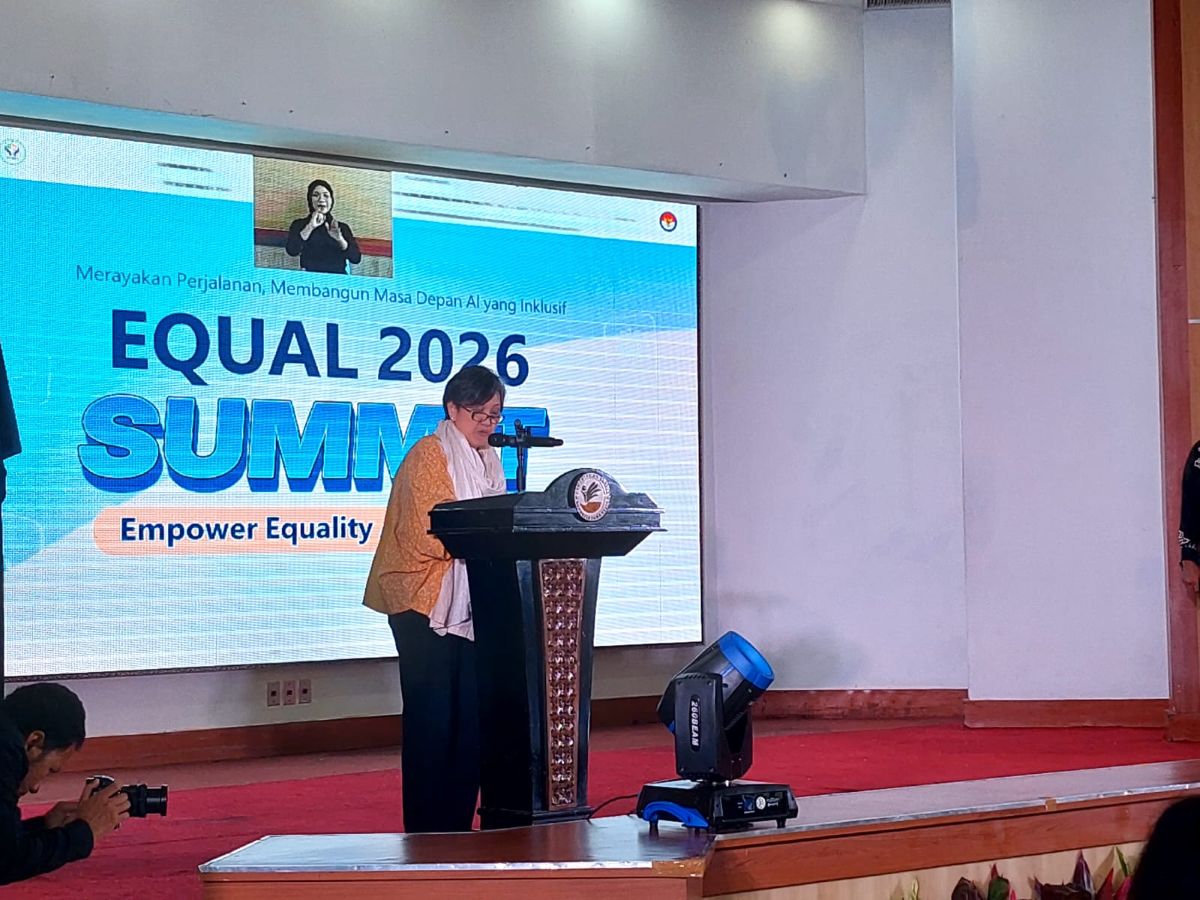
Vice Chair of the People’s Consultative Assembly (MPR) Lestari Moerdijat emphasised that artificial intelligence (AI) must serve as a tool for expanding rights and social justice, rather than creating new forms of discrimination against vulnerable groups, including persons with disabilities.
She made the statement at the Empower Equality AI Initiative (EQUAL) Summit organised by Alunjiva Indonesia and Microsoft Indonesia in East Jakarta on Monday (25 May).
Lestari stated that technology does not automatically exist in a neutral state but is shaped by human intentions in its creation and management.
“The most advanced technology is not that which replaces humans, but technology that makes humans more visible in the world,” she said.
She noted that AI development is part of a major civilisational shift that can bring progress but risks widening social inequality if not managed inclusively.
She stressed the constitution mandates the enlightenment of national life to include all citizens, including persons with disabilities, women, vulnerable groups, and those with limited access.
“A nation is not only those considered physically perfect, but all citizens,” she said.
Lestari warned that old forms of discrimination could resurface in new technology. Previously, discrimination was visible through limited access to facilities and jobs; now it can emerge through digital systems, algorithms, or technology access barriers.
She urged all stakeholders to ensure Indonesia’s digital transformation does not create new social inequalities. “Do not build a digitally unequal Indonesia,” she stressed.
She also highlighted the importance of accurate disability data for policy-making, noting discrepancies between official government data and ground realities regarding the number of persons with disabilities in Indonesia.
Lestari encouraged using technology and AI to build more integrated data systems for targeted policy interventions.
In the national context, she said Pancasila values should guide AI development. The second principle of human justice and civility and the fifth principle of social justice, she noted, affirm that technology must serve humanity.
“Appropriate AI is AI that stands with humanity, opens access, acknowledges diversity, and ensures social justice,” she said.
Alunjiva Indonesia’s founder, Nicky Clara, said AI and digital transformation must be accompanied by inclusive digital literacy to ensure technology benefits all societal layers.
“AI technology not only boosts efficiency and productivity but also opens new opportunities for innovation, skill development, and digital-based employment and entrepreneurship models,” Nicky said.
He added that access to literacy and technology capacity-building remains uneven, particularly for youth, persons with disabilities, and small and medium enterprises.
“Cross-sector collaboration is crucial to strengthen an inclusive technology ecosystem, expand learning access, and ensure digital transformation delivers broader societal benefits,” Nicky said.
Alunjiva Indonesia’s AI training, in collaboration with Microsoft Indonesia, has reached over 100,000 beneficiaries, with more than 15,000 participants obtaining AI competency certifications.