
AI Assessed to Improve Accuracy of Breast Cancer Diagnosis
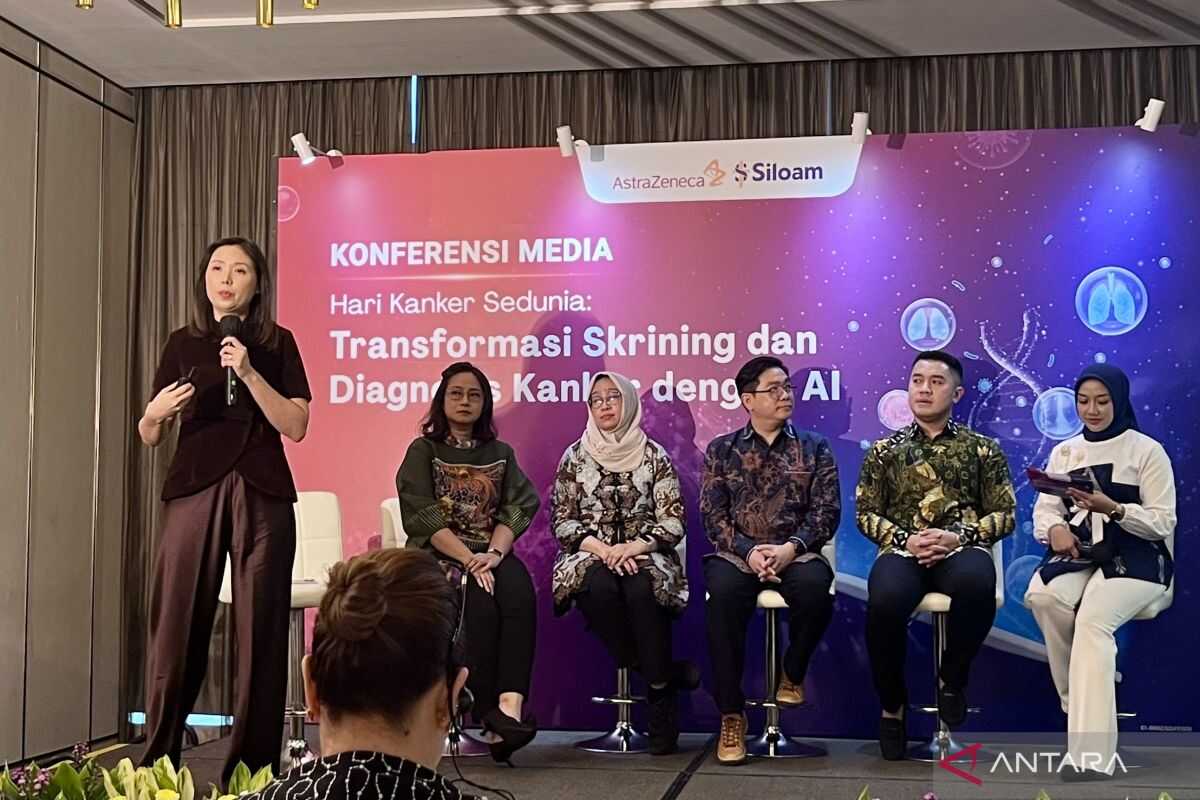
Jakarta (ANTARA) - The use of Artificial Intelligence (AI) is considered to help doctors assess the type of breast cancer more accurately, especially in identifying the Human Epidermal Growth Factor Receptor 2 (HER2) status, which is a protein that can trigger the growth of cancer cells more aggressively.
“Data from studies presented at the ASCO Annual Meeting 2025 shows that the use of AI as an aid in HER2 assessment can increase the detection of HER2-ultra low by 40% compared to conventional assessment. The accuracy of the assessment also increased to around 92%,” said Dr. Patricia Diana Prasetyo, MSi. Med, Sp.PA, a specialist in Anatomical Pathology, at a press conference for World Cancer Day entitled ‘Transformation of Cancer Screening and Diagnosis with AI’ in Jakarta, Wednesday.
She explained that HER2 examination is carried out through analysis of tumor tissue in the laboratory to determine whether patients can receive specific targeted therapy.
In addition, the doctor, who graduated from Diponegoro University, added that the consistency of results between doctors also increased from 66% to 82% with the help of AI, especially in the HER2-low and HER2-ultra low categories, which are very low levels of HER2 and are often difficult to recognize through manual examination.
In simple terms, the more accurately doctors assess the HER2 level, the more appropriate the therapy that can be given. Patients with HER2 positive or a certain level can receive targeted anti-HER2 therapy that works directly on the protein to inhibit cancer growth.
Based on GLOBOCAN 2020 data, breast cancer accounts for approximately 65,000 new cases and more than 22,000 deaths in Indonesia. Some cases are related to HER2 expression, which makes cancer grow faster than other types.
In line with this, Dr. Jeffry Beta Tenggara, Sp.PD-KHOM, a specialist in Internal Medicine, Subspecialist in Hematology Oncology, said that the use of AI helps accelerate the tissue analysis process and supports more timely decision-making regarding therapy.
He emphasized that the technology functions as an aid to doctors, not a replacement, with the final decision remaining in the hands of medical personnel who consider the patient’s condition as a whole.