
AHY Urges Data Centre Expansion to Prioritise Water Sustainability
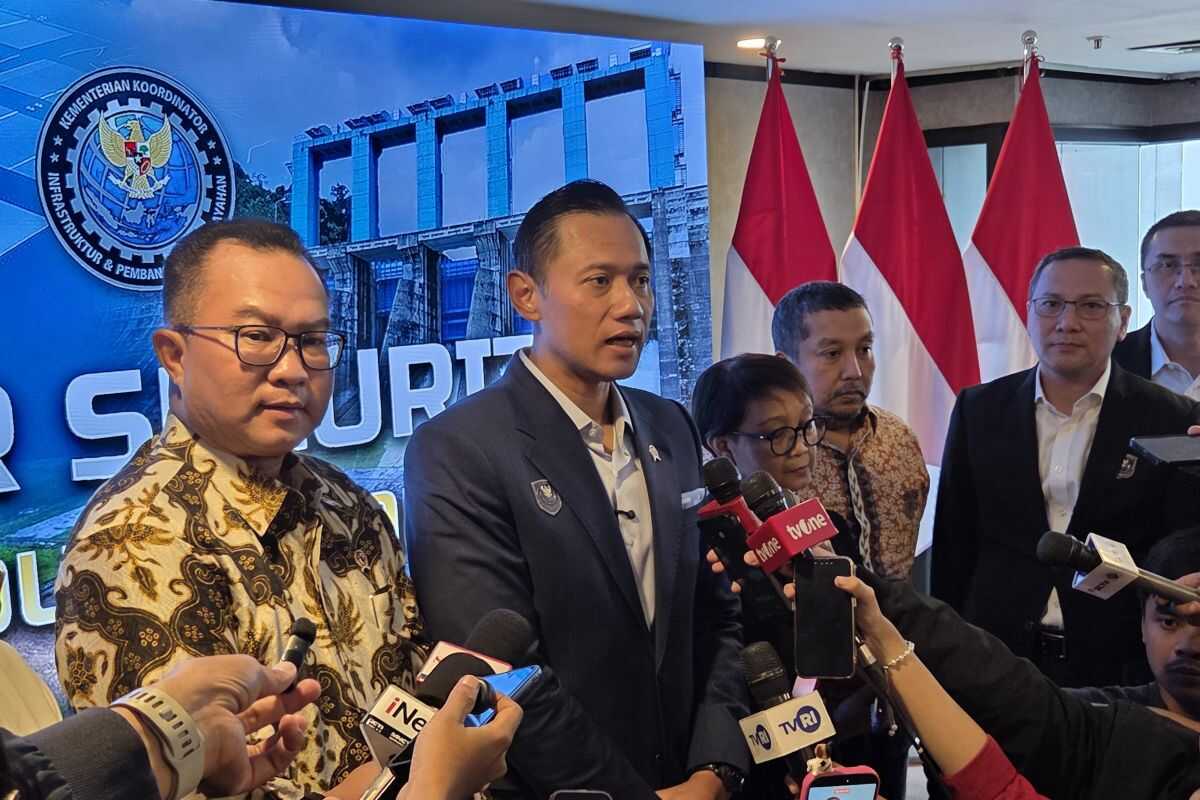
Jakarta (ANTARA) – Coordinating Minister for Infrastructure and Regional Development, Agus Harimurti Yudhoyono, has stated that the development of data centres must be balanced with strategies to ensure the availability of national water resources.
According to Agus Harimurti Yudhoyono, who is also known as AHY, the massive expansion of the digital industry has the potential to increase pressure on water supplies, especially as water is a key component in data centre cooling systems.
“We want to build these data centres throughout Indonesia, and even make Indonesia a hub for data centres in the Southeast Asian region. We need water, including for industrial boilers. So, this also needs to be carefully considered,” said AHY at a Water Town Hall Meeting in Jakarta on Tuesday (February 24).
During the same discussion, the UN Secretary-General’s Special Envoy for Water Issues, Retno Marsudi, said that water management can no longer be done in a sectoral or separate manner.
She emphasised the importance of involving various stakeholders across sectors, from agriculture and health to energy and the digital industry. She also underlined that the data centre industry is very water-intensive.
According to her calculations, for every 1 megawatt (MW) of IT load, cooling systems based on evaporative cooling or cooling towers can require 1.5 to 3 million litres of water per month.
However, on the other hand, she acknowledged that Indonesia’s future economy will heavily depend on the development of data centres and digital transformation. Therefore, the challenge is to ensure that the expansion of the industry remains in line with the sustainability of water resources.
“Speaking of even greater challenges, you can imagine that currently, there are still 2.2 billion people who do not have access to safe drinking water, and 3.5 billion people who do not have access to safe sanitation. So, in terms of numbers, it’s very large, and this must be addressed,” she said.
The large numbers indicate that the water crisis is a global challenge that cannot be solved in isolation.
“Therefore, we must abandon the siloed approach, the approach of acting independently. Because water teaches us one important thing, namely that we cannot solve the water crisis alone,” she added.
Investment in the water sector is a crucial element in supporting sustainable development.
She said that global funding needs for the water and sanitation sector are estimated to reach around 600 billion US dollars per year. Meanwhile, the funding gap to achieve Sustainable Development Goal (SDG) number six remains in the range of 131-140 billion US dollars per year.
Citing a World Bank study, the former foreign minister said that every 1 US dollar of investment in the water sector can generate economic returns of around 6.8 US dollars, through increased productivity, reduced healthcare costs, and social stability.
Retno also referred to an analysis by the World Resources Institute (WRI), which estimates that providing access to water for the entire world population requires allocating about 1 per cent of global Gross Domestic Product (GDP), or about 0.29 US dollars per person per day.
According to Retno, the challenges of financing the water sector are becoming more complex because water plays a connecting role across sectors, from agriculture and energy to health and industry.
Globally, the agricultural sector accounts for about 72 per cent of freshwater use, so water management and financing have a direct impact on food security and the economy.
“Water is an enabler for many sectors. Therefore, the approach to financing the water sector must also be cross-sectoral and collaborative,” she said.