
AHY Says Infrastructure Must Support Youth Creativity
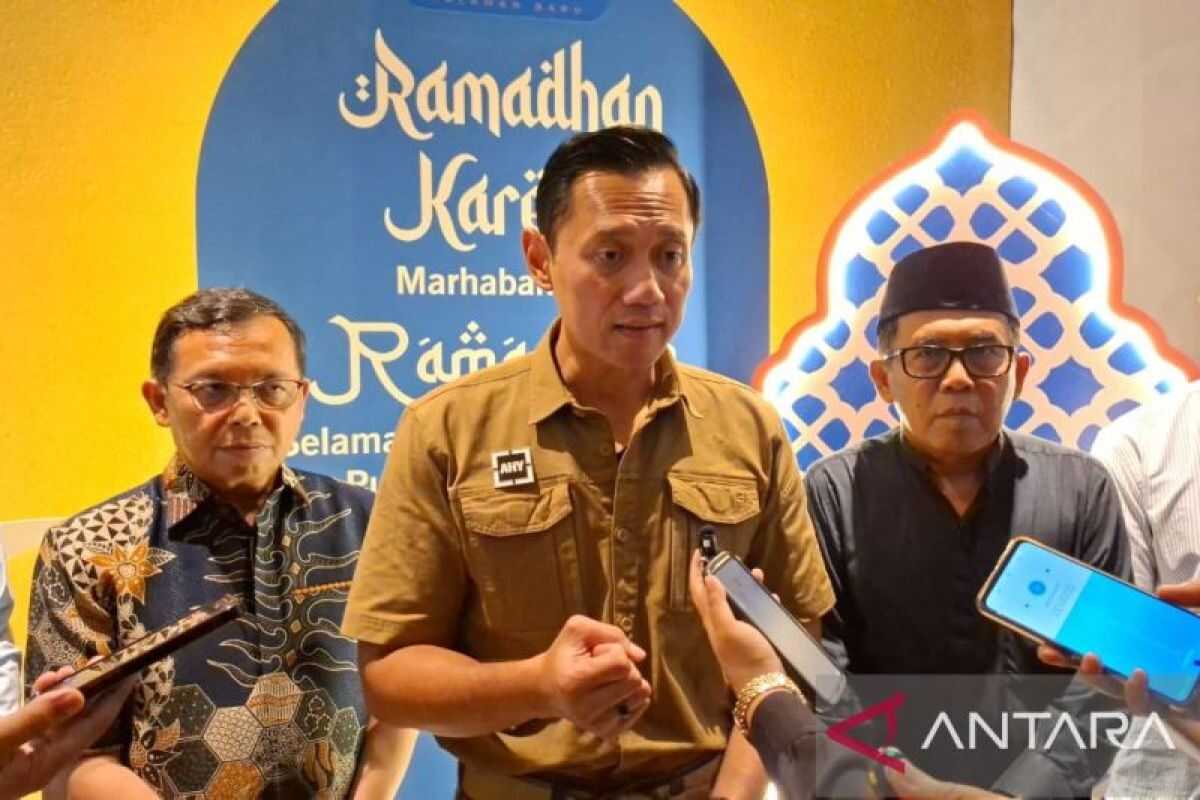
Jakarta – Coordinating Minister for Infrastructure and Regional Development, Agus Harimurti Yudhoyono (AHY), said that future infrastructure development must be able to spur creativity and provide space for the activities of the younger generation. ‘I strongly agree (infrastructure related to youth creativity). I am pleased that young people, Generation Z, expressed the aspiration that infrastructure development must touch all sectors,’ AHY said at a casual talk event in Cipayung, East Jakarta, on Thursday.
According to AHY, infrastructure development is not solely oriented toward economic growth. The government also needs to ensure that such development can foster creativity and provide space for youth activities.
In the forum, many Generation Z representatives expressed hope that infrastructure development would not focus only on the economic aspect, but also support spaces for expression and creativity of young people. AHY said he agreed with this view. He noted that infrastructure development should touch various sectors of public life.
Moreover, AHY explained that infrastructure is not limited to physical construction such as roads and bridges. The education and health sectors are important parts of infrastructure that must be continuously improved to be accessible to all people. ‘In addition to basic infrastructure like roads and bridges, we must also strengthen the education sector to become better. This includes healthcare facilities that must be more easily accessible to all people,’ AHY said.
Furthermore, AHY highlighted the importance of providing creative spaces for the younger generation, especially in big cities like Jakarta. He assessed that the presence of creative centres can be a forum for young people to express their ideas and works. A modern and advanced city is not only characterised by massive physical development, but also by providing spaces that support community creative activities. A forward-looking city should be able to present itself as a global city without losing its local identity. Therefore, development must remain rooted in the characteristics and cultural uniqueness of the regions.
‘The city can be global, but its roots must remain strong in Indonesia’s characteristics and regional uniqueness,’ AHY said. To realise this, he believes serious support from all levels of government—central, provincial, and municipal—is required. Such synergy is important so that infrastructure development can proceed in an integrated manner and meet the needs of people in various regions.
Additionally, AHY noted that young people play a crucial role in the development process. He praised the critical attitude of youth in bravely voicing aspirations to policymakers. Moreover, the voices of the younger generation must be heard so that policies reflect the needs of society in the future. ‘Our young people have critical thinking and are brave enough to voice aspirations. This is very important for decision-makers, including us who are entrusted to oversee infrastructure development,’ he said.
AHY emphasised that the government will continue to strive to ensure every development policy can accommodate diverse public aspirations, including those of the younger generation. Thus, young people should not only be recipients of development but also active participants in determining its direction. ‘The younger generation should not merely be objects of development; they must be subjects of development,’ he said.