
AHY Reveals That Majority of Homebound Travellers in 2026 Mudik Season Will Use Private Vehicles
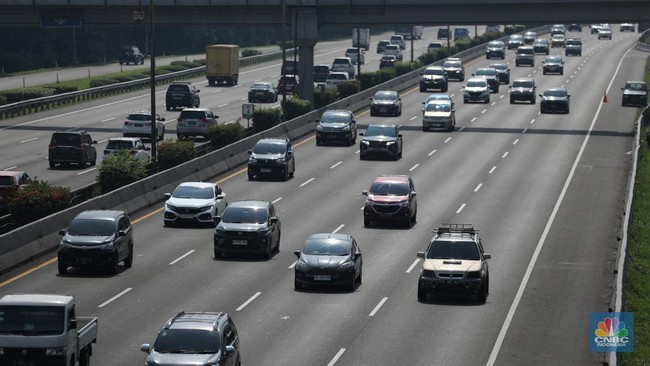
Infrastructure and Regional Development Coordinator Minister Agus Harimurti Yudhoyono (AHY) has stated that the majority of homebound travellers during the 2026 Mudik season will use private vehicles, with private cars expected to account for up to 52% of journeys.
“Private vehicles remain the dominant mode of transport, estimated at 52% alone, followed by motorcycles and public buses, then others,” AHY said at the Presidential Staff Office in Jakarta on Wednesday, 11 March 2026.
According to AHY, the primary burden of the homecoming exodus will fall on land routes including highways, toll roads, arterial roads and national routes. Based on his presentation, four-wheeled vehicle movements are projected to reach 52.98% or 76.24 million journeys, whilst motorcycles are predicted to account for 24.08 million or 16.74% of journeys. This brings the total for private vehicles to 100.32 million.
Other transport modes include buses at 23.34 million (16.22%), ferries at 6.40 million (4.45%), aircraft at 4.98 million (3.46%), intercity trains at 4.79 million (3.33%), urban trains at 2.17 million (1.51%), ships at 926,120 (0.64%), high-speed trains at 682,900 (0.47%), and others at 262,270 (0.18%).
According to AHY, a survey conducted by the Ministry of Transportation estimates that 143.9 million journeys will be undertaken by the public during the Mudik season. The largest travel destinations are Central Java, East Java, West Java, Yogyakarta and South Sulawesi.
The peak homebound traffic is expected to occur on 14 and 15 March, with a secondary peak on 18 and 19 March. Return journeys are projected to peak on 24 and 25 March, and again on 28 and 29 March.
Road Readiness
AHY also explained that 47,000 kilometres of non-toll roads require maintenance and preservation. “Conditions vary, but in general non-toll national roads have a stability rating of around 93.2%. When we move to provincial roads and district/city roads, the stability rating differs. However, we report that non-toll national roads across Java-Bali, Sumatra, Kalimantan, Sulawesi, Maluku, Nusa Tenggara and Papua are generally in good and stable condition,” AHY stated.
Currently, 3,115 kilometres of operational toll roads exist across Indonesia. AHY noted that his ministry has given attention to toll gates that represent bottlenecks.
Preparations include rest and service areas and electric vehicle charging stations.
“We have prepared 76 operational toll road sections along with supporting facilities. Here we have Type A, B and C categories. Type A means it has a fuel station. Type B has no such facility. Type C is only modular in nature and is only temporarily deployed during the Lebaran period,” he explained.