
Ahead of Eid, Beef Stock Tripled
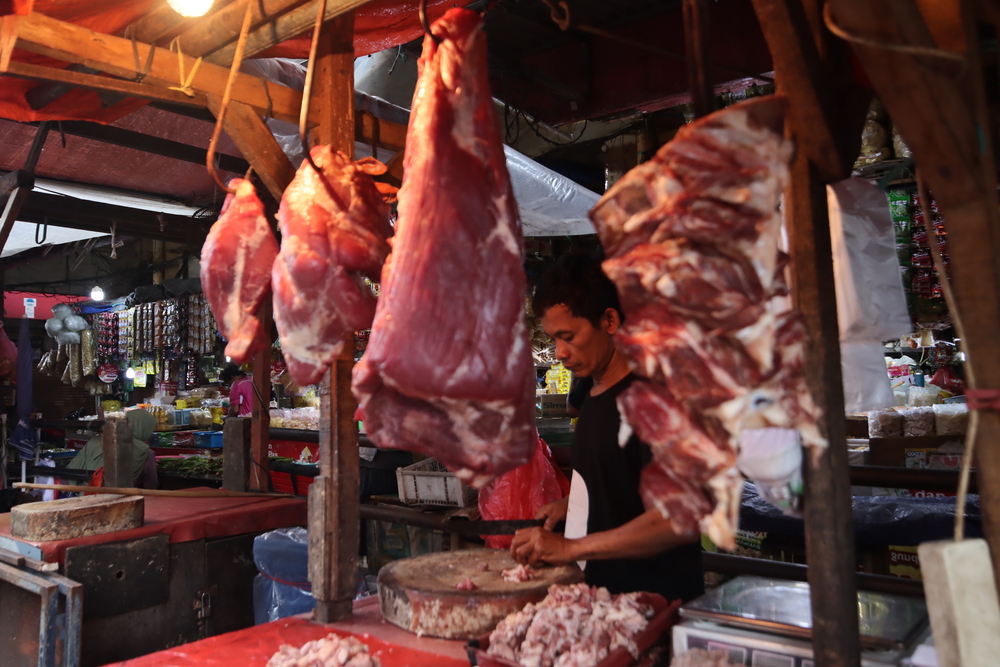
Ahead of Eid al-Fitr 1447 AH, public demand for beef stocks is increasing. Nevertheless, the National Food Agency (Bapanas) assures that food availability is very secure nationally, both from domestic production and imports.
I Gusti Ketut Astawa, Deputy for Food Availability and Stabilisation at Bapanas, stated that national stocks are sufficient to meet consumption needs until and beyond Eid. The agency has projected that national ruminant meat availability through March can reach 226,000 tonnes, exceeding March consumption needs by more than three times.
“Nationally, as I have stated and in line with what the Head of the National Food Agency and Minister of Agriculture Andi Amran Sulaiman has conveyed, our stocks are very, very, very safe. Three times very safe,” said Ketut in a statement on Wednesday (18 March).
This optimism is based on the Beef and Buffalo Food Balance Projection for March, which estimates total ruminant meat availability at 226,000 tonnes. Supply comes from domestic cattle and buffalo production of 143,800 animals, equivalent to 28,200 tonnes. The remainder comes from the slaughter of beef cattle and import realisation, totalling 29,200 tonnes, plus opening stocks of March at 168,600 tonnes. Meanwhile, national beef and buffalo consumption needs for March are estimated at 65,800 tonnes.
“Beef stocks are therefore relatively very adequate, as we have imported 700,000 live cattle, predominantly from Australia. Few cattle from Brazil have arrived yet. There is also substantial local beef stock from East Nusa Tenggara and East Timor, as well as cattle fattening operations,” Ketut explained.
Based on government monitoring, beef prices are beginning to show downward trends and stable averages. The government is committed to maintaining fair prices from slaughterhouses through to retail level.
“We monitor beef prices nationally, and the trend is flat and declining. So after ensuring stocks are very adequate, beef prices will continue to be maintained,” Ketut added.
According to data from the Price Development Index (IPH) for beef released by the Central Statistics Agency (BPS), the number of districts experiencing declining IPH for beef by the second week of March increased compared to late February. In the second week of March, BPS recorded 47 districts/cities experiencing a decline in beef IPH, compared to only 19 districts/cities in late February.
The downward trend in beef prices reflects the firm direction of Bapanas Head and Minister of Agriculture Andi Amran Sulaiman. Long ago, Amran instructed beef importers to release stocks during Ramadan through Eid. Amran also assured that strict penalties will be implemented if price anomalies occur.
“We have instructed everyone to release their beef. Prices must not rise. If any producer, particularly feedlot operators, raises prices on feeder cattle, I will revoke their license and they will not be allowed to import again. Price increases are happening among large distributors and middlemen,” said Amran firmly.
Beyond this, investigations into the causes of price anomalies will also be implemented. The government does not want middlemen practising price manipulation for the benefit of a select few, while making life difficult for the wider public.
“We are asking the Food Task Force across Indonesia to seal operations if necessary, without leniency. We have now agreed that this is no longer a production issue, but the actions of a handful of people causing difficulties for millions of Indonesians. We demand prices must not rise. I have instructed the crime unit to pursue the major distributors,” Amran concluded.