
Ahead of Eid al-Adha, sacrificial animals in West Jakarta given anti-stress vitamins
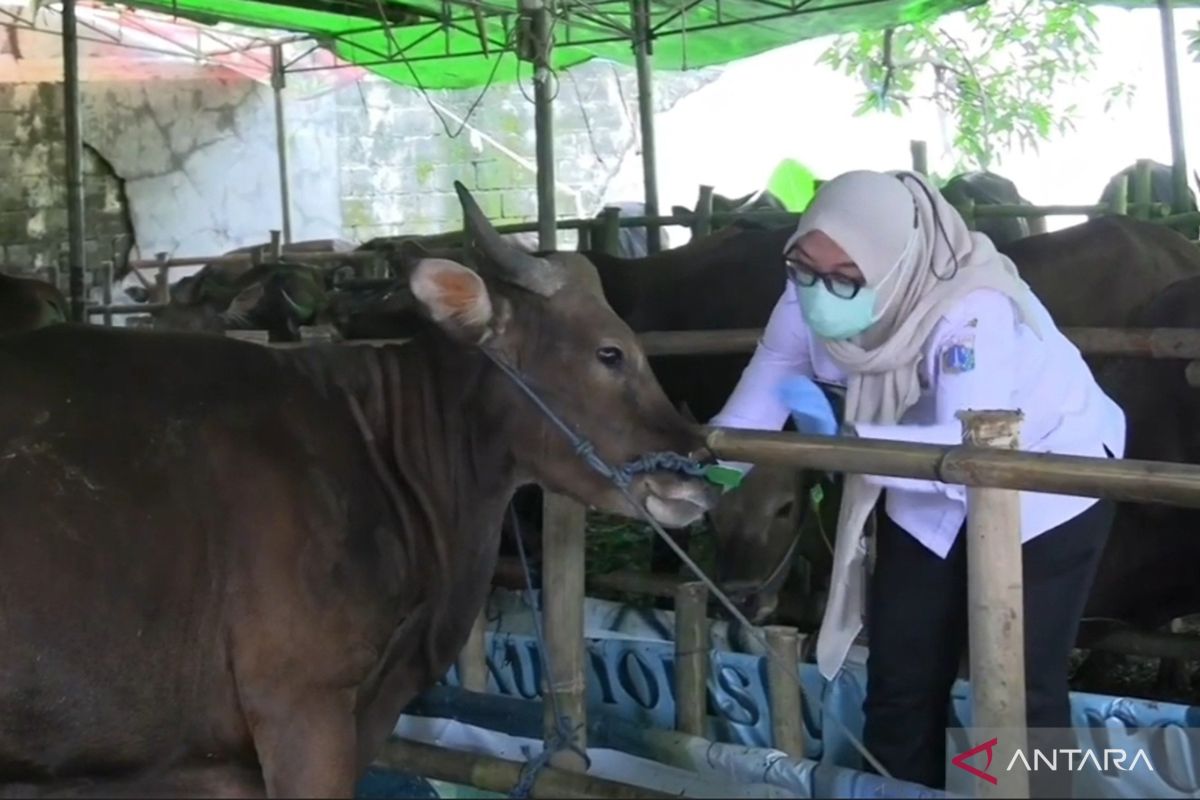
Jakarta (ANTARA) - The Sub-Department of Food Security, Maritime Affairs, and Agriculture (Sudin KPKP) of West Jakarta (Jakbar) is providing electrolyte anti-stress vitamins to sacrificial animals at holding sites ahead of the Eid al-Adha celebrations.
The Head of the Livestock and Animal Health Section of Sudin KPKP Jakbar, Tanti, told ANTARA in Jakarta on Thursday that sacrificial animals brought from other regions to Jakarta require adaptation to the local environment or atmosphere.
“We are giving vitamins. These vitamins are electrolytes as anti-stress for the animals, because they come from outside the city and need to adapt,” said Tanti.
The electrolyte vitamins, she said, are administered through the animals’ drinking water with a measured concentration.
“We give the electrolytes through their drinking water. So, one gram for two litres of water,” Tanti explained.
Meanwhile, if any sacrificial animals are found to be ill, the department isolates them.
“They must be separated from the healthy animals. So, there is an isolation pen for separation, given treatment until they are completely healthy, and only then can they be rejoined,” Tanti stated.
The inspections cover the legality and physical condition of the sacrificial animals, as well as the suitability of the holding sites.
“First, we check the completeness of documents, starting from the veterinary certificate, then the Animal Health Certificate (SKKH) from the origin area,” Tanti revealed.
Next, she said, the physical condition of the animals is also examined, from age to mouth condition.
“If they are of sufficient age, we check their teeth. Have they got gaps or not? If they already have gaps, it means the sacrificial animal is suitable. Then, we provide health services to the sacrificial animals,” Tanti added.
In addition, the condition of the Temporary Holding Sites for Sacrificial Animals (TPnHK) is also inspected to anticipate environmental and surrounding settlement impacts from the holding sites.
“For example, we check the distance of the TPnHK from settlements, how the waste is disposed of, and importantly, the place must be shaded or have a roof for the sacrificial animals,” Tanti explained.