
Ahead of Eid 2026, Ketupat Leaf Sellers in Palmerah Overwhelmed by Orders
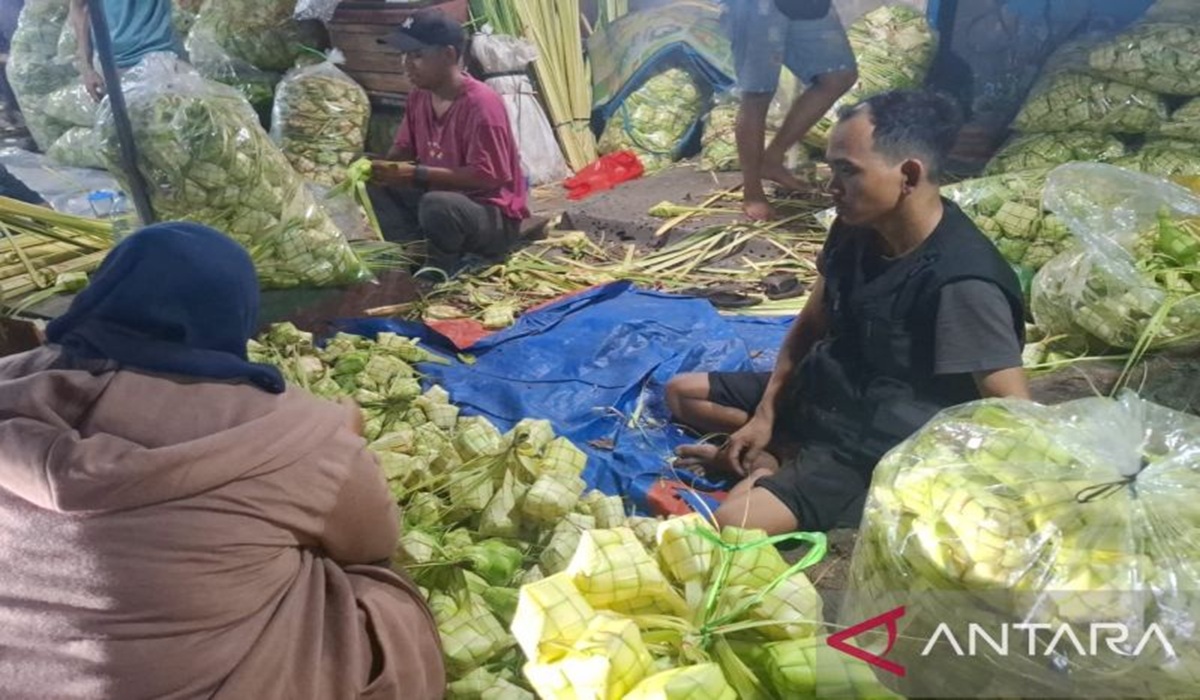
The Palmerah Barat road area in West Jakarta is beginning to be crowded with rows of seasonal ketupat leaf sellers ahead of Eid al-Fitr 1447 Hijriah. The high enthusiasm of residents in welcoming Eid 2026 has left the sellers overwhelmed in fulfilling the sharply rising market demand.
Based on observations at the location on Thursday night (19/3/2026), the buying and selling activities along that road appeared relentless.
The sellers are utilising the pavements and road edges to offer the yellow janur weavings to residents and retail traders.
This surge in demand has directly impacted selling prices. Aji, one of the regular sellers in the area, revealed that the price of ketupat leaves has now risen up to twice as much as on normal days.
“The price is Rp12,000 for 10 during Eid. On normal days, it’s at most Rp5,000 to Rp6,000,” said Aji.
Despite the significant price increase, Aji admitted that buyers do not mind too much. This is because ketupat has become a mandatory dish that must be on the dining table during Eid.
In addition to the demand factor, the price rise is also triggered by the increasing cost of raw materials from wholesalers.
Interestingly, the sellers have different strategies in facing the order surge, which can reach thousands of ketupat leaves per day. Aji, for example, chooses to take ready-made ketupat leaf stock from suppliers to chase time efficiency.
“I buy more; if I make them myself, I can’t keep up. The demand is huge, up to thousands a day during times like this Eid,” he added.
In contrast to Aji, another seller named Hafid chooses to weave the ketupat leaves himself at his stall.
Assisted by a colleague, Hafid can produce around 300 ketupat leaves every day while waiting for buyers. He adopts this strategy to keep profit margins thick.
“I can make up to 300 pieces a day, weaving the ketupat leaves while waiting for buyers—we just make them ourselves. If I take from others, the profit is very thin. Better to make them myself,” explained Hafid.
To serve consumers from various backgrounds, from housewives buying dozens to wholesalers ordering up to 1,000 pieces, the sellers in Palmerah are now operating fully for 24 hours.
This pre-Eid moment becomes an annual blessing for them. If on normal days yellow janur is more used for celebratory banners or catering, now those janur become the favourite hunted by the public to perfect the dishes on the day of victory.