
Agrinas Boss Announces Arrival of 1,000 Indian Pickups at Tanjung Priok
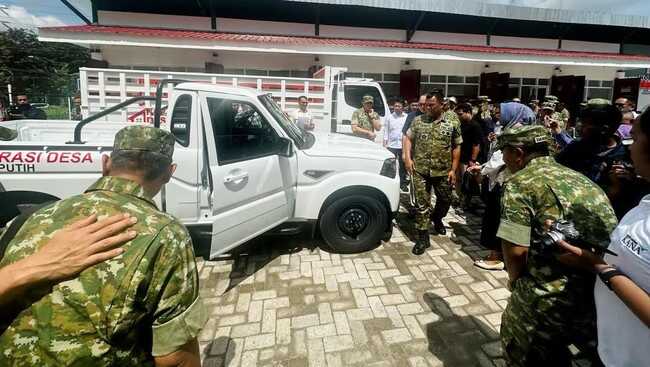
Agrinas Pangan Nusantara has imported 1,000 pickup trucks and trucks from India, with all units arriving at the Port of Tanjung Priok.
“Yes, 1,000 units have arrived at Tanjung Priok,” said the Director General of Agrinas Pangan Nusantara, Joao Angelo De Sousa Mota, in a statement to the media, quoted on Thursday (February 26, 2026).
He also revealed that they had paid a down payment of 30% for the procurement of 105,000 operational vehicles from India, which will be used in the Red and White Village/Urban Cooperative (Kopdes Merah Putih) program. The value of the down payment reached approximately IDR 7.39 trillion out of a total procurement contract of IDR 24.66 trillion.
“We had to provide a 30% down payment, and we have done so for all the products we purchased,” he said.
The procurement of vehicles consists of 35,000 units of 4x4 pickup trucks from Mahindra & Mahindra, 35,000 additional units of 4x4 pickup trucks, and 35,000 units of six-wheeled trucks produced by Tata Motors. All of these vehicles are planned to be the logistics fleet to support the operational network of village cooperatives in various regions of Indonesia.
According to Joao, negotiations with vehicle manufacturers in India took quite a long time before the company agreed to adjust production capacity to Agrinas’ needs. He explained that the initial production capacity of the manufacturers was limited, so discussions and lobbying were needed to ensure that the order volume could be met.
The import process of these vehicles began to attract attention after the Deputy Speaker of the Indonesian House of Representatives, Sufmi Dasco Ahmad, asked for the plan to be postponed in order to protect the domestic automotive industry. The DPR even encouraged that decisions regarding the import be made after receiving direction from the President.
In the midst of the ongoing polemic, Joao stated that his company did not consider the possibility of cancellation penalties in the procurement process because from the beginning, the process was carried out in good faith and based on price efficiency considerations.
“We carried out the procurement in good faith, and we never thought about cancellation penalties,” he said.
Joao also believes that the price of the vehicles obtained through the import contract is much more competitive compared to the price of similar vehicles available domestically. According to him, if there are differences of opinion regarding this policy, it can still be resolved through a more comprehensive explanation to stakeholders.
Despite this, Agrinas stated that it is ready to comply with the government and DPR’s decision if the import of the vehicles is ultimately asked to be stopped. He stated that he is ready to take on business risks, including the possibility of lawsuits from suppliers.
“I will be loyal, and I will obey whatever the state decides, if it is indeed for the benefit of the people without any hesitation. If I have to be sued or have problems with the supplier, that is my responsibility,” said Joao.