
Agriculture Ministry Supplies 1.7 Tonnes of Chilli to Kramat Jati to Curb Price Surge
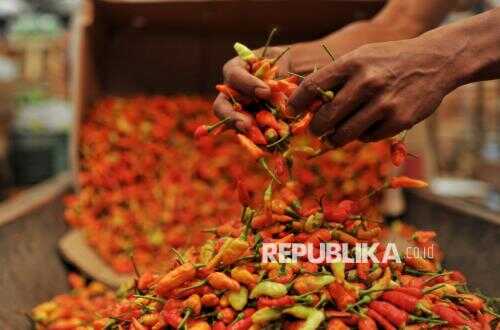
JAKARTA — The Ministry of Agriculture dispatched 1.7 tonnes of red cayenne chilli to the Kramat Jati Wholesale Market on Sunday (22/2/2026). The move was taken to curb soaring consumer prices coinciding with the Ramadan period.
Director of Vegetables and Medicinal Plants at the Ministry of Agriculture, Muhammad Agung Sunusi, said supplies to the wholesale market would continue to be strengthened through shipments from production centres supported by the chilli champion network across various regions.
“We will continue to safeguard supplies to the Kramat Jati Wholesale Market. Chilli champions at production centres are ready to send red cayenne chilli on an ongoing basis so that public demand during Ramadan remains fulfilled,” Agung said in Jakarta, as quoted on Tuesday (24/2/2026).
He explained that the price of red cayenne chilli from chilli champions had been set at around Rp50,000 per kilogram. To contain consumer-level prices, the government, through the National Food Agency’s (Bapanas) food distribution facilitation programme, is subsidising transport costs from production centres to wholesale markets.
Under this scheme, the consumer price of red cayenne chilli is expected not to exceed Rp65,000 per kilogram. The distribution intervention is aimed at ensuring supplies remain smooth and prices stay affordable during the period of heightened demand.
Agung detailed that prices of other horticultural commodities have remained relatively stable. White cayenne chilli is priced at around Rp30,000 per kilogram, green curly chilli at Rp25,000 per kilogram, large red chilli at Rp40,000 per kilogram, and red curly chilli at Rp50,000 per kilogram. A significant increase has only occurred in red cayenne chilli in recent weeks.
According to him, the price rise was triggered by heavy rainfall in a number of production centres, which hampered harvesting activities. At the same time, public consumption has risen ahead of Ramadan, including demand linked to the nyekar grave-visiting tradition in several regions.
“Heavy rainfall has prevented farmers from picking optimally. Combined with increased public consumption ahead of Ramadan, prices had risen. However, with this distribution intervention, we are optimistic that prices will stabilise soon,” Agung said.