
Agriculture Ministry encourages farmers to utilise drought-adaptive rice varieties ahead of early dry season
Jakarta — The Ministry of Agriculture (Kementan) is encouraging farmers to utilise drought-adaptive rice varieties to anticipate potential water shortages resulting from an earlier-than-normal dry season predicted for 2026.
Agriculture Minister Andi Amran Sulaiman has instructed all regional governments to immediately implement anticipatory measures, ranging from mapping drought-prone areas to strengthening early warning systems.
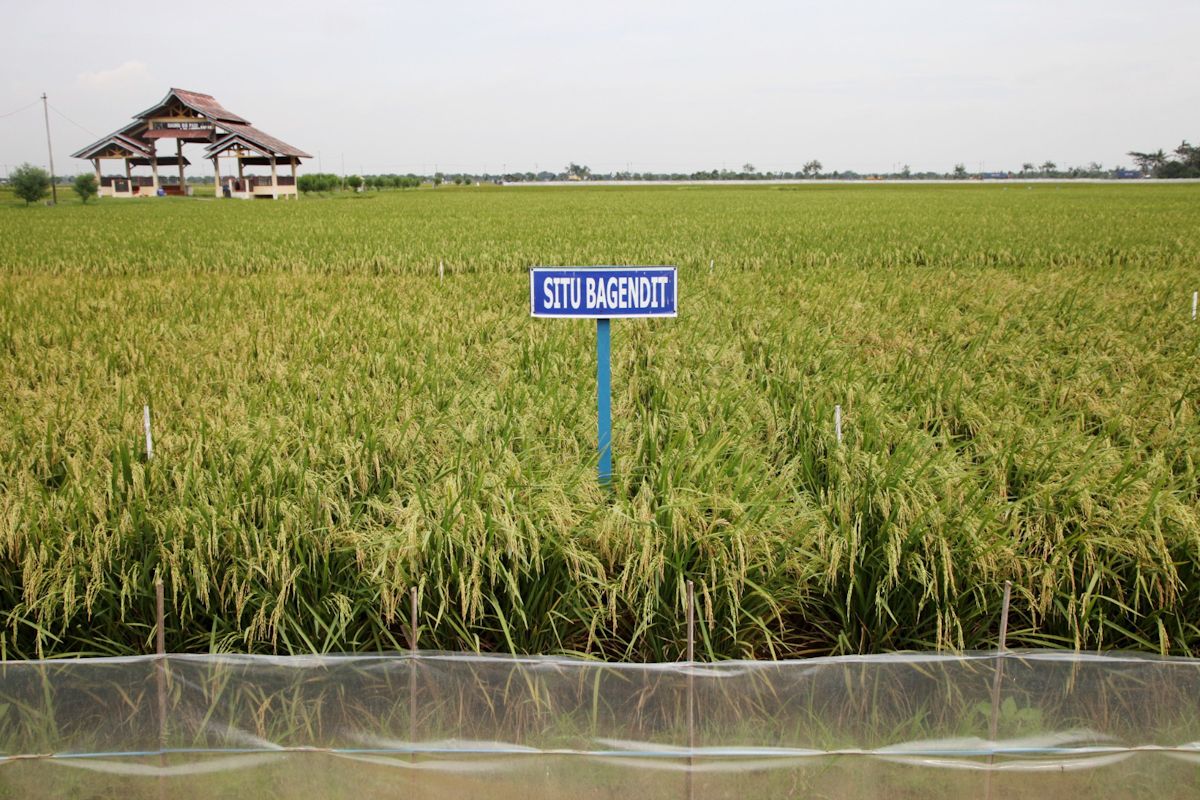
“Farmers need to utilise early-maturing and drought-resistant varieties, such as Inpago 4–13, Inpari 38–46, Situbagendit, Situpatenggang, Padjadjaran, Cakrabuana, or similar varieties to maintain production despite facing the dry season,” the minister said in a statement in Jakarta on Sunday.
The Ministry of Agriculture is also promoting optimised water management through irrigation, pump systems and piping, as well as accelerated planting across various production centres.
The Meteorology, Climatology and Geophysics Agency (BMKG) predicts that several regions in Indonesia will experience an earlier start to the dry season, including parts of Sumatra, Java, Bali, Nusa Tenggara, southern and eastern Kalimantan, much of Sulawesi, Maluku, and parts of Papua.
“This condition has the potential to increase drought risk on agricultural land if not anticipated early,” said Amran.
Meanwhile, Fadjry Djufry, Head of the Agricultural Assembly and Modernisation Agency (BRMP) under the Ministry of Agriculture, explained that the ministry has developed various superior varieties that are adaptive to drought conditions.
According to him, these varieties have been developed with the capacity to maintain production under limited water availability whilst having relatively short harvest periods.
Djufry stated that drought-stressed rice varieties such as Inpari 38 to Inpari 46, as well as upland rice varieties in the Inpago group, are designed to maintain productivity under limited water availability.
“Additionally, there are early-maturing varieties such as Padjadjaran and Cakrabuana that can be harvested more quickly, helping plants avoid drought periods,” Djufry explained.
He further stated that the utilisation of these adaptive varieties forms part of a technological strategy to strengthen the resilience of the rice production system amid dynamic climate conditions.
“We are encouraging wider utilisation of these drought-resistant superior varieties, particularly in drought-prone areas or rainfed rice fields, so that national rice production remains secure and food security can continue to be strengthened,” he emphasised.
The Ministry of Agriculture, through BRMP, continues to strengthen the utilisation of technological innovation to increase the sector’s resilience to climate change impacts, including through the development of adaptive superior varieties and the application of appropriate cultivation technology at the farmer level.