
Agriculture Minister Wants Indonesia's Sugar Industry to Rise from the Grave: Here's How
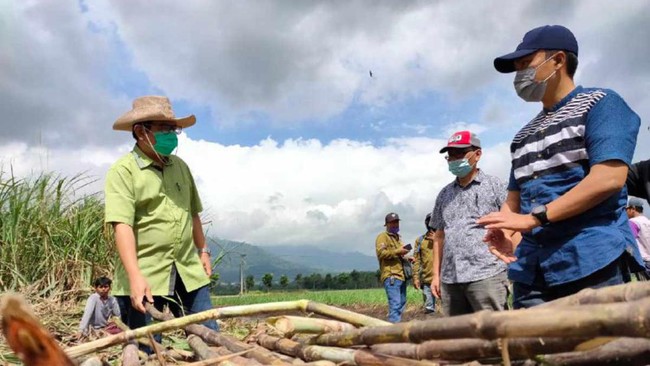
The government is targeting a revival of national sugar production by restoring sugarcane yield rates to those of the colonial era. During the colonial period, Indonesia was once the world’s second-largest sugar producer after Cuba. In the past, Indonesia’s sugar yield was even three times higher than current levels. Currently, the sugarcane yield is only 7-8%, whereas neighbouring countries like Thailand have achieved 11-12%. “In the Dutch era, the yield was three times higher than now. It was very high back then; why has it fluctuated now? We must pay attention to that,” said Agriculture Minister Sudaryono when met at the Parliamentary Complex in Jakarta on Tuesday (14/4/2026). He explained that the low yield is the main root problem in the current sugar sector. Yield determines how much sugar is produced from the milled sugarcane. The lower the yield, the less sugar farmers obtain, even if the volume of sugarcane is large. “The main issue, based on research and studies we have conducted, is the low yield,” he stated. According to him, this condition makes national sugar production suboptimal, so Indonesia still depends on imports. However, on the other hand, there is still great potential to increase domestic production. “Actually, our current position is that sugar is insufficient. So we still import refined sugar. That means it’s still lacking. If it’s lacking, it means there is still potential in the country for us to produce it ourselves,” he clarified. Sudaryono emphasised that the key to restoring the glory of national sugar lies in increasing productivity, particularly through improving yield and expanding sugarcane land. “So the yield must be high, or we create new land,” he said. To increase yield, the Ministry of Agriculture is promoting the use of superior seeds and rejuvenation of sugarcane plants through the ratoon dismantling programme. He mentioned that seed quality is a crucial factor that can directly boost production. “Like it or not, not only in sugar, we’re talking about all crop varieties; good seeds do have an impact of 20%-30%,” he explained. “So with the same treatment, as long as the seeds are good, whether rice, corn, sugarcane, whatever, as long as they are correct and well-standardised, including oil palm, production can increase by 20%-30%,” Sudaryono continued. The government has allocated a large budget to support improvements in seed quality. The total budget amounts to Rp9.9 trillion, disbursed gradually over three years. “Imagine, just from the seed quality component. Thus, President Prabowo has budgeted and given to the Ministry of Agriculture Rp9.9 trillion, divided over three years. Last year Rp2.5 trillion, this year Rp5.5 trillion, and the rest next year,” he elaborated. Besides seeds, the government also plans to open new land for sugarcane, while still considering environmental aspects. “The second thing is, like it or not, we have to find new land suitable for sugarcane, without disturbing the ecology, without clearing forests and so on,” he said. Sudaryono stressed that if yield can be increased back to near past levels, Indonesia would not only achieve sugar self-sufficiency but also potentially lower prices. “If Indonesia can increase its yield high, back to the Dutch era for example, it’s not just that we achieve sugar self-sufficiency. Even sugar prices can be lowered,” he stated. He emphasised that the biggest challenge now is how to increase yield amid farmers’ land limitations. “So like it or not, what we must do is increase the yield. Our yield can be said to be relatively low, and we must improve it. We were once in a position far higher, three times what it is now,” Sudaryono concluded.