
Agriculture Minister: National Food Security Ready to Face Geopolitical Crises and Climate Challenges
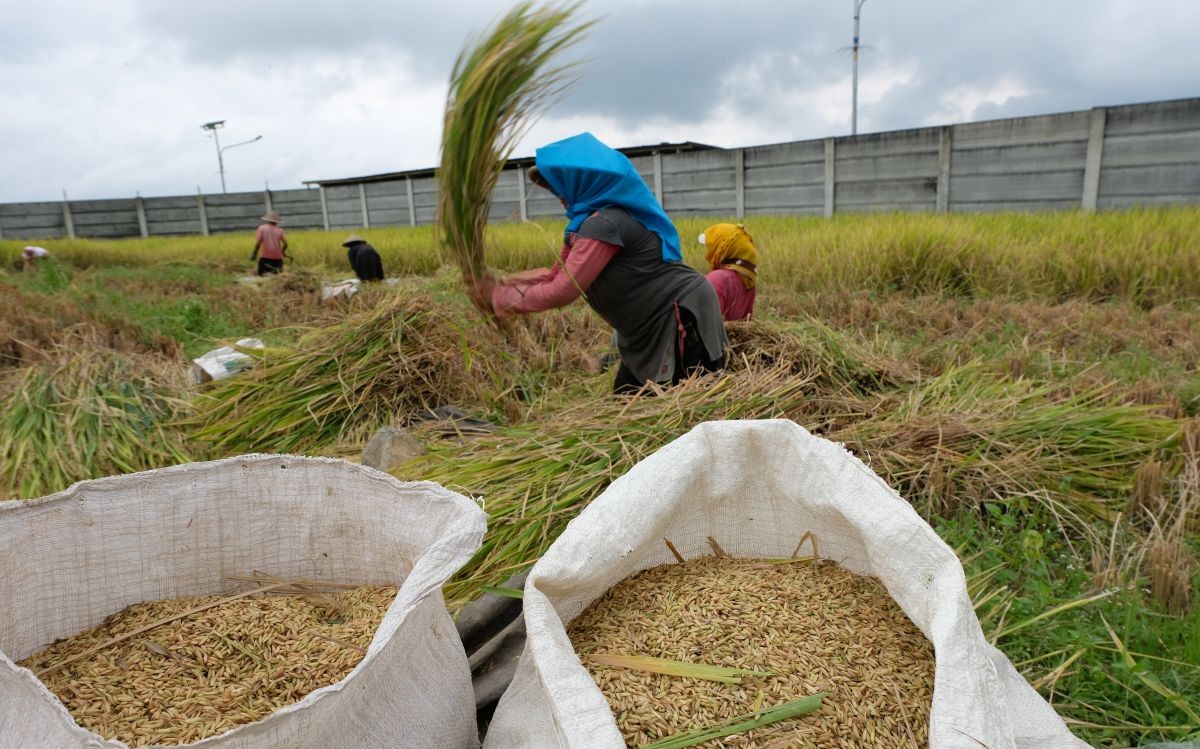
The Ministry of Agriculture (MoA) is preparing a range of strategic measures to safeguard national food security amid rising global geopolitical tensions and the potential El Niño phenomenon in 2026. The measures include strengthening production, increasing rice reserves, pumping irrigation (pompanisation), and the development of adaptive varieties.
Minister of Agriculture (MoA) Andi Amran Sulaiman stressed that the public need not worry about global dynamics or potential climate disruptions. After all, national food production currently exceeds consumption requirements.
‘Our rice production ranges from 2.6 to 5.7 million tonnes per month, while national demand is around 2.5 million tonnes per month. In other words, production is above consumption. Therefore food is secure; the public need not worry,’ Amran said in a statement on Saturday (7 March).
Global geopolitical dynamics that are heating up, especially the Middle East conflicts, could affect global trade stability and the food supply chain. However, Amran stated that the state of production and national food reserves is strong enough to withstand various potential upheavals.
‘Our food supply is prepared to face a range of worst-case conditions, from El Niño and La Niña to global geopolitical dynamics. Our agriculture, God willing, remains safe,’ he asserted.
Currently, total national rice availability stands at around 27.99 million tonnes. This comprises Bulog’s stock of 3.76 million tonnes, community stocks of about 12.50 million tonnes, and standing crops or harvested paddy of 11.73 million tonnes. With this total, he said, national rice reserves are expected to be enough to meet demand for almost a year.
MoA also noted that national rice production is showing a positive trend. From January to May 2026, rice production reached about 16.92 million tonnes.
Meanwhile, government rice stocks managed by Perum Bulog are expected to continue rising to surpass 5 million tonnes in the next two months, as harvests come in across various regions.
In efforts to strengthen production resilience against climate change, Indonesia has developed a range of location-specific superior varieties adapted to local conditions while maintaining high productivity.
Not only for dry land; the minister outlined breakthroughs in rice development on swamp land. He said Indonesia has mineral swamp land potential of around 1 million hectares that can be utilized through the use of superior rice varieties such as Inpara. In addition, there is the Biosalin variety capable of being grown on coastal land affected by seawater intrusion.
To address drought conditions, the government is also developing ‘padi gogo’—rice grown on dry land that requires less water than paddy rice.
To address potential droughts caused by climate change, the Ministry of Agriculture has implemented various climate adaptation measures. One of these is the irrigation pumping program for agricultural land, which previously covered around 1.2 million hectares and this year is expanded by a further 1 million hectares.
‘We have anticipated drought potential from the outset through pumping irrigation to keep production steady,’ he stated.
Apart from rice, other food commodities such as poultry and eggs are also in surplus. Fertiliser availability is assured with prices having fallen by around 20%, encouraging farmers to continue increasing production.
‘With these various measures, the government is optimistic that national food stability will remain safeguarded amid global dynamics and potential climate challenges,’ he concluded. (W-3)