
Agriculture Minister Candidly Admits Indonesia Still Imports Broken Rice Despite Abundant Stock
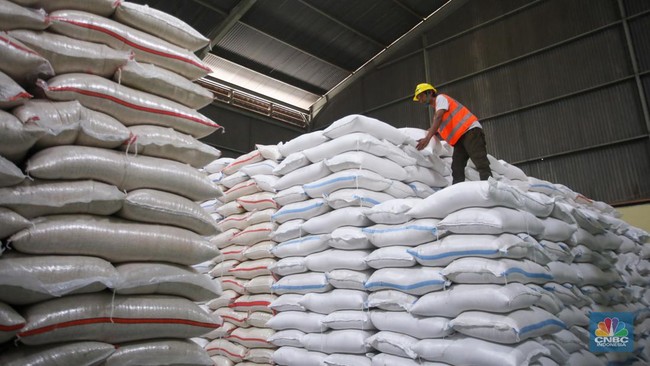
Agriculture Minister Amran Sulaiman is pushing for rice downstreaming measures to curb imports of broken rice, or menir, which continue to enter Indonesia. He stressed that the need for menir can be met from domestic stocks by breaking intact rice available in warehouses.
This was stated by Amran in response to discussions on processing degraded rice into rice flour by Perum Bulog. According to him, this step is appropriate and should be expanded to replace menir imports.
“That’s good. Yes, that’s good. Why? Because there are imports of menir,” said Amran when met at the Bulog Panaikang Warehouse in Makassar, South Sulawesi, on Sunday (5/4/2026).
Amran said that instead of importing, the government can process existing rice into menir according to industrial needs.
“Don’t import menir. So how? I’ll mill it. This is good rice, I’ll break it into menir. Done, right? The important thing is rice, right?” he stated.
He explained that the rice breaking process can be a quick solution to meet needs without depending on foreign supplies.
“So the imported broken rice, pecah. Well, I break it, mill it. That means, we close the entire sector (imports), we utilise (downstreaming),” he clarified.
According to him, menir imports have typically reached 200-500 thousand tonnes per year, even though domestic stocks are deemed sufficient.
“Usually imports reach up to 200-500 thousand tonnes. Indonesia has it. Come on, take it from our warehouses,” said Amran.
He emphasised that if industry needs broken rice, the government is ready to process it from existing stocks.
“Because they need broken rice, we break it first,” he added.
Amran also assured that this rice downstreaming policy can be implemented anytime, given the current abundant stock availability.
“Whenever it’s needed. Because the rice is already there,” he said.
He claimed to have instructed Bulog’s ranks to immediately follow up on this step, especially to optimise the utilisation of rice stocks in warehouses.
“When? I said follow it up, if someone asks? Give it. Because this rice, rather than renting warehouses, we’ve already rented 2 million tonnes capacity,” said Amran.
Previously, the government still recorded imports of certain types of rice, including menir, for industrial needs. Based on data from the Central Statistics Agency (BPS), rice imports in October 2025 were recorded at 40.7 thousand tonnes.
Cumulatively, rice imports from January to October 2025 reached 364.3 thousand tonnes valued at US$178.5 million or equivalent to Rp2.97 trillion. All of these imports were special and industrial rice, not medium rice for general consumption.
Head of Communication and Information Services Bureau of the Ministry of Agriculture Moch Arief Cahyono explained that the majority of imported rice entering is 100% broken rice or menir (HS 1006.40.90) used as industrial raw material.
In addition, imports also include special rice for specific needs such as for diabetes sufferers, as well as rice for restaurants and hotels. This includes special varieties like basmati, jasmine, and japonica which are not produced domestically.