
Agriculture Minister Assures Indonesia's Food Security Ahead of Approaching Godzilla El Niño
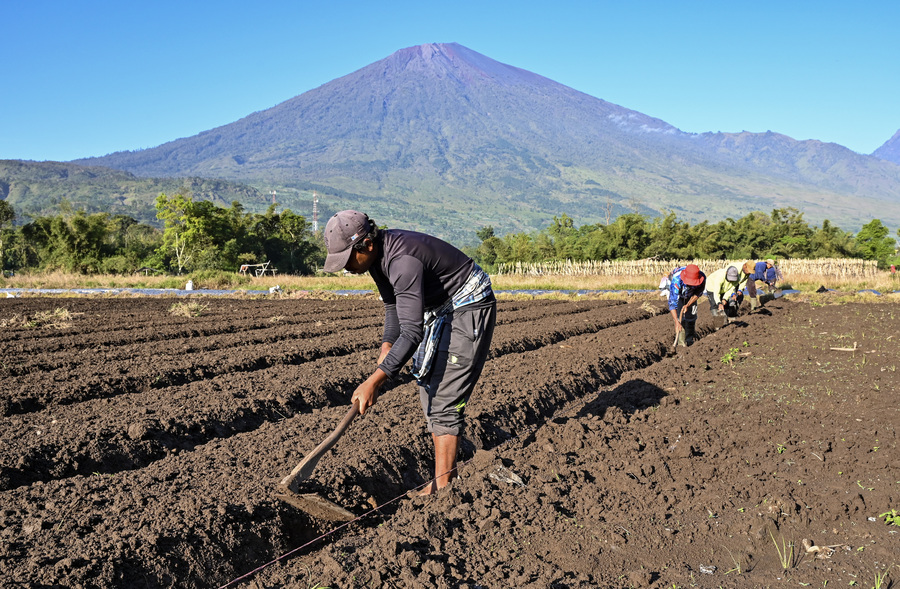
Agriculture Minister Andi Amran Sulaiman has spoken out on Indonesia’s food security ahead of the Godzilla El Niño phenomenon set to affect the country from April onwards.
“The upcoming Godzilla El Niño will begin next month in April and is estimated to last six months. Insha’Allah, the food sector will be secure. Why? In 2023, there was an El Niño that was no less severe or devastating,” said Amran at the Ministry of Agriculture office in Jakarta on Monday (30/10).
The Ministry of Agriculture, continued Amran, will implement several strategies that were applied in the agricultural sector during the previous year’s El Niño to face the impending Godzilla El Niño, such as pump irrigation and the optimisation of swamp lands.
He added that the government’s current rice stock is at 4.3 million tonnes and will increase to 5 million tonnes by April next year.
In addition, reserves in the hotel, restaurant, and household sectors amount to around 12.5 million tonnes, plus the potential harvest or standing crop of approximately 11 million tonnes.
“Then the standing crop is around 11 million tonnes. So the total is about 27 million tonnes. If we divide that, it can cover the next 10 months—we calculate 10 months ahead—while the El Niño lasts six months. That means there’s overlap,” explained Amran.
Meanwhile, during the El Niño period, production is expected to continue albeit at a reduced level, so the total supply is deemed sufficient to meet needs for around 15 months. Food commodity prices are also guaranteed to remain stable.
“Prices, Insha’Allah, will be stable. So for 10 months, that means up to 15 months until the dry season turns into the rainy season. Our preparations are far better than before because previously we anticipated by importing food on one side, but now our stocks are plentiful,” concluded Amran.
A prolonged dry spell due to the Godzilla El Niño phenomenon is estimated to strike Indonesia from April to October 2026 and has the potential to pressure agricultural production.