
Agriculture Minister Amran emphasises downstream processing as key to making Indonesia a strong nation
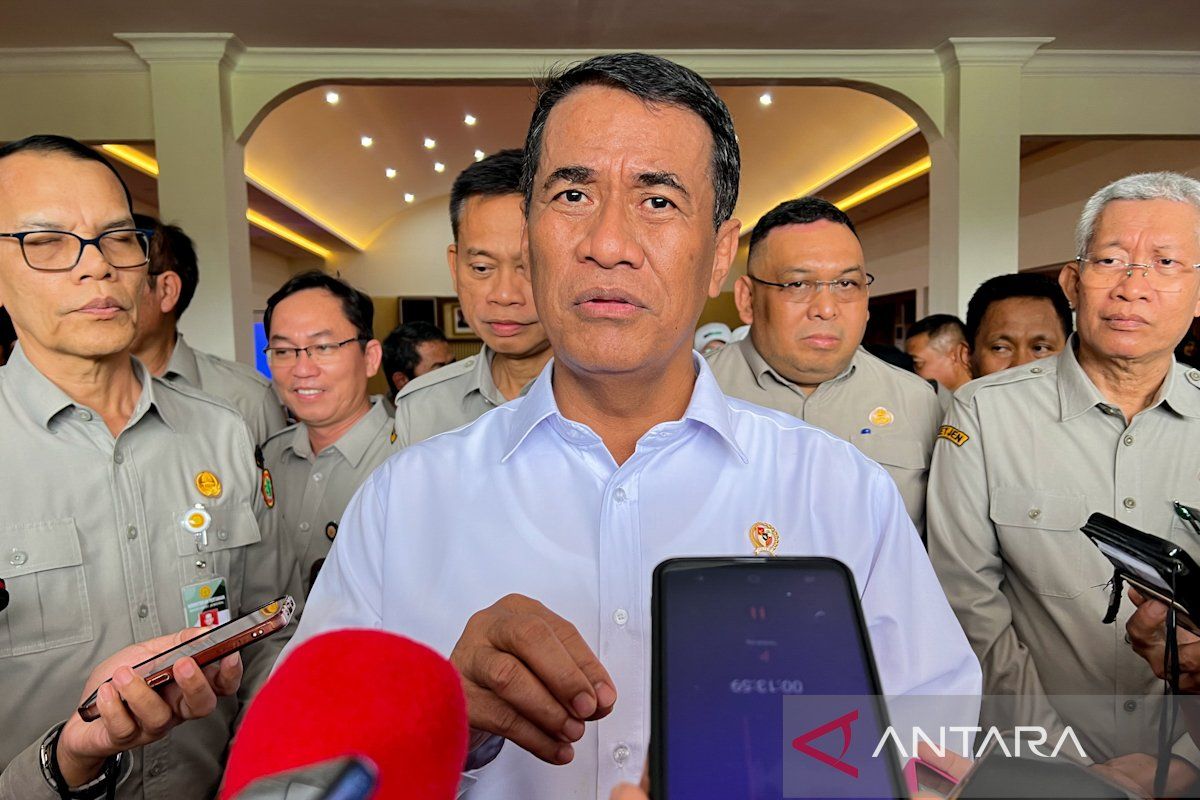
We dominate the world in coconuts, number one globally. The problem is that coconuts are shipped whole. If processed into virgin coconut oil, coconut milk, coconut water, the value can be tens to hundreds of times higher.
Jakarta (ANTARA) - Agriculture Minister Andi Amran Sulaiman has emphasised that downstream processing is the key to making Indonesia a strong nation, bolstering the national economy, promoting energy independence, and safeguarding food security amid global dynamics.
“Downstream processing as the main key to strengthening the national economy, energy independence, and food security amid global dynamics,” said the Agriculture Minister in his statement in Jakarta on Saturday.
According to Amran, Indonesia must no longer merely export raw materials but must advance to downstream processing so that the added value is enjoyed domestically.
He stated that several flagship commodities such as coconuts, palm oil (CPO), and gambier have great potential for development through downstream processing. Derivative products such as processed oils, coconut milk, coconut water, and other industrial derivatives are seen as capable of significantly increasing economic value compared to raw products.
Besides coconuts, Indonesia also controls around 80 percent of the world’s gambier market, but it is still exported in semi-processed form, so the added value is enjoyed by other countries.
“Gambier, we supply 80 percent to the world. But what is sent is semi-processed. If we downstream it, the value is in the thousands of trillions. The highest added value is in the downstream, not the upstream,” he revealed.
He also touched on the vast potential of downstream processing for palm oil (CPO), which he believes can change the world economic map because Indonesia controls more than 60 percent of global CPO production.
He emphasised that downstream processing will not only strengthen the national economy but also improve farmers’ welfare, create jobs, and enhance Indonesia’s position in the international arena.
Nevertheless, he conveyed that the struggle towards self-sufficiency and downstream processing is not always easy because there are parties who are unhappy when Indonesia stops importing and starts becoming independent.
However, he assured that the government will continue the downstream processing programme, food self-sufficiency, and energy independence in line with President Prabowo Subianto’s directives.
He stressed that Indonesia’s success in strengthening the food sector has even impacted global food prices because Indonesia has succeeded in significantly reducing rice imports.
He mentioned that global food prices, particularly rice, previously reached 660 US dollars per tonne and now have dropped to 340 US dollars per tonne. This decline reflects Indonesia’s contribution to suppressing global food prices.
He explained that Indonesia’s step to stop rice imports equivalent to 7 million tonnes, or around Rp100 trillion, has had a significant impact, thereby contributing to a roughly 44 percent drop in world rice prices.
Indonesia’s success in the food sector has received international recognition through the World Food Security Award from the FAO for two consecutive years, 2024–2025, for its contributions that greatly strengthen the global food system.
Along with this recognition, the Agriculture Minister continued, interest in food cooperation has increased, marked by visits from Japan, Canada, Chile, and Belarus who came to learn from Indonesia due to seeing real evidence of the success of the national food sector achieved by the government.
The Agriculture Minister emphasised that food security is a highly strategic matter because a food crisis can lead to political and social crises.
“A country can collapse if there is a food crisis. That’s why our President is very visionary; from the beginning, he has talked about food self-sufficiency and energy self-sufficiency,” added the Agriculture Minister.