
Agricultural Corruption: 76 Suspects Already Processed
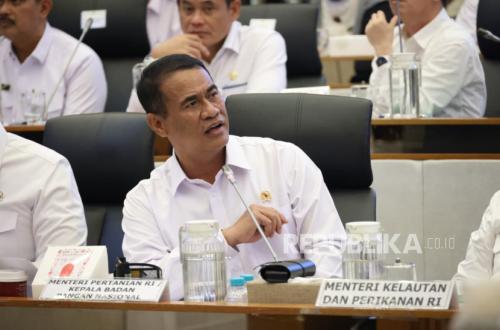
Agriculture Minister Andi Amran Sulaiman has once again spotlighted corruption practices in the agricultural sector that have ensnared dozens of individuals in legal processes. He stressed that enforcement is a crucial component in maintaining good governance in the food sector.
Amran stated that these legal measures are proceeding alongside government efforts to improve the agricultural system, from fertiliser distribution and infrastructure development to strengthening national production. The government is also opening avenues for public oversight, including involving students.
“There are corruptors, we imprison them. In the agricultural sector, there are already 76 suspects,” said the Minister in Jakarta on Wednesday (6/5/2026).
He explained that enforcement continues as reports come in from various parties. The Ministry of Agriculture follows up on every finding in the field, including those raised by students in discussion forums.
Several student executive body leaders discussed food sector issues with Amran. In the forum, various complaints were voiced, ranging from fertiliser distribution to illegal commodity practices.
“It was revoked earlier; it was only online for 10 minutes, and it’s being processed legally. It shouldn’t be allowed,” he said.
Amran cited a student report on fertiliser shortages in West Nusa Tenggara, which was immediately addressed by revoking the distributor’s permit. He also mentioned reports of illegal onion circulation in North Sumatra that were promptly handled by authorities.
According to him, allowing violations to persist could expand criminal practices in agriculture. Therefore, swift action is key to keeping the distribution system healthy.
“If we allow it once, it’s like breeding crime in the Republic,” he said.
Amran views the role of students as constructive critics as essential for bolstering oversight. The Ministry of Agriculture is opening reporting access for students to raise field issues.
He cited reports on fertiliser shortages and illegal commodities as concrete examples of student involvement in policy oversight.
“Report it; there was a fertiliser shortage earlier. Then there was illegal activity from North Sumatra; that was reported by BEM,” he said.
On the other hand, the government continues to implement policies to sustain agricultural sector performance. Amran mentioned reductions in fertiliser prices as well as increases in production capacity and national food stocks.
He noted that national rice stocks are in a strong position, serving as an indicator of agricultural sector strengthening in recent times.
“Our warehouses are full; our rice stocks are the highest since independence, around 5 million to 5.2 million tonnes,” said Amran.