
Aggression Against Iran: The Beginning of the Collapse of US Global Dominance?
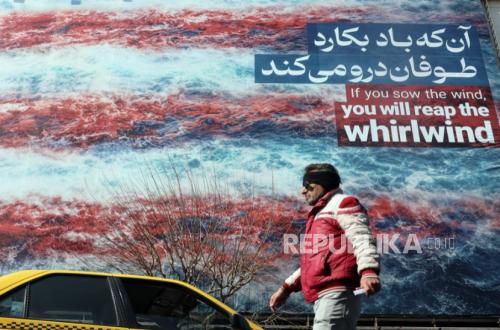
President Donald Trump’s claim of victory over the joint US-Israel aggression against Iran in early March appears premature. Far from subsiding, the conflict shows signs of dragging on. Iran continues to demonstrate strong resistance, while the economic and political costs to the United States mount.
Several Iranian officials have reportedly been killed. However, the power structure of the Islamic Republic does not appear to be cracking. On the contrary, amid this pressure, a new leadership consolidation has emerged, with Mojtaba Khamenei officially named as the new supreme leader.
Tehran’s rejection of two ceasefire proposals brought by US special envoy Steve Witkoff underscores that they do not feel themselves to be on the defensive. On the contrary, Iranian leaders assess that Washington is facing domestic pressures. They predict the conflict will end due to the mounting economic, political, and military burdens on the United States.
This situation creates uncertainty. Some observers argue that, although Iran’s military capabilities may have weakened, a formal “victory” remains difficult for the US and Israel to achieve due to the absence of clear political objectives. The risk of a prolonged war is wide open.
Equally important, this conflict has the potential to worsen the US economic and financial condition. Fiscal pressures are increasing, growth projections are weakening, and recession risks are strengthening. In this context, a fundamental question arises: can the US bear the costs of war amid its fragile domestic economy? More broadly, is the US capable of maintaining its global dominance in the long term?
Imperial Overstretch
This question recalls the classic thesis of historian Paul Kennedy on the rise and fall of great powers. He asserts that global powers do not collapse solely due to military defeats, but because of an imbalance between strategic ambitions and economic capacity.
When a country expands its military commitments beyond its economic support capacity, it enters a phase of imperial overstretch. History records that this pattern afflicted great empires such as Spain, Britain, and the Ottomans.
The United States’ prolonged military involvement in the Middle East shows similar symptoms. US ambitions to maintain global dominance are often not matched by calculations of its economic capacity.
Costs of Global Leadership
Since the end of the Cold War, the United States has taken on the role of global power with a strategy of military interventions in various regions, including the Middle East. This policy is often framed as an effort to maintain international stability and protect national interests.
However, the costs incurred are enormous, while the strategic results are often not commensurate. US military spending is the largest in the world, while domestic challenges—from economic inequality, social problems, to political polarisation—are increasing.
At the same time, the United States faces increasingly tight global competition, particularly from China, which continues to strengthen its position in industrial production, applied technology, and infrastructure development. Resources drained into military conflicts could potentially reduce America’s competitiveness in arenas that determine the future of global power.
Warnings from Realists and Strategic Mistakes
Realists in international relations have long warned of the risks of overly expansive foreign policy. John Mearsheimer, for example, argues that many US military interventions have instead produced instability rather than security.
In the context of Iran, the military approach faces serious challenges. Iran is not an isolated actor, but has a wide network of political and military connections in the region. Efforts to pressure or even overthrow its regime risk triggering prolonged conflict without clear outcomes.
Economist Jeffrey Sachs adds another dimension: the costs of modern war are not only measured in military losses, but also in lost economic opportunities. Large funds allocated to conflicts should instead be used for productive investments such as education, infrastructure, and technological innovation.
If this trend continues, American power will be eroded from within—not by attacks from adversaries, but by the burdens it creates itself.
Media Narratives and War Politics
Meanwhile, journalist and writer Max Blumenthal argues that public discourse on Middle East conflicts, including Iran, more reflects the interests of the Israeli lobby through media narratives than careful strategic analysis. Political pressures, such as the Epstein files, sometimes push Washington towards confrontation rather than diplomacy. US foreign policy is more often determined by domestic politics and lobby pressures, especially Zionist ones, which ultimately complicate America’s long-term interests.
Changes in the global order strengthen these challenges. The world today is moving towards a multipolar configuration with an increasingly dispersed distribution of economic power. Asia is becoming a new growth centre, while technological and geopolitical rivalries intensify.
In this context, prolonged conflict with Iran could become a strategic distraction. Rather than strengthening its global position, such policy could hinder the United States’ ability to adapt to the changes of the times.
History shows that great powers endure not only because of military superiority, but also because of economic resilience and domestic stability. Without such foundations, global dominance is difficult to maintain in the long term.
In the end, the greatest threat to the United States may not come from Iran or other external powers. That threat emerges when global ambitions