
Agam proposes IDR 2.75 trillion to rebuild infrastructure damaged by disaster
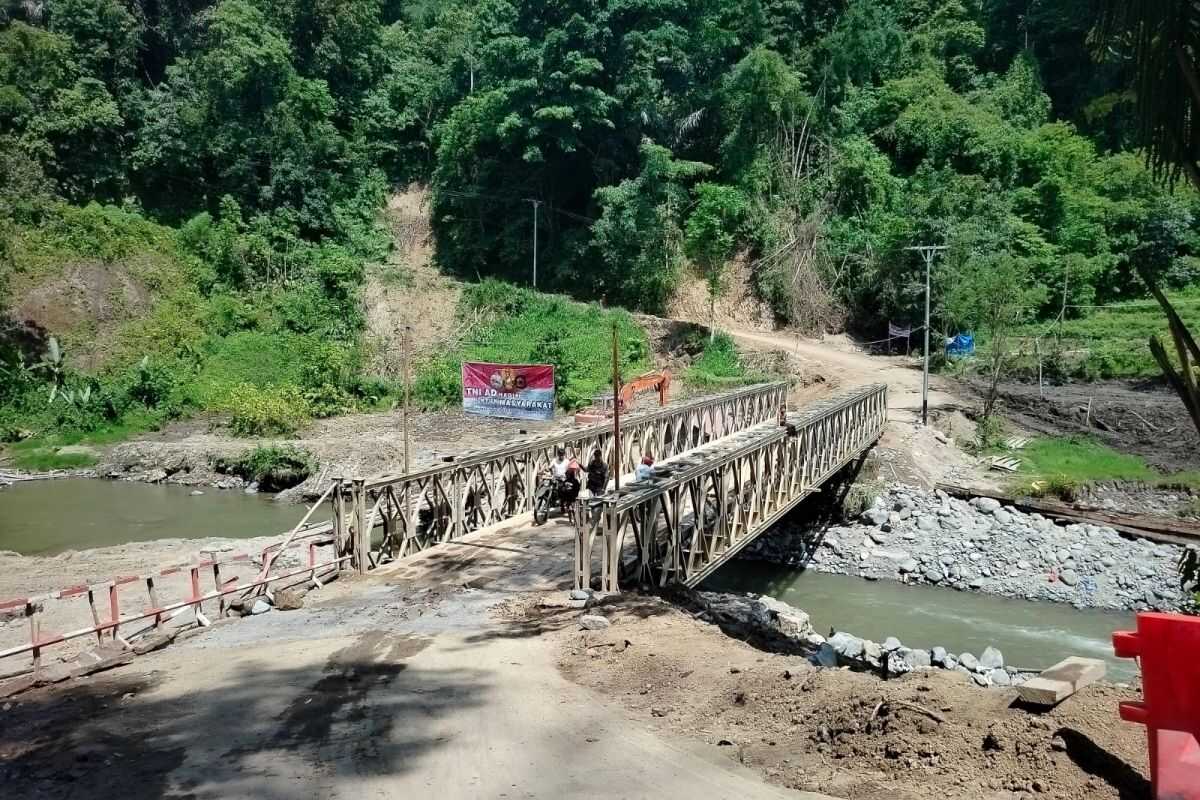
Lubuk Basung (ANTARA) - The Agam Regency government, West Sumatra, has proposed a budget of IDR 2.75 trillion to the central government for the reconstruction of infrastructure damaged by natural disasters that struck the region in late November 2025.
“This proposal is a strategic step in accelerating equitable development and improving the welfare of the community in various sectors. This is a form of the regional government’s seriousness in responding to the needs of the community,” said the Regent of Agam, Benni Warlis, in Lubuk Basung, Agam, West Sumatra, Thursday.
The budget is planned for the repair and improvement of 166 road sections, the construction of 211 bridge units, and the construction of 11 suspension bridge units spread throughout the Agam region.
“This construction and rehabilitation aims to strengthen connectivity between regions, facilitate community mobility, and support the smooth distribution of agricultural products and other economic activities,” he said.
In the Water Resources Management (PSDA) sector, he said that the Agam Regency government also proposed the repair of irrigation areas at 281 points and 152 rivers.
The program focuses on strengthening food security through the optimization of irrigation networks, as well as carrying out control and normalization of rivers to reduce the risk of flooding and the impact of damage caused by natural disasters.
In addition, the proposed budget is also intended for improving basic public services, such as the repair and development of the Urban and Rural Water Supply System (SPAM).
The program includes the construction of rural-scale septic tanks, rehabilitation of buildings, repair of drainage, and rehabilitation of neighborhood roads.
This program aims to improve access to decent drinking water, healthy sanitation, and create a more organized and comfortable residential environment.
“This step is a form of the regional government’s commitment to accelerating post-disaster recovery while strengthening infrastructure resilience to future disaster risks,” he said.