
After US-Israel Attack on Iran, Middle East Energy Map Shaken
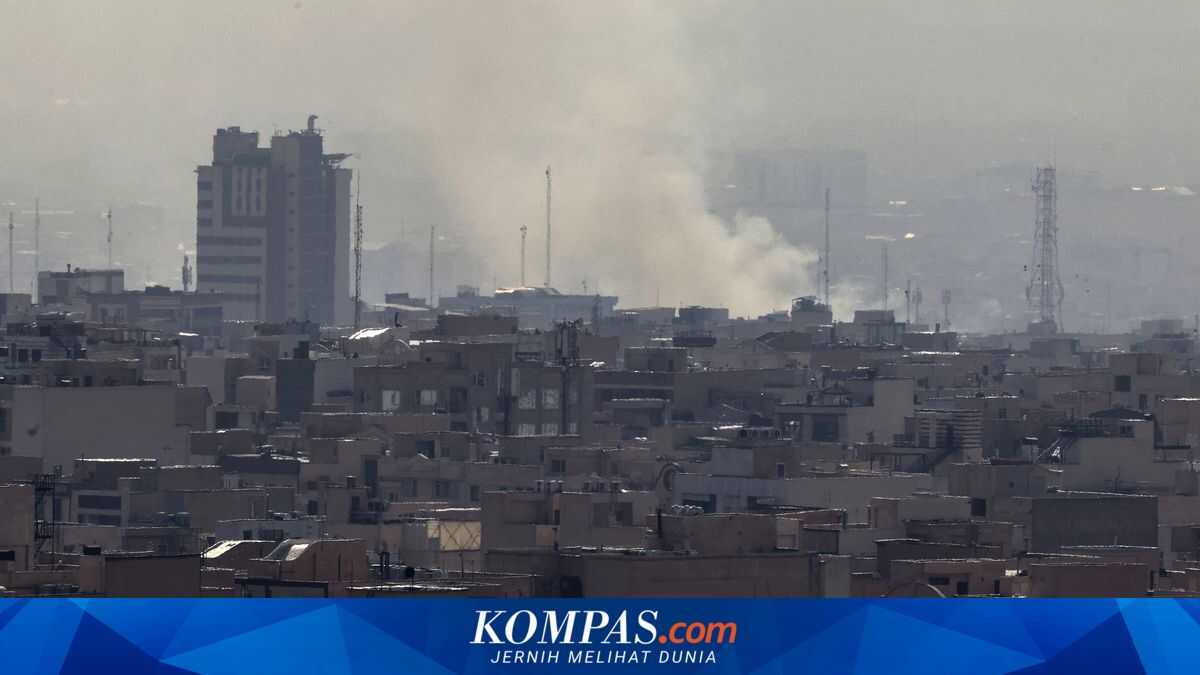
Jakarta, Kompas.com – The Middle East energy map has shifted again following the United States and Israel’s attack on Iran on Saturday, 28 February 2026. The nation, which has long been a crucial hub for global oil reserves, production, and distribution, now sits at the centre of regional geopolitical tensions.
The attack prompted retaliation from Tehran and heightened concerns about disruptions to global energy supplies, particularly through the Strait of Hormuz, a shipping corridor through which approximately one-fifth of global oil and liquefied natural gas supplies pass daily.
“For the Middle East region, Iran’s position in terms of reserves and distribution is quite strategic,” said energy analyst Komaidi Notonegoro, Executive Director of the ReforMiner Institute, in comments to Kompas.com on Sunday, 1 March 2026.
Komaidi explained that regarding reserves, Iran ranks as the second-largest in the region after Saudi Arabia. In terms of production, Iran also holds the second position below Saudi Arabia in the region.
“Its position is indeed quite significant,” he said.
This region has for decades been the primary determinant of global oil balance.
Iran currently produces approximately 3.4 million barrels per day, representing about 4 per cent of global oil supplies. Its exports range from 1 to 2 million barrels daily, with the majority going to China despite being under sanctions.
Beyond production factors, Iran’s geographical position is a distinguishing feature. Its proximity to the Strait of Hormuz gives it significant influence over global energy distribution routes.
“Equally important is the distribution route, because they are close to the Strait of Hormuz. Thus they have the ability to control the Strait of Hormuz and can potentially close it, though not permanently, but they have the capacity to effect a closure,” Komaidi explained.
“The current regime, since the Islamic Revolution, has declared itself opposed to both Israel and America,” he noted.
He assessed that from an energy perspective, the US also has strategic interests in the region given its military bases scattered across several Middle Eastern nations requiring stable energy supplies.
“America probably does not want to depend on a single country, such as Saudi Arabia, whose policies could shift over time,” he said.