
After Six Years of Surplus, Indonesia's Balance of Payments Falls into Deficit in 2025
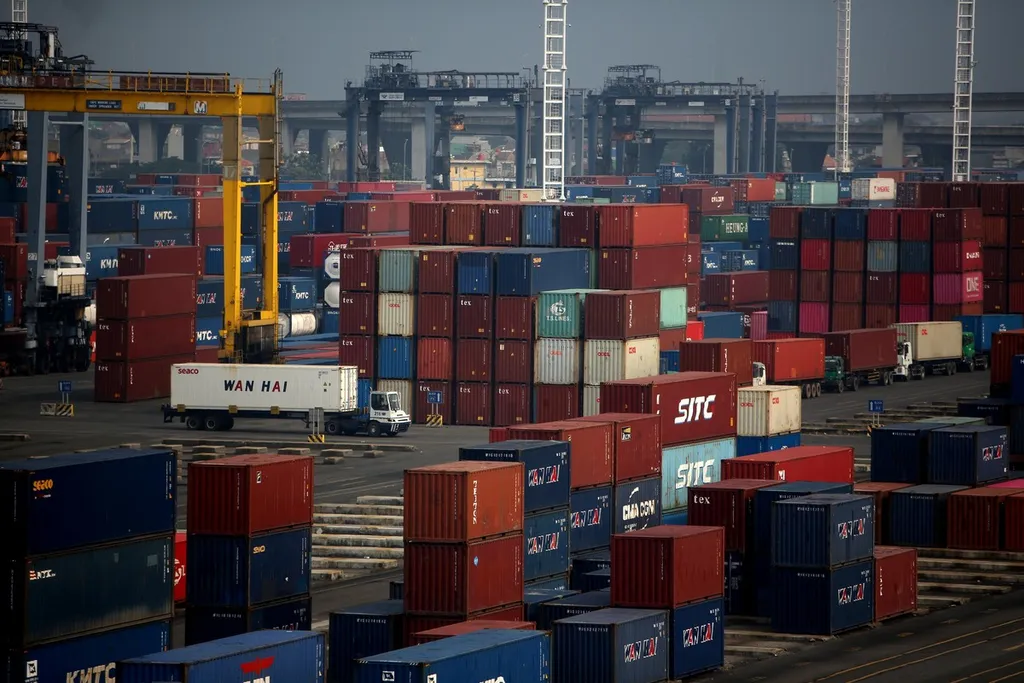
Like a national savings book, the NPI records all transactions of the Indonesian population with the outside world. Currently, the financial ledger of the Republic of Indonesia is in deficit by 7.8 billion US dollars. By Agustinus Yoga Primantoro 20 Feb 2026 19:08 WIB · English JAKARTA, KOMPAS – Indonesia’s Balance of Payments (NPI) recorded a deficit of 7.8 billion US dollars in 2025. The main cause is leakage in the investment and services sectors. This condition illustrates the fragility of external resilience against global turbulence. Citing a report from Bank Indonesia (BI), the Balance of Payments (NPI) is projected to turn into a deficit in 2025 after recording a surplus of 7.2 billion US dollars in 2024. Furthermore, the deficit in 2025 breaks the trend of consecutive surpluses in the NPI over the past six years. The last time the NPI recorded a deficit was in 2018, amounting to 7.1 billion US dollars. The performance of the NPI is primarily influenced by the capital and financial account balance, which has also turned into a deficit amounting to 4.2 billion US dollars. This development is affected by the outflow of foreign portfolio investments and other investments amid a shrinking surplus of direct investment. Meanwhile, the current account balance still records a deficit of 1.5 billion US dollars or 0.1 percent of Gross Domestic Product (GDP). Although it tends to shrink, this deficit has occurred for three consecutive years. The narrowing of the current account deficit in 2025 is due to an increase in the surplus in the goods trade balance and the secondary income balance. The trade surplus is driven by demand for export commodities, coupled with front-loading in anticipation of US tariff policies. Conversely, the services balance and the primary income balance experienced a widening deficit. The widening deficit in the services balance is primarily caused by the travel services component, while the primary income deficit occurs in line with the increasing payment of investment returns. Professor of the Faculty of Economics and Business at Andalas University, Syafruddin Karimi, on Friday (20/2/2026), stated that the NPI deficit in 2025 sends a clear message that the Indonesian economy is facing a surge in foreign exchange needs amid limited supply. “The NPI deficit is not merely an accounting figure. This deficit signifies the rising stabilization costs when authorities must maintain foreign exchange balance at a time when the real foreign exchange machinery is weakening,” he said. In 2025, the foreign exchange market is likely to experience a tightening of dollar liquidity, as reflected in the NPI deficit from the first to the third quarter. Only in the fourth quarter of 2025 will the influx of foreign exchange liquidity be felt, resulting in the NPI recording a surplus of 6.1 billion US dollars. When large deficits occur repeatedly, exchange rate pressures easily increase, energy imports become more expensive, and policy space narrows. Syafruddin explained that the surplus did not come from the strengthening of the current account, but rather from a reversal of financial capital flows that recorded a surplus of 8.3 billion US dollars. This condition was driven by attractive yield levels and the withdrawal of foreign loans. Overall, the NPI deficit in 2025 indicates that external resilience is becoming more vulnerable to global fluctuations. This structure will also result in the Indonesian rupiah exchange rate being more susceptible to volatility in line with market sentiment or when the US dollar strengthens. “When large deficits occur repeatedly, exchange rate pressures easily increase, energy imports become more expensive, and policy space narrows,” he said. In the future, pressure will continue into 2026 along with the increasing risk premiums. This is partly due to issues of transparency and governance, fiscal uncertainty, as well as a shift in investor sentiment that will drive capital outflows. According to Syafruddin, Indonesia’s economy faces resilience risks that will quickly affect exchange rate stability. Furthermore, Indonesia’s foreign debt is expected to increase by 2025, thereby raising the future demand for foreign currency payments. Various conditions demand the government to strengthen policy governance and the credibility of financing. Without policy certainty, the market will impose costs through exchange rates, capital outflows, and increased capital costs, which risks eroding opportunities for high growth. The Head of Macroeconomics and Market Research at Bank Permata, Faisal Rachman, predicts that the current account deficit in 2026 will widen. This is primarily due to the deficit in the capital and financial account amid a shrinking trade balance surplus. “In the first half of 2026, we see the possibility of an outflow from the financial account, which will put pressure on the overall balance. So, if we add up the first and second quarters of 2026, the overall balance will be in deficit,” he said in an online PIER Economic Review 2025 Media Briefing. Nevertheless, there is still room for a reduction in global benchmark interest rates in the second semester of 2026, which could attract foreign capital inflows. In addition, the resolution of issues currently under scrutiny by MSCI and Moody’s Ratings also has the potential to attract foreign capital. Faisal added that Indonesia’s import needs will also increase in line with government policies that continue to encourage economic growth (pro-growth). However, the current account deficit is expected to remain below 1 percent of GDP. Bank Indonesia recorded that foreign portfolio investment in the Indonesian financial market reached 1.6 billion US dollars as of February 13, 2026, supported by Bank Indonesia’s Rupiah Securities (SRBI) and government securities (SBN). Meanwhile, foreign capital flow in the Indonesian capital market as of February 19, 2026, has been recorded at 14.65 trillion rupiah for t