
After Deadly Floods in Sumatra, Indonesia Moves Against Polluters
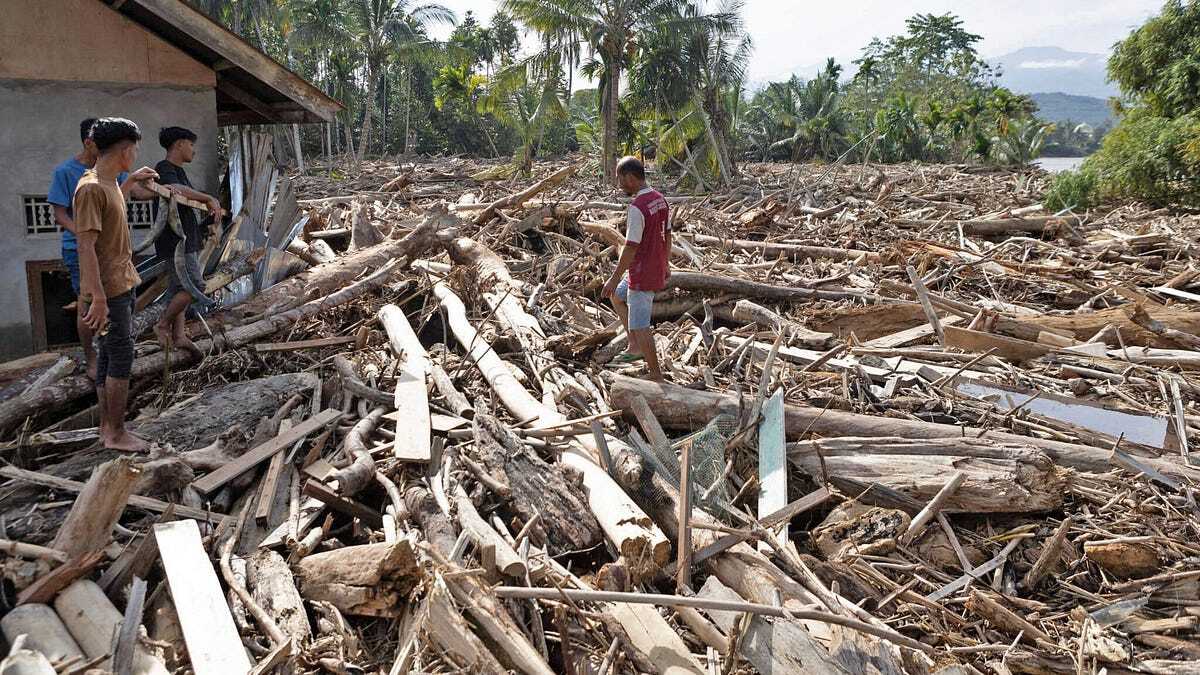
When torrential rains triggered floods and landslides across three provinces in Sumatra late last year, entire villages were swept away, more than 1,200 people were killed and forests upstream collapsed under the weight of decades of unchecked exploitation. Now, Indonesia’s government is moving to hold companies accountable.
The Indonesian government has filed multiple lawsuits seeking more than US$200 million in damages against six firms after deadly floods wreaked havoc across Sumatra. The government is seeking 4.8 trillion rupiah (US$283.8 million) from six companies accused of damage to an area spanning more than 2,500 hectares. The sum represents both fines for damage and the proposed monetary value of recovery efforts.
“We firmly uphold the principle of polluter pays,” Environment Minister Hanif Faisol Nurofiq said in a statement.
For years, ecosystems in Aceh, North Sumatra, and West Sumatra had been weakened by deforestation and land-use change. The regions lost 1.4 million hectares of forest in the past decade alone. The government has acknowledged that deforestation and land-use changes — not extreme weather alone — amplified the scale of floods and landslides triggered by Cyclone Senyar in November 2025.
Indonesia revoked the permits of 28 companies after a post-Cyclone Senyar audit found environmental violations that authorities say worsened the deadly floods and landslides. Forestry Minister Raja Juli Antoni said the government would revoke 22 forestry permits across the country, including permits that encompass more than 100,000 hectares in Sumatra.
The government launched a three-track response: rapid disaster impact assessments, reviews of provincial zoning plans, and environmental audits of more than 100 companies across extractive and infrastructure sectors.
Audits already began in North Sumatra, where eight companies operating in and around the ecologically fragile Batang Toru ecosystem were ordered to cease operations pending a government investigation. Batang Toru is home to critically endangered species, including the Tapanuli orangutan, the world’s rarest great ape. The companies under scrutiny include pulpwood producer PT Toba Pulp Lestari, hydropower developer PT North Sumatra Hydro Energy, and gold mine operator PT Agincourt Resources.
The full audit process is expected to take up to a year, but investigations into major cases are targeted for completion by March, allowing authorities to pursue follow-up action, whether through criminal proceedings, civil lawsuits, or administrative sanctions.
Civil society groups cautiously welcomed the move, but noted that meaningful reform will depend on whether Jakarta is willing to revise permissive zoning plans that legally enable large-scale forest conversion. Critics observe that Indonesia risks remaining stuck in a recurring cycle: disaster strikes, the government scrambles to respond, fine-sounding promises flow, attention fades, and the cycle starts again.
Nevertheless, public anger and political attention have converged, with deforestation emerging as a central topic of national debate and senior Indonesian leaders acknowledging failures in forest protection and governance.