
AFPI Responds to KPPU Ruling: It Does Not Reflect the Facts of the Trial
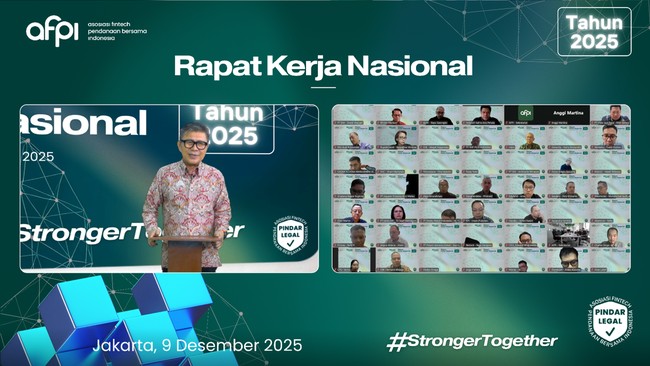
Jakarta, CNBC Indonesia - The Indonesian Peer-to-Peer Fintech Association (AFPI) has responded to the Business Competition Supervisory Commission (KPPU) panel’s ruling. AFPI regrets that the decision does not reflect the facts presented throughout the examination hearing.
From AFPI’s perspective, the KPPU appears to have forced the issue by ruling against all online lending platforms, as no collusion regarding the maximum economic benefit cap (interest rate) was proven during the examination hearing.
In fact, the approach adopted in the industry, including the maximum economic benefit cap, has been part of efforts to protect consumers and clearly differentiate from illegal online lending (pinjol) practices. This has also been the applicable regulatory framework under the supervision of the Financial Services Authority (OJK).
AFPI Chairman, Entjik S. Djafar, expressed his disappointment with the KPPU’s decision, noting that the maximum economic benefit cap at the time was guidance from the OJK to protect consumers from predatory lending practices and illegal pinjol that charged very high interest rates.
“Therefore, the majority of association members will appeal the KPPU’s decision,” said Entjik in an official statement, quoted on Saturday (28/3/2026).
Previously, the KPPU ruled that 97 online lending platforms under AFPI’s auspices were guilty of suspected collusion in setting economic benefit caps. Each platform was ultimately imposed with varying fine amounts.
Regardless of the decision, AFPI emphasises that it still respects the applicable legal processes and is committed to maintaining integrity and trust in the industry ecosystem. As a rule of law state, AFPI believes that Indonesia has mechanisms that provide space for fair resolution. Therefore, AFPI urges its members to take steps in accordance with the applicable legal processes.
“We are still coordinating with all platforms regarding the legal steps to be taken. Basically, appealing is the right of each member, but we can say that all members do not accept the decision. Because the upper limit of economic benefits is intended for consumer protection and no malicious intent was proven throughout the examination hearing. We believe that online lending industry players are in the right position by following OJK’s guidance at that time,” explained Entjik.
In addition, Entjik also emphasised that the operational activities of AFPI-affiliated lending platforms continue normally. Basically, the decision does not change payment obligations under agreements, and all such obligations must still be fulfilled as usual.
For context, when this case began to be examined by the KPPU, the OJK also stated that the regulation of the maximum economic benefit cap or interest rate for lending by AFPI was part of the code of ethics (code of conduct) provisions before the issuance of SEOJK No.19/SEOJK.06/2023 on the Implementation of Peer-to-Peer Lending Services, which was OJK guidance at the time, further affirmed in OJK Letter No. S-408/NB.213/2019 dated 22 July 2019.
AFPI then explained this as direct guidance from the OJK in accordance with OJK Letter No. S-537/PL.122/2025 dated 16 May 2025, which was received.